
 AI-generated
Corsage Orchid
Cattleya hybrids
Corsage orchids (Cattleya hybrids) are known for large, fragrant, ruffled flowers, which usually appear once or twice a year. They need bright light, a coarse bark mix, and a real drying-out period between waterings. They are slow growing and moderately easy once you get the light and watering right.
Saving is free with a KinClub account, and it works here and in the KinClub app. Sign up free
Care profile
- Light
- Bright, indirect lightLow → direct sun
- Water
- Dry to moderate wateringAbout every 7 days
- Difficulty
- ModerateTricky → easy
- Coldest it tolerates
- 55°F
- Humidity
- Medium to high
- Mature size
- Small to mediumSmall → tree-size
- Growth rate
- Slow
- How common
- CommonRare → everywhere
- Plant family
- Orchidaceae
Pets and toxicity
Cats and dogs: not yet checked
Not yet checked against ASPCA — don't assume it's safe for pets.
No toxicity source on record for this plant yet. If a pet eats any houseplant, call your vet or an animal poison helpline.
How to care for Corsage Orchid
Light
Give bright light, such as an east window or a south or west window filtered by a sheer curtain. Leaves should be light olive or yellow-green, not dark green; a few hours of gentle morning sun is fine.
Watering
Soak the pot thoroughly, let it drain, then wait until the bark is almost dry before watering again, usually every 5-10 days in the growing season. Water in the morning and use less in winter, when the plant may need water only every 10-14 days.
Soil
Use a coarse orchid mix of medium fir bark, perhaps with perlite or charcoal, in a pot with plenty of drainage holes. Never use regular potting soil, which stays too wet and rots the roots.
Feeding
Feed with a balanced orchid fertilizer at quarter to half strength every 2 weeks while actively growing, or weekly at quarter strength. Flush the pot with plain water monthly to remove salt build-up and skip feeding in winter rest.
Repotting
Repot every 2-3 years when the bark breaks down or new growth overhangs the pot edge, ideally as new roots start to emerge after flowering. Choose a pot only slightly bigger, since these orchids prefer to be snug.
Propagation
Divide large plants into sections of at least 3-4 pseudobulbs with a sterilized blade, ideally at repotting time. Growing from seed needs lab conditions, so division is the practical method at home.
Common problems
- Shriveled pseudobulbs: usually from root rot or underwatering; check roots, trim dead ones and repot into fresh bark.
- No blooms: usually too little light; move to a brighter spot until leaves are light green.
- Brown sunken spots on leaves: often a fungal or bacterial rot from water sitting on foliage; keep leaves dry, improve air flow and remove affected tissue.
- Buds drying before opening (bud blast): caused by drafts, sudden temperature change or dry air; keep the plant in a stable spot away from vents.
- Cottony or hard brown bumps on leaves and bulbs: mealybugs or scale; dab with rubbing alcohol on a cotton swab and repeat weekly.
Similar plants
Same light needs and difficulty.
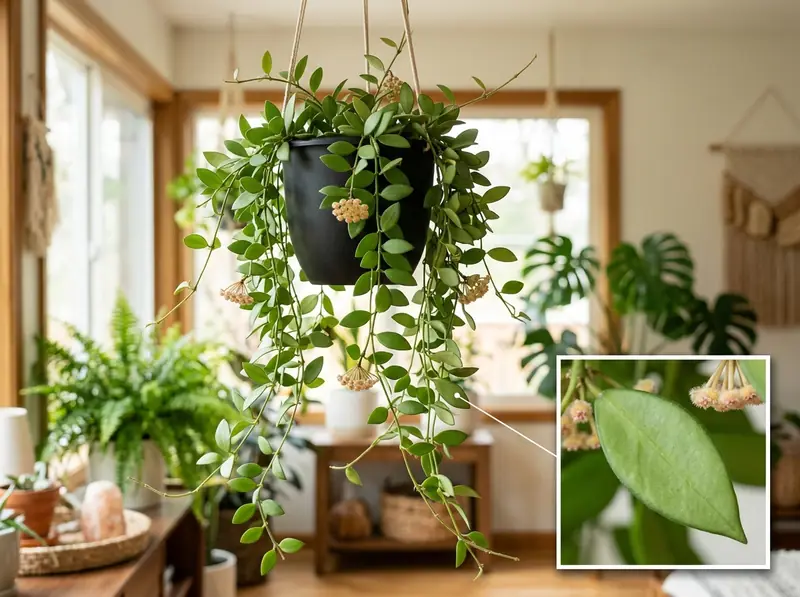 AI-generated
Heuschkeliana Hoya
Hoya heuschkeliana
- Bright, indirect light
- Dry to moderate watering
Pets: not yet checked AI-generated
 AI-generated
 AI-generated