
 AI-generated
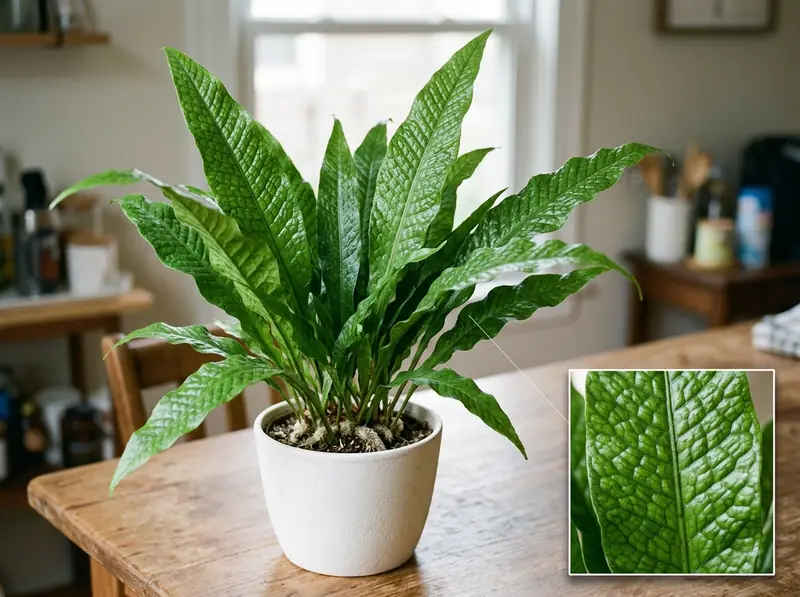
Crocodile Fern
Microsorum musifolium 'Crocodyle'
'Crocodyle' is the widely sold crocodile fern, prized for its glossy, deeply quilted fronds whose raised pattern resembles reptile skin. It grows into a medium-sized, vase-shaped clump and does best in bright, indirect light with evenly moist but never soggy soil. Keep the rhizomes on the surface and the air reasonably humid for the best-looking fronds.
Saving is free with a KinClub account, and it works here and in the KinClub app. Sign up free
Care profile
- Light
- Bright, indirect lightLow → direct sun
- Water
- Moderate wateringAbout every 7 days
- Difficulty
- ModerateTricky → easy
- Coldest it tolerates
- 55°F
- Humidity
- Medium to high
- Mature size
- MediumSmall → tree-size
- Growth rate
- Moderate
- How common
- CommonRare → everywhere
- Plant family
- Polypodiaceae
Pets and toxicity
Cats and dogs: not yet checked
Not yet checked against ASPCA — don't assume it's safe for pets.
No toxicity source on record for this plant yet. If a pet eats any houseplant, call your vet or an animal poison helpline.
How to care for Crocodile Fern
Light
Give bright, indirect light, such as a spot a few feet from an east or lightly shaded south window. It tolerates medium light but grows more slowly, and direct sun scorches the fronds.
Watering
Water when the top inch of soil feels dry, usually about once a week in the growing season, and less often in winter. Water the soil and not the rhizomes, and never let the pot sit in standing water.
Soil
Use a loose, airy, well-draining mix, such as 2 parts potting soil with 1 part orchid bark and 1 part perlite. The mix should hold a little moisture but never stay soggy.
Feeding
Feed every 4 weeks in spring and summer with a balanced houseplant fertilizer diluted to half strength. Skip feeding in winter.
Repotting
Repot every 2 to 3 years in spring, only when the rhizomes crowd the pot. Go up one size at most, and keep the rhizomes on the soil surface and not buried.
Propagation
Divide in spring by cutting a rhizome section that has at least 2 or 3 fronds and some roots, then pot it in fresh mix. Keep it evenly damp and humid until new growth appears.
Common problems
- Brown, crispy frond edges usually mean dry air or missed waterings; water more evenly and raise humidity with a pebble tray or humidifier.
- Yellowing fronds and mushy rhizomes point to overwatering or poor drainage; let the soil dry a bit and repot into a chunkier mix.
- Scale or mealybugs can collect along the midribs; wipe them off with rubbing alcohol on a cotton swab and repeat weekly.
- Fronds can be damaged by handling or cold drafts; keep the plant above 55°F and away from vents.
- Brown dots on the underside of the fronds are normal spore clusters and need no treatment.
Similar plants
Same light needs and difficulty.
 AI-generated
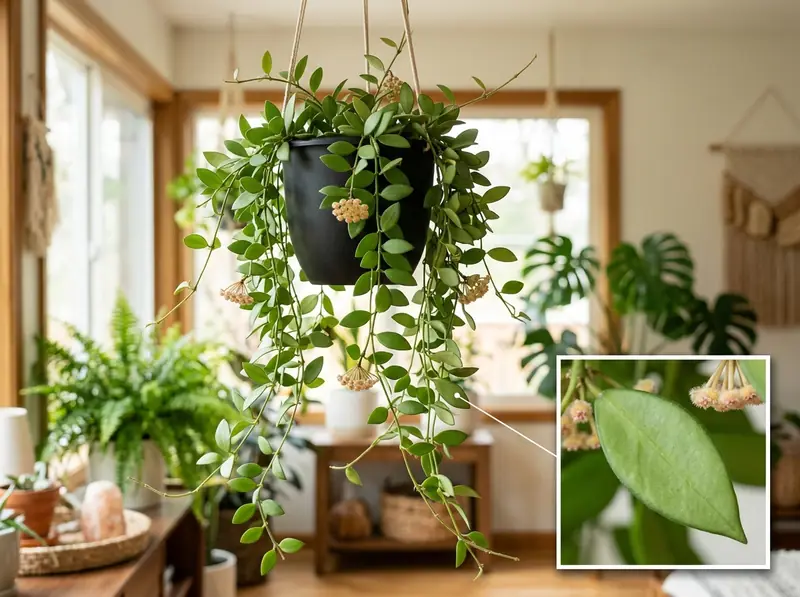
Heuschkeliana Hoya
Hoya heuschkeliana
- Bright, indirect light
- Dry to moderate watering
Pets: not yet checked AI-generated
 AI-generated
 AI-generated