
 AI-generated
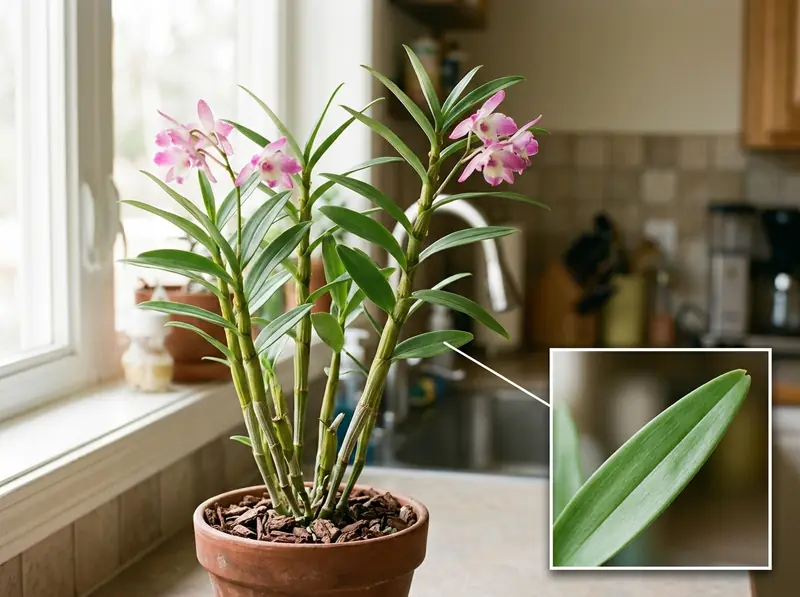
Dendrobium Orchid
Dendrobium hybrids
Dendrobium hybrids are compact orchids with upright canes that carry clusters of long-lasting flowers, usually in winter or spring. They need bright light, a fast-draining bark mix, and a cooler, drier winter rest to re-bloom. Water only when the mix is nearly dry.
Saving is free with a KinClub account, and it works here and in the KinClub app. Sign up free
Care profile
- Light
- Bright, indirect lightLow → direct sun
- Water
- Moderate wateringAbout every 7 days
- Difficulty
- ModerateTricky → easy
- Coldest it tolerates
- 50°F
- Humidity
- Medium
- Mature size
- Small to mediumSmall → tree-size
- Growth rate
- Moderate
- How common
- Very commonRare → everywhere
- Plant family
- Orchidaceae
Pets and toxicity
Cats and dogs: not yet checked
Not yet checked against ASPCA — don't assume it's safe for pets.
No toxicity source on record for this plant yet. If a pet eats any houseplant, call your vet or an animal poison helpline.
How to care for Dendrobium Orchid
Light
Give bright light: an east window, or a south or west window with a sheer curtain. A few hours of gentle morning sun is fine, but avoid harsh midday sun.
Watering
In the growing season, water thoroughly about once a week when the mix is nearly dry and the pot feels light, letting the water drain away fully. In winter rest, water only every 2-3 weeks, just enough to keep the canes plump.
Soil
Use a coarse orchid mix of bark chunks, perhaps with perlite or charcoal, in a pot with large drainage holes. Never use ordinary potting soil, which holds too much water and suffocates the roots.
Feeding
From spring to early autumn, feed every 2 weeks with a balanced orchid fertilizer at quarter to half strength. Stop feeding in winter, and flush the pot with plain water monthly to prevent salt build-up.
Repotting
Repot only every 2-3 years, after flowering when new roots start to appear, or when the bark breaks down. Dendrobiums bloom best slightly root-bound, so choose a pot only 1 inch larger.
Propagation
Plantlets called keikis often form on old canes; remove them when they have roots 2-3 inches long and pot them in fine orchid bark. Large clumps can also be divided, keeping at least 3 canes per division.
Common problems
- No flowers: usually too little light or no cool winter rest. Move to brighter light and give cooler nights with less water for several weeks in winter.
- Wrinkled canes: often from underwatering or rotted roots. Check the roots, trim any mushy ones, and repot into fresh bark if needed.
- Yellow lower leaves: old leaves naturally yellow and drop after a cane matures, but widespread yellowing means overwatering, so let the mix dry more.
- Buds dropping: caused by drafts, sudden temperature shifts, or moving the plant. Keep it in a stable spot away from vents and cold windows.
- Sticky residue or white cottony bits: scale or mealybugs. Wipe them off with a cotton swab dipped in rubbing alcohol and repeat weekly.
Similar plants
Same light needs and difficulty.
 AI-generated
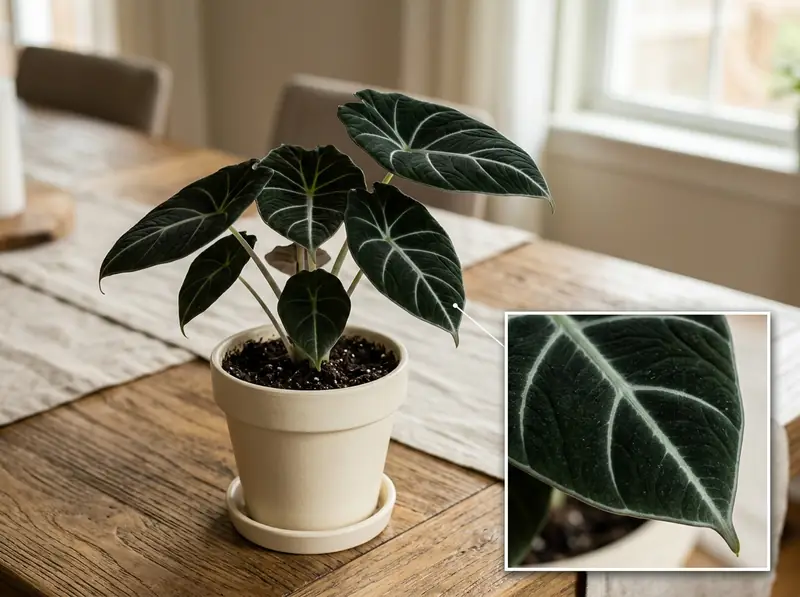
Black Velvet Alocasia
Alocasia reginula 'Black Velvet'
- Bright, indirect light
- Moderate watering
Toxic to cats and dogs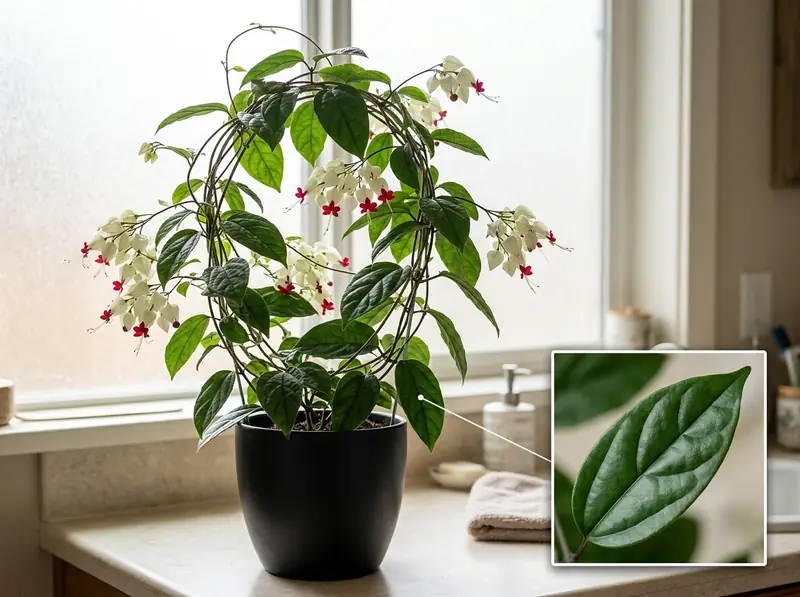 AI-generated
Bleeding Heart Vine
Clerodendrum thomsoniae
- Bright, indirect light
- Moderate watering
Pets: not yet checked AI-generated
 AI-generated