
 AI-generated
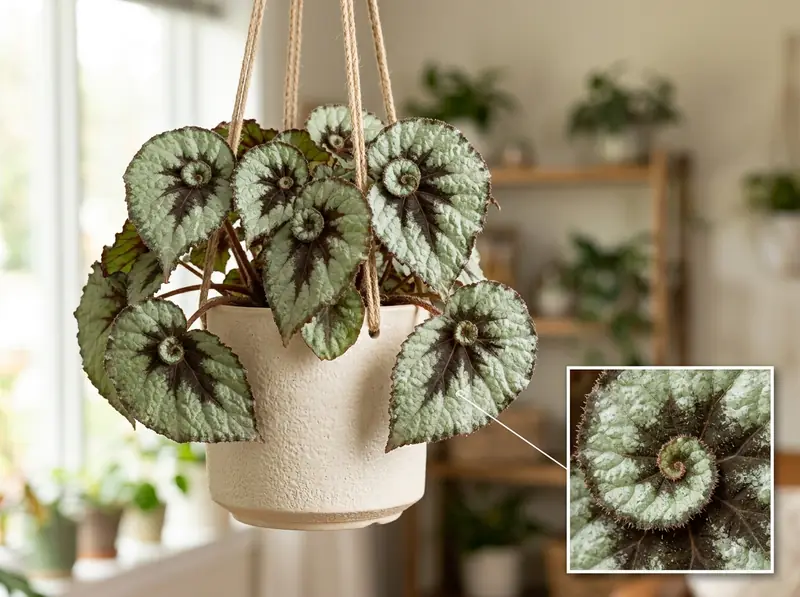
Escargot Begonia
Begonia 'Escargot'
Escargot Begonia is a rhizomatous begonia grown for its spiralling silver and green leaves, which are edged with dark shades and look like snail shells. It stays compact and trails a little over the pot edge. It grows best in bright, indirect light, with evenly moderate watering and some humidity, and it dislikes wet leaves and soggy soil.
Saving is free with a KinClub account, and it works here and in the KinClub app. Sign up free
Care profile
- Light
- Bright, indirect lightLow → direct sun
- Water
- Moderate wateringAbout every 7 days
- Difficulty
- ModerateTricky → easy
- Coldest it tolerates
- 55°F
- Humidity
- Medium to high
- Mature size
- SmallSmall → tree-size
- Growth rate
- Moderate
- How common
- CommonRare → everywhere
Pets and toxicity
Toxic to cats
Keep away from cats. Call your vet or a pet poison helpline if a cat chews it.
Toxic to dogs
Keep away from dogs. Call your vet or a pet poison helpline if a dog chews it.
Source: ASPCA toxic and non-toxic plants. If a pet eats any houseplant, call your vet or an animal poison helpline.
How to care for Escargot Begonia
Light
Give it bright, indirect light, such as a spot near an east window or a few feet back from a south or west one. Avoid direct midday sun, which scorches the leaves.
Watering
Water when the top inch of soil feels dry, roughly once a week in the growing season, until water drains out. Empty the saucer, and water less often in winter.
Soil
Use a light, airy, well-draining potting mix, such as standard houseplant mix with about one-quarter perlite added. Use a pot with drainage holes.
Feeding
Feed every 2 to 4 weeks in spring and summer with a balanced liquid fertilizer diluted to half strength. Skip feeding in winter.
Repotting
Repot every 1 to 2 years in spring, only moving up 1 to 2 inches in pot diameter. It prefers being slightly snug, and too large a pot stays wet.
Propagation
Take a stem-tip cutting with 2 or 3 leaves, or a leaf-wedge cutting, and root it in moist perlite mix or water. Keep it warm and humid until new growth appears, usually in 3 to 6 weeks.
Common problems
- Powdery mildew (white dusty patches on leaves): improve airflow, avoid wetting leaves, and remove badly affected leaves.
- Stem or crown rot from wet soil: let the soil dry more between waterings and repot into fresh mix, cutting away any mushy parts.
- Crispy leaf edges from dry air: group it with other plants or use a nearby humidifier rather than misting.
- Leggy growth in dim light: move it somewhere brighter and pinch the stem tips to encourage a fuller plant.
Similar plants
Same light needs and difficulty.
 AI-generated
 AI-generated
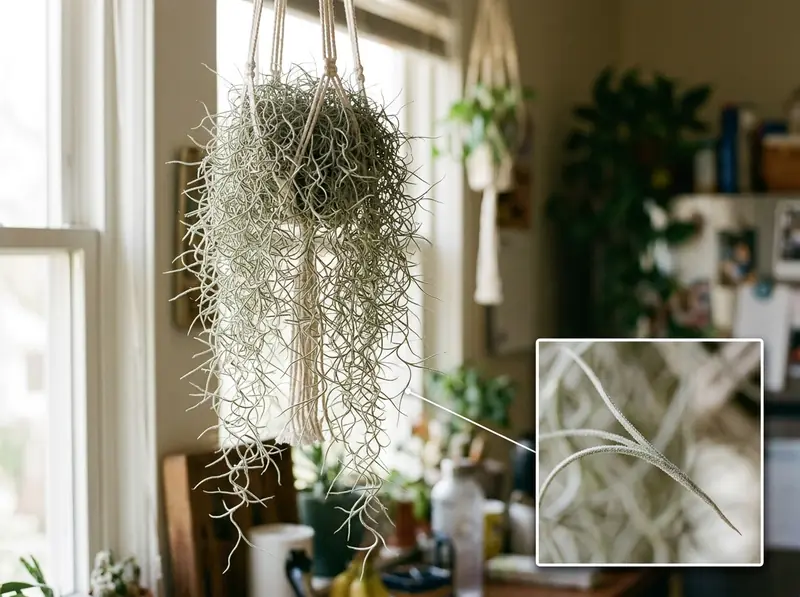
Spanish Moss
Tillandsia usneoides
- Bright, indirect light
- Moderate to moist watering
Pets: not yet checked AI-generated
 AI-generated