
 AI-generated
Eve's Needle
Opuntia subulata
Also known as Opuntia ellemeetiana, Opuntia segethii
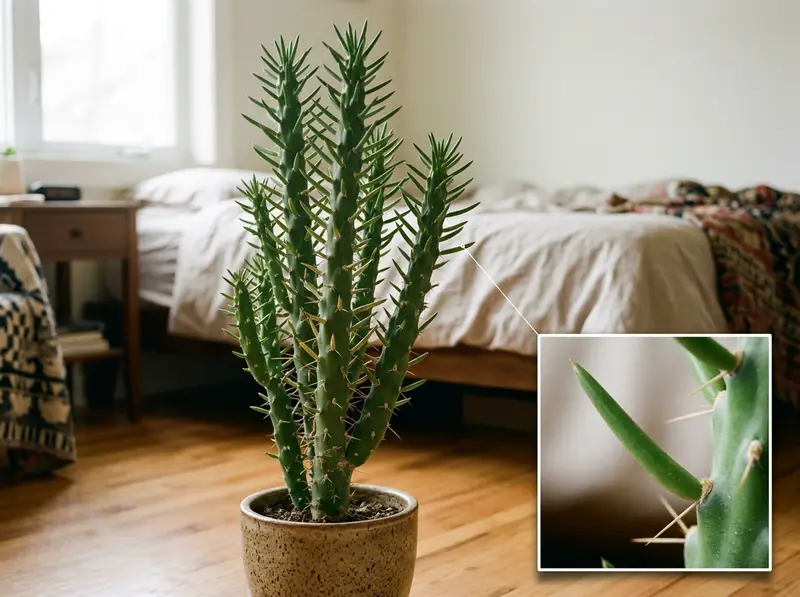
Eve's Needle is an upright, branching cactus with cylindrical green segments and long, sharp, needle-like leaves on new growth. It is tough and easy to care for if you give it lots of sun, gritty soil, and infrequent watering. Handle it carefully with gloves, since the leaves are sharp and the tiny barbed glochids are irritating.
Saving is free with a KinClub account, and it works here and in the KinClub app. Sign up free
Care profile
- Light
- Direct sunLow → direct sun
- Water
- Let it dry outAbout every 21 days
- Difficulty
- EasyTricky → easy
- Coldest it tolerates
- 40°F
- Humidity
- Low
- Mature size
- LargeSmall → tree-size
- Growth rate
- Moderate to fast
- How common
- CommonRare → everywhere
- Plant family
- Cactaceae
Pets and toxicity
Cats and dogs: not yet checked
Not yet checked against ASPCA — don't assume it's safe for pets.
Source: ASPCA toxic and non-toxic plants. If a pet eats any houseplant, call your vet or an animal poison helpline.
How to care for Eve's Needle
Light
Give it at least 4-6 hours of direct sun, such as a south- or west-facing window. Move it into stronger sun gradually to avoid sunburn.
Watering
Water thoroughly, then let the soil dry out completely before watering again, about every 2-4 weeks in spring and summer. In winter, water very little or not at all.
Soil
Use a gritty cactus and succulent mix. Add extra pumice or coarse sand (about one-third by volume) and use a pot with drainage holes.
Feeding
Feed with a diluted cactus fertilizer (low nitrogen) once a month in spring and summer. Do not feed in fall and winter.
Repotting
Repot every 2-3 years in spring, using a heavy, stable pot as the plant gets tall. Wear thick gloves and use folded newspaper or tongs to handle it, because the leaves are sharp and the tiny barbed glochids are irritating.
Propagation
Twist off or cut a segment and let the cut end dry and callus for 1-2 weeks. Then set it on or in barely damp cactus mix, and wait to water until roots form in a few weeks.
Common problems
- Soft, dark, mushy base: this is rot from too much water. Cut away the rot, let healthy cuttings callus, and re-root them in dry gritty mix.
- Tall, thin, pale growth: the light is too low. Move the plant to a sunny window and be patient, because the stretched growth will not shrink back.
- White cottony clusters in the joints: these are mealybugs. Dab them with cotton swabs dipped in rubbing alcohol and repeat weekly.
- Brown, raised, corky bumps on the stem: these may be scale insects, or just natural aging at the base. Scrape off scale and treat with alcohol or horticultural oil.
Similar plants
Same light needs and difficulty.
 AI-generated
 AI-generated
 AI-generated
 AI-generated
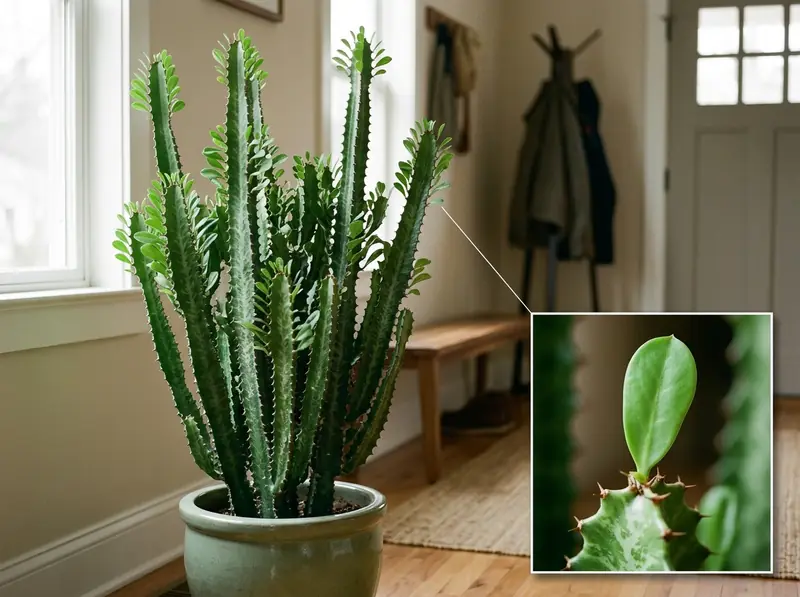
African Milk Tree
Euphorbia trigona
- Bright, indirect to direct sun
- Let it dry out
Pets: not yet checked