
 AI-generated
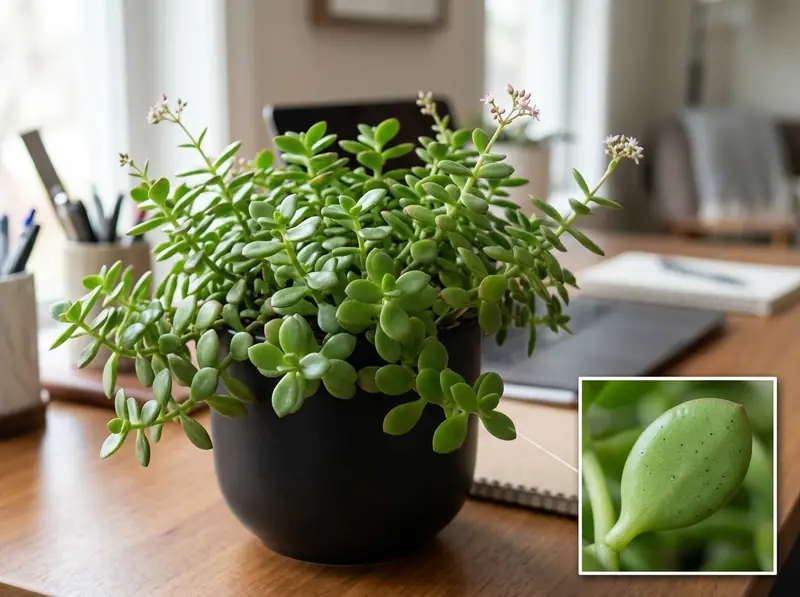
Fairy Crassula
Crassula multicava
Fairy crassula is a small, bushy succulent from southern Africa with rounded, glossy green leaves and stems that spread into a dense mat. It is easy and forgiving if given bright light and a gritty, fast-draining mix, and it produces tiny pink-white flowers in winter or spring. It spreads readily by plantlets and cuttings.
Saving is free with a KinClub account, and it works here and in the KinClub app. Sign up free
Care profile
- Light
- Bright, indirect lightLow → direct sun
- Water
- Let it dry outAbout every 14 days
- Difficulty
- EasyTricky → easy
- Coldest it tolerates
- 40°F
- Humidity
- Low
- Mature size
- SmallSmall → tree-size
- Growth rate
- Moderate
- How common
- CommonRare → everywhere
- Plant family
- Crassulaceae
Pets and toxicity
Cats and dogs: not yet checked
Not yet checked against ASPCA — don't assume it's safe for pets.
No toxicity source on record for this plant yet. If a pet eats any houseplant, call your vet or an animal poison helpline.
How to care for Fairy Crassula
Light
Give it bright light, such as an east or south window with a few hours of gentle morning sun. It tolerates some direct sun if acclimated gradually, but stretches in dim rooms.
Watering
Water thoroughly, then wait until the soil is dry through the pot, about every 2 weeks in summer. Water only every 3 to 5 weeks in winter, just enough to keep leaves from wrinkling.
Soil
Use a gritty cactus or succulent mix, or ordinary potting mix blended about half and half with perlite or coarse sand. Choose a pot with drainage holes.
Feeding
Feed with a half-strength balanced fertilizer or cactus fertilizer once a month in spring and summer. Do not feed in fall and winter.
Repotting
Repot every 2 to 3 years in spring, or when roots fill the pot, moving up only one size. Shallow pots suit its spreading, shallow roots.
Propagation
Take stem cuttings or pull off the small plantlets that form on stems, let cuttings callus for a day or two, and set them on barely moist gritty mix. They root in 2 to 4 weeks.
Common problems
- Leggy, sparse growth: move it to a brighter window and trim stems back to encourage bushier growth.
- Soft, yellow, mushy leaves: overwatering. Let the soil dry fully, and cut away rotted stems and repot in fresh gritty mix if the base is affected.
- White cottony spots in leaf joints: mealybugs. Dab with a cotton swab dipped in rubbing alcohol and repeat weekly.
- Lower leaves shriveling and dropping: often natural aging, but if many drop and the soil is dry, water more thoroughly.
Similar plants
Same light needs and difficulty.
 AI-generated
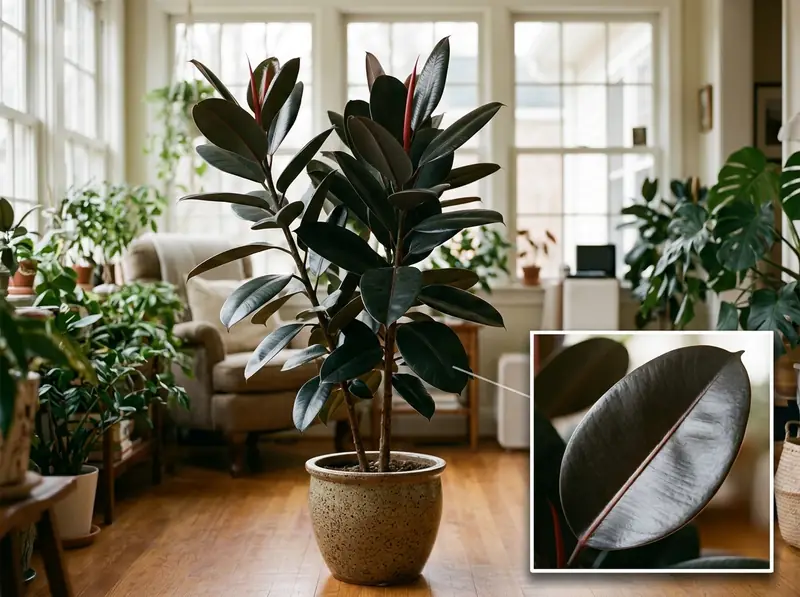
Burgundy Rubber Plant
Ficus elastica 'Burgundy'
- Bright, indirect light
- Moderate watering
Toxic to cats and dogs AI-generated
 AI-generated
Chinese Money Plant
Pilea peperomioides
- Bright, indirect light
- Dry to moderate watering
Pets: not yet checked AI-generated
Christmas Cactus
Schlumbergera × buckleyi
- Bright, indirect light
- Moderate watering
Pets: not yet checked