
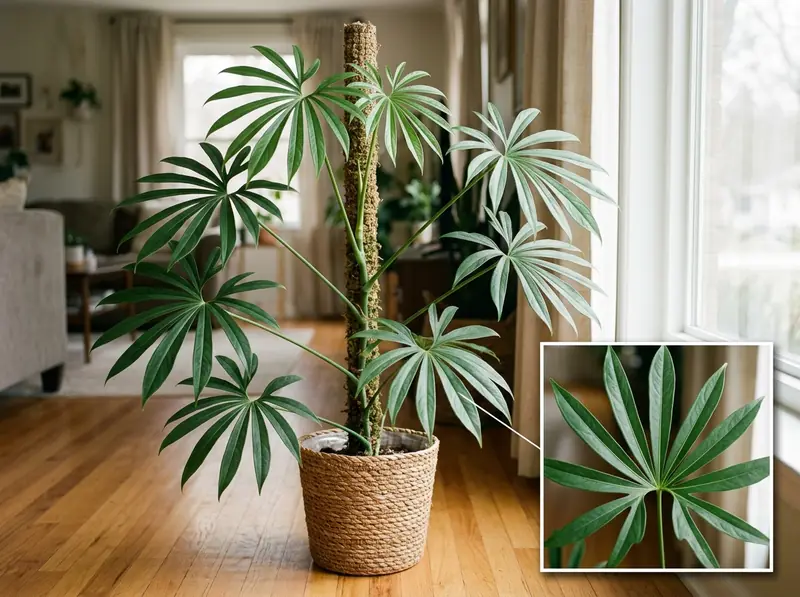
 AI-generated
Fingerleaf Anthurium
Anthurium pedatoradiatum
Fingerleaf anthurium has deeply divided, finger-like leaves on a vining stem, closer to a philodendron than to the usual flowering anthurium. It is a sturdy, easier species when given a pole. Give it bright light and regular water.
Saving is free with a KinClub account, and it works here and in the KinClub app. Sign up free
Care profile
- Light
- Bright, indirect lightLow → direct sun
- Water
- Moderate wateringAbout every 7 days
- Difficulty
- ModerateTricky → easy
- Coldest it tolerates
- 55°F
- Humidity
- Medium to high
- Mature size
- LargeSmall → tree-size
- Growth rate
- Moderate
- How common
- EnthusiastRare → everywhere
- Plant family
- Araceae
Pets and toxicity
Cats and dogs: not yet checked
Not yet checked against ASPCA — don't assume it's safe for pets.
No toxicity source on record for this plant yet. If a pet eats any houseplant, call your vet or an animal poison helpline.
How to care for Fingerleaf Anthurium
Light
Bright indirect light gives the fullest growth. Direct midday sun scorches the leaflets, and dim rooms leave the stems long and bare.
Watering
Water when the top 2 inches are dry, about every 7 days in summer and every 10 to 14 days in winter.
Soil
Use a very chunky, airy mix such as orchid bark, perlite, and coco coir with a little potting soil, in a pot with drainage.
Feeding
Feed every 3 to 4 weeks in spring and summer with balanced fertilizer at half strength; skip it in winter.
Repotting
Repot every 2 years in spring into a pot one size larger, adding a moss pole for support.
Propagation
Take stem cuttings with a node and aerial root and root them in water or damp moss.
Common problems
- Dry air browns the leaf tips; raise humidity above 50 percent.
- Spider mites stipple the leaflets; rinse and treat with insecticidal soap.
- Yellow lower leaves usually point to soggy soil.
Similar plants
Same light needs and difficulty.
 AI-generated
 AI-generated
 AI-generated
 AI-generated