
 AI-generated
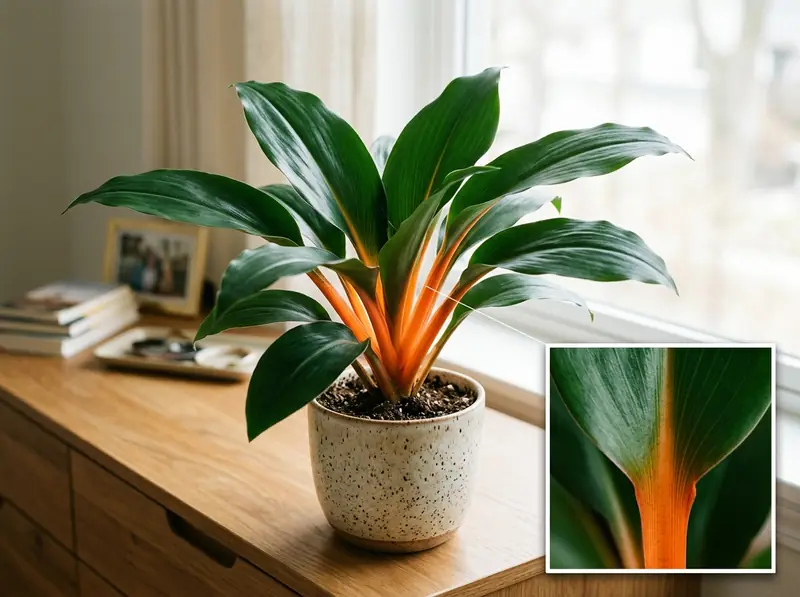
Fire Flash Orange Spider Plant
Chlorophytum orchidastrum 'Fire Flash'
Fire Flash is a compact spider plant relative with glossy, dark green leaves on bright orange stems. It stays under about 18 inches and forms a tidy clump, so it suits a tabletop or shelf. Give it bright, indirect light for the strongest stem color, and keep it above 55°F.
Saving is free with a KinClub account, and it works here and in the KinClub app. Sign up free
Care profile
- Light
- Bright, indirect lightLow → direct sun
- Water
- Moderate wateringAbout every 8 days
- Difficulty
- EasyTricky → easy
- Coldest it tolerates
- 55°F
- Humidity
- Medium
- Mature size
- SmallSmall → tree-size
- Growth rate
- Moderate
- How common
- CommonRare → everywhere
- Plant family
- Asparagaceae
Pets and toxicity
Cats and dogs: not yet checked
Not yet checked against ASPCA — don't assume it's safe for pets.
No toxicity source on record for this plant yet. If a pet eats any houseplant, call your vet or an animal poison helpline.
How to care for Fire Flash Orange Spider Plant
Light
Give it bright, indirect light, such as a spot a few feet from an east or lightly shaded south window, which keeps the orange stems vivid. It tolerates medium light but grows more slowly and the color fades there. Avoid hot direct afternoon sun.
Watering
Water thoroughly when the top inch or two of soil is dry, roughly every 7 to 10 days in the growing season, and let excess drain away. Cut back in winter, when the soil may need 2 weeks or more to dry.
Soil
Use an ordinary well-draining potting mix, ideally with a handful of perlite or bark added per few quarts for better drainage. Make sure the pot has drainage holes.
Feeding
Feed every 4 to 6 weeks in spring and summer with a balanced liquid houseplant fertilizer at half the label strength. Skip feeding in winter.
Repotting
Repot every 1 to 2 years in spring, when the thick roots fill the pot or push up against the surface. Move up just one size, about 1 to 2 inches wider.
Propagation
Divide the clump at repotting time, making sure each piece has a few roots and some leaves. This cultivar rarely makes runners with baby plantlets, so division is the usual method; keep the soil lightly moist until new growth appears.
Common problems
- Brown leaf tips: caused by salts or fluoride in tap water or by dry soil. Use filtered or rainwater and flush the pot occasionally.
- Yellowing leaves and mushy roots: from overwatering or poor drainage. Let the soil dry more between waterings and trim rotted roots when repotting.
- Sticky residue or fine webbing on leaves: signs of pests such as mealybugs, scale or spider mites. Wipe leaves with soapy water or treat with insecticidal soap.
- Floppy, pale growth with faded orange stems: not enough light. Move it to a brighter spot.
Similar plants
Same light needs and difficulty.
 AI-generated
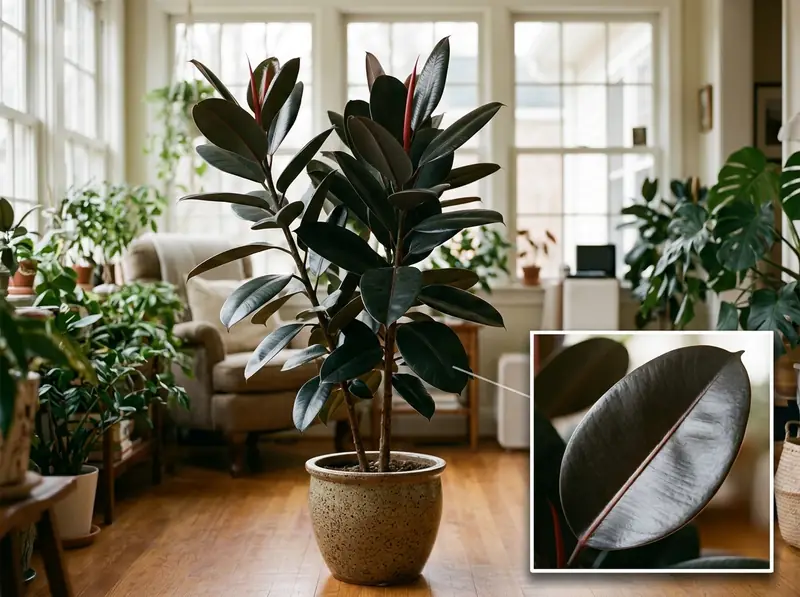
Burgundy Rubber Plant
Ficus elastica 'Burgundy'
- Bright, indirect light
- Moderate watering
Toxic to cats and dogs AI-generated
 AI-generated
Chinese Money Plant
Pilea peperomioides
- Bright, indirect light
- Dry to moderate watering
Pets: not yet checked AI-generated
Christmas Cactus
Schlumbergera × buckleyi
- Bright, indirect light
- Moderate watering
Pets: not yet checked