
 AI-generated
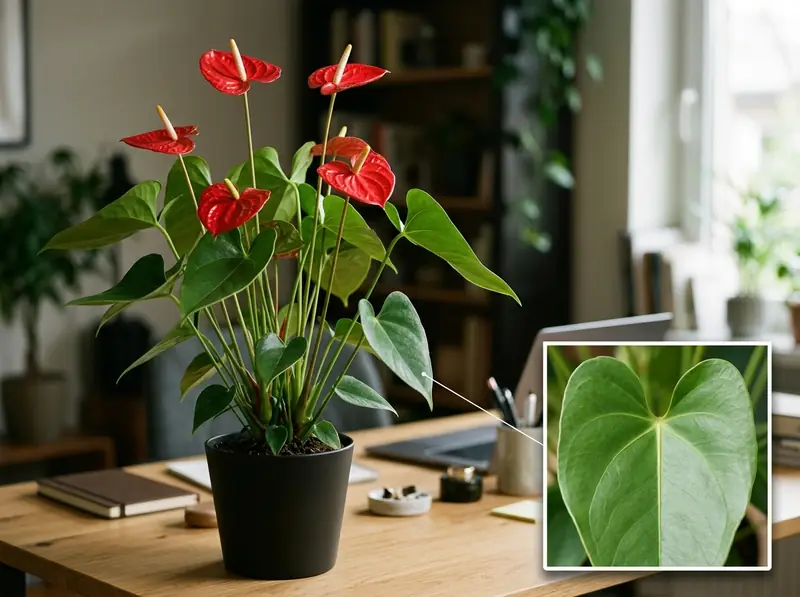
Flamingo Flower
Anthurium andraeanum
Flamingo flower is a tropical plant with glossy, heart-shaped leaves and long-lasting waxy red, pink or white bracts that can bloom for months. It prefers bright indirect light, steady warmth, high humidity and an airy mix that never stays soggy. It suits owners who can give it a little attention.
Saving is free with a KinClub account, and it works here and in the KinClub app. Sign up free
Care profile
- Light
- Bright, indirect lightLow → direct sun
- Water
- Moderate wateringAbout every 7 days
- Difficulty
- ModerateTricky → easy
- Coldest it tolerates
- 60°F
- Humidity
- High
- Mature size
- MediumSmall → tree-size
- Growth rate
- Slow to moderate
- How common
- Very commonRare → everywhere
- Plant family
- Araceae
Pets and toxicity
Cats and dogs: not yet checked
Not yet checked against ASPCA — don't assume it's safe for pets.
No toxicity source on record for this plant yet. If a pet eats any houseplant, call your vet or an animal poison helpline.
How to care for Flamingo Flower
Light
Give bright, indirect light, such as a spot near an east window or a few feet back from a south or west window. Avoid direct midday sun, which scorches leaves and bracts.
Watering
Water when the top 1 to 2 inches of mix feel dry, about once a week in the growing season and less in winter. Water thoroughly until it drains, and empty the saucer.
Soil
Use a chunky, airy mix, such as orchid bark, perlite and peat or coco coir in roughly equal parts. It should hold slight moisture but drain fast.
Feeding
Feed every 4 to 6 weeks in spring and summer with a balanced or bloom-type fertilizer at half the label strength. Skip feeding in winter.
Repotting
Repot every 2 to 3 years in spring, only moving up 1 to 2 inches in pot size, since it blooms best when slightly snug. Keep the crown at soil level, not buried.
Propagation
Divide offsets with their own roots from the parent in spring and pot them separately. Stem cuttings with aerial roots can also root, but it is slower and less reliable.
Common problems
- Brown leaf tips: usually low humidity or salt buildup, so raise humidity with a pebble tray or humidifier and flush the pot with water every few months.
- Yellow leaves: often overwatering or poor drainage, so let the top inch dry and check that the pot drains.
- No flowers: usually too little light, so move to a brighter spot out of direct sun and feed lightly.
- Sticky residue or cottony white clusters: mealybugs or scale, so wipe with rubbing alcohol on a cotton swab and repeat weekly.
Similar plants
Same light needs and difficulty.
 AI-generated
 AI-generated
 AI-generated
 AI-generated