
 AI-generated
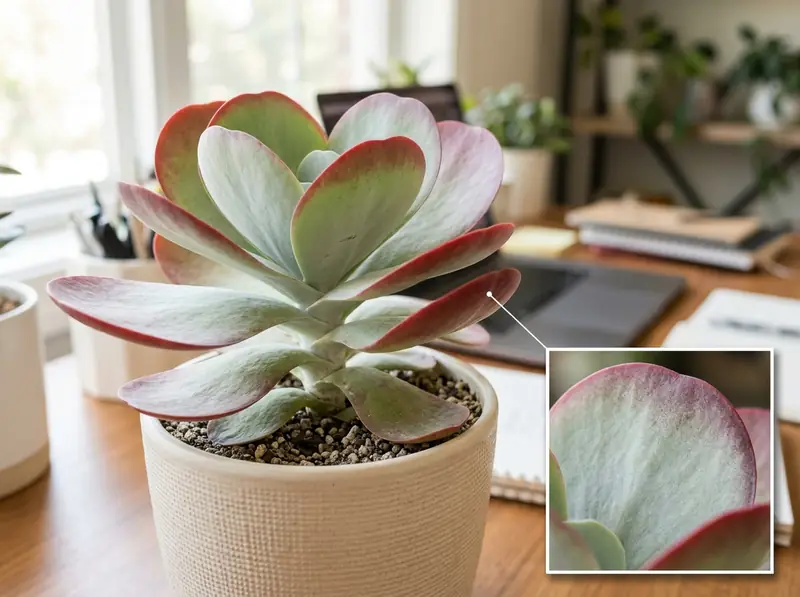
Flapjacks
Kalanchoe luciae
Flapjacks (Kalanchoe luciae) forms a rosette of thick, rounded, paddle-shaped leaves with a dusty white coating. In bright light the edges blush red. It is a forgiving, slow-growing succulent for a sunny windowsill, as long as you let the soil dry between waterings.
Saving is free with a KinClub account, and it works here and in the KinClub app. Sign up free
Care profile
- Light
- Direct sunLow → direct sun
- Water
- Let it dry outAbout every 14 days
- Difficulty
- EasyTricky → easy
- Coldest it tolerates
- 50°F
- Humidity
- Low
- Mature size
- SmallSmall → tree-size
- Growth rate
- Slow to moderate
- How common
- CommonRare → everywhere
- Plant family
- Crassulaceae
Pets and toxicity
Toxic to cats
Keep away from cats. Call your vet or a pet poison helpline if a cat chews it.
Toxic to dogs
Keep away from dogs. Call your vet or a pet poison helpline if a dog chews it.
Source: ASPCA toxic and non-toxic plants. If a pet eats any houseplant, call your vet or an animal poison helpline.
How to care for Flapjacks
Light
Give it several hours of bright light, including some direct sun from a south or west window. Strong light brings out the red edges on the paddles, while a dim spot makes it stretch.
Watering
Soak the soil thoroughly, then let it dry out almost completely before watering again. This is usually every 2 to 3 weeks in summer and every 4 to 6 weeks in winter.
Soil
Use a gritty cactus or succulent mix, or add about one part perlite or coarse sand to one part regular potting mix. The pot must have a drainage hole.
Feeding
Feed with a diluted cactus fertilizer at half strength once a month in spring and summer. Skip feeding in fall and winter.
Repotting
Repot every 2 to 3 years, in spring, into a pot only 1 to 2 inches wider. Handle it carefully, because the paddles break off easily.
Propagation
Twist off a healthy leaf or take a stem cutting and let it callus for a few days. Lay it on dry succulent mix and mist lightly once roots form. Plantlets also sprout from the base after the plant flowers and dies back.
Common problems
- Leggy, stretched growth means too little light, so move it to a sunnier window. Existing stems won't shrink back.
- Soft, mushy paddles or a blackened base mean rot. Stop watering, and cut off healthy parts to re-root if the stem is affected.
- White cottony clusters in the leaf joints are mealybugs. Dab them with a cotton swab dipped in rubbing alcohol.
- The main rosette dies after flowering, which is normal. Keep the offsets that grow at the base.
- Fingerprints and scratches on the white powdery coating are permanent, so handle the plant as little as possible.
Similar plants
Same light needs and difficulty.
 AI-generated
 AI-generated
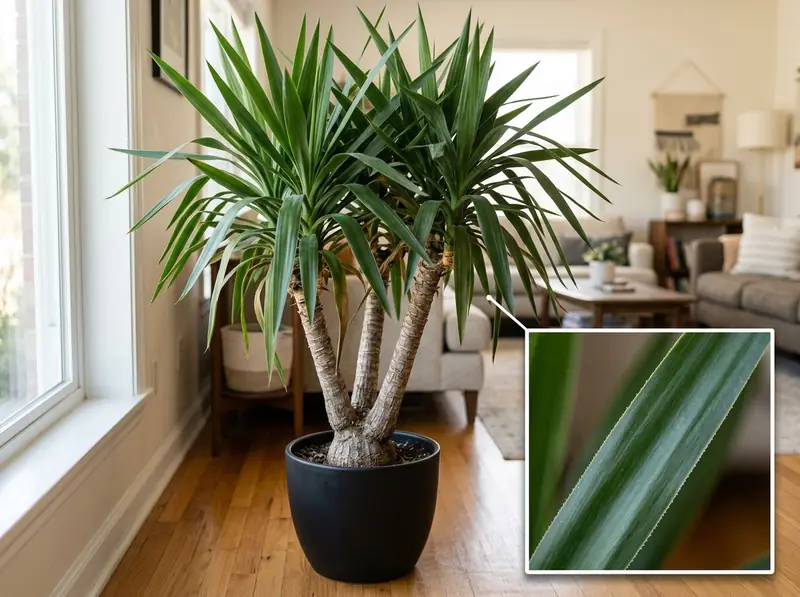
Spineless Yucca
Yucca elephantipes
- Bright, indirect to direct sun
- Let it dry out
Toxic to cats and dogs AI-generated
 AI-generated