
 AI-generated
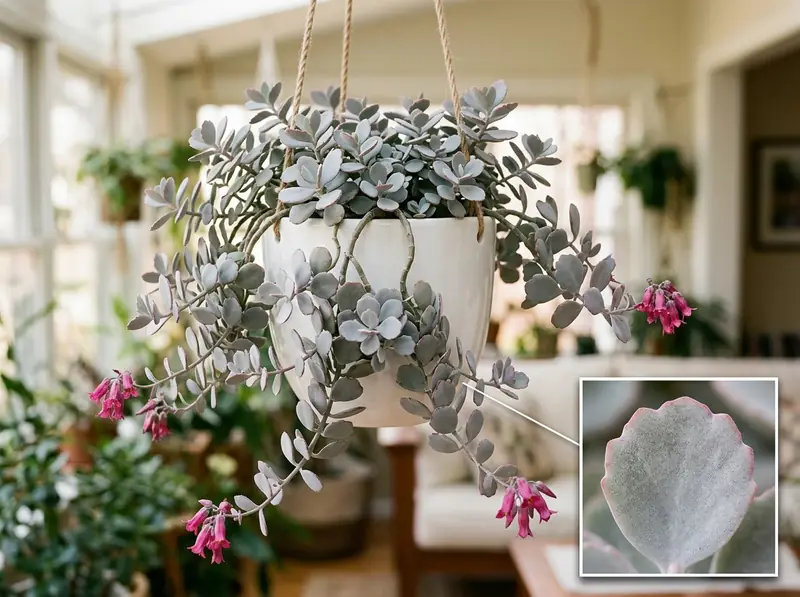
Flower Dust Plant
Kalanchoe pumila
Also known as Kalanchoe brevicaulis, Kalanchoe multiceps
Flower Dust Plant is a compact, trailing succulent from Madagascar with silvery, powder-coated leaves edged in pink. In late winter to spring it produces small magenta-pink flowers. It is easy to grow on a sunny windowsill or in a hanging basket if you let the soil dry between waterings.
Saving is free with a KinClub account, and it works here and in the KinClub app. Sign up free
Care profile
- Light
- Direct sunLow → direct sun
- Water
- Let it dry outAbout every 14 days
- Difficulty
- EasyTricky → easy
- Coldest it tolerates
- 50°F
- Humidity
- Low
- Mature size
- SmallSmall → tree-size
- Growth rate
- Moderate
- How common
- CommonRare → everywhere
- Plant family
- Crassulaceae
Pets and toxicity
Toxic to cats
Keep away from cats. Call your vet or a pet poison helpline if a cat chews it.
Toxic to dogs
Keep away from dogs. Call your vet or a pet poison helpline if a dog chews it.
Source: ASPCA toxic and non-toxic plants. If a pet eats any houseplant, call your vet or an animal poison helpline.
How to care for Flower Dust Plant
Light
Give it at least 4 hours of bright light, including some direct sun, such as a south or west window. Bright light keeps the leaves silvery with pink edges and the plant compact.
Watering
Soak the soil thoroughly, then let it dry out almost completely before watering again, usually every 2 to 3 weeks in the growing season. Water sparingly, about once a month, in winter.
Soil
Use a gritty cactus or succulent mix, or ordinary potting mix blended with about one-third perlite or coarse sand. The pot must have drainage holes.
Feeding
Feed with a half-strength cactus or balanced liquid fertilizer once a month in spring and summer. Skip feeding in fall and winter.
Repotting
Repot every 2 to 3 years in spring, only when roots fill the pot, into a container just 1 to 2 inches wider. Shallow pots suit its small root system.
Propagation
Take a stem cutting or pluck a leaf, let the cut end callus for 1 to 2 days, then lay it on or push it into barely damp gritty mix. Roots usually form in 2 to 4 weeks.
Common problems
- Leggy, sparse stems: too little light. Move to a sunnier window and trim back stems to encourage branching.
- Soft, mushy leaves and stems: overwatering or poor drainage. Let the soil dry fully, and repot into gritty mix if rot has started.
- Cottony white clusters in leaf joints: mealybugs. Dab with a cotton swab dipped in rubbing alcohol and repeat weekly.
- Leaves drop after a cold night or draft: keep it above 50°F and away from cold glass in winter.
- Wilted or shriveled leaves: soil has been dry too long. Give a thorough soak and resume regular watering.
Similar plants
Same light needs and difficulty.
 AI-generated
 AI-generated
 AI-generated
 AI-generated
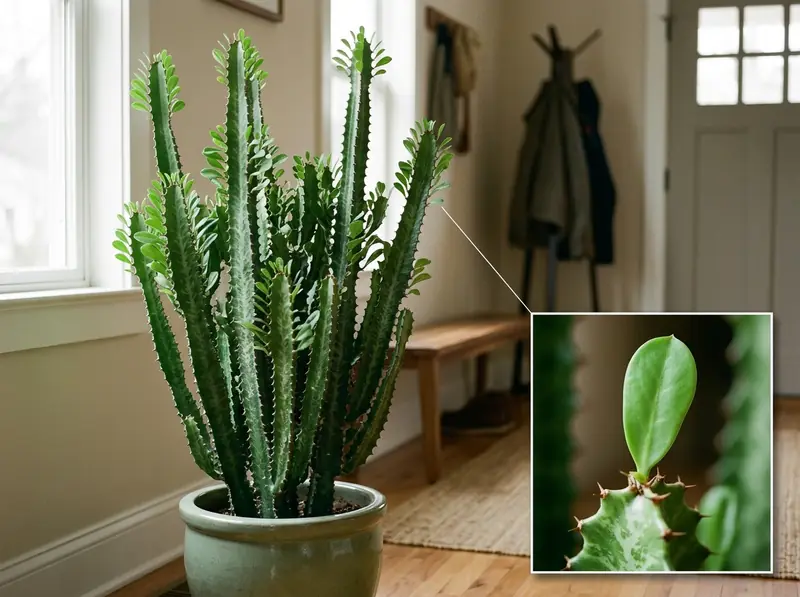
African Milk Tree
Euphorbia trigona
- Bright, indirect to direct sun
- Let it dry out
Pets: not yet checked