
 AI-generated
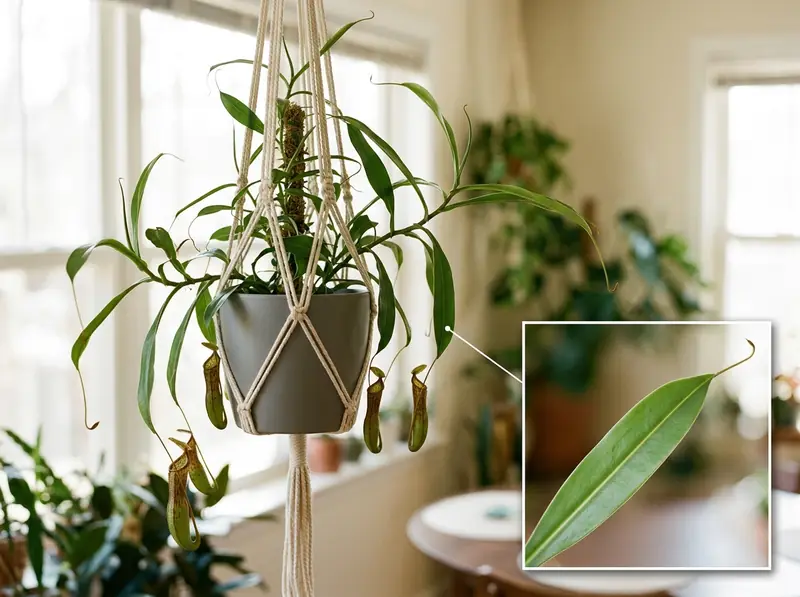
Fusca Pitcher Plant
Nepenthes fusca
Nepenthes fusca is a small Borneo climber with slender, narrow-lidded pitchers that start out low and tubular. It does best with high humidity and a modest night-time cooldown, so it suits a bright window with a humidifier or a terrarium.
Saving is free with a KinClub account, and it works here and in the KinClub app. Sign up free
Care profile
- Light
- Bright, indirect lightLow → direct sun
- Water
- Keep moistAbout every 3 days
- Difficulty
- ModerateTricky → easy
- Coldest it tolerates
- 50°F
- Humidity
- High
- Mature size
- Medium to largeSmall → tree-size
- Growth rate
- Moderate
- How common
- RareRare → everywhere
- Plant family
- Nepenthaceae
Pets and toxicity
Cats and dogs: not yet checked
Not yet checked against ASPCA — don't assume it's safe for pets.
No toxicity source on record for this plant yet. If a pet eats any houseplant, call your vet or an animal poison helpline.
How to care for Fusca Pitcher Plant
Light
Bright indirect light, such as an east window or a spot a few feet back from a south window, or about 12 hours under a strong grow light. Gentle morning sun is fine; hot midday sun scorches the leaves.
Watering
Keep the media evenly damp but never swampy, roughly every 3 days or when the surface starts to dry. Water with rain, distilled, or reverse-osmosis water only, because minerals in tap water build up and brown the leaf tips.
Soil
Use a nutrient-poor, airy mix: long-fiber sphagnum moss with about a third perlite or orchid bark. Avoid ordinary potting soil and added fertilizer granules, which burn the roots.
Feeding
Skip fertilizer in the pot. Once a month, mist the leaves lightly with orchid fertilizer diluted to quarter strength, or drop a few fish-food flakes or a small insect into a pitcher.
Repotting
Repot every 1 to 2 years in spring into fresh sphagnum and perlite, using a pot only 1 to 2 inches wider. Handle the fine roots gently and keep the plant in the shade for a week afterward.
Propagation
Take 3 to 4 inch stem cuttings with at least two leaves, dip in rooting hormone, and root in damp sphagnum under a clear dome. Expect 6 to 12 weeks, and a rooted cutting sulks for a while.
Common problems
- Leaves with no pitchers: raise humidity above 60 percent and add more light, and make sure nights run a few degrees cooler than days.
- Black leaf tips are common from dry air or mineral-heavy water; switch to rain or distilled water and mist or use a humidifier.
- Aphids and thrips cluster on new growth; rinse them off and treat with insecticidal soap.
Similar plants
Same light needs and difficulty.
 AI-generated
 AI-generated
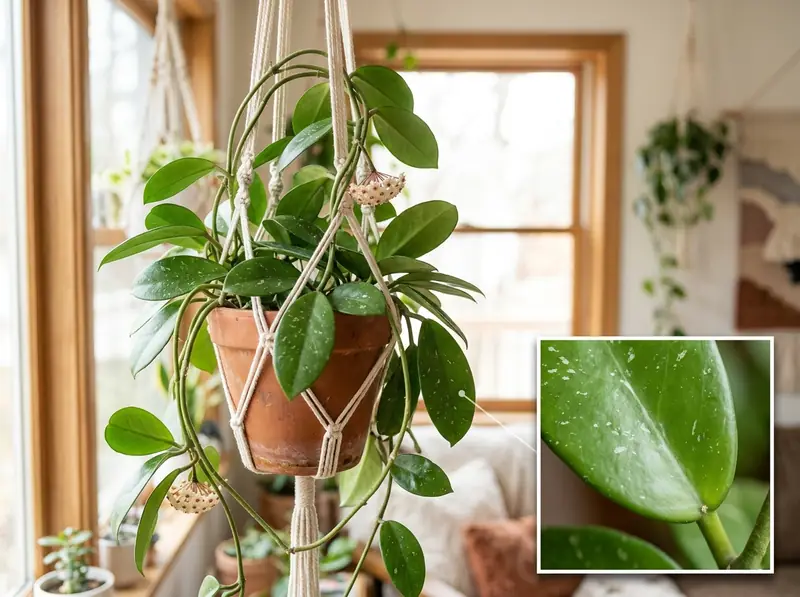
Crassipetiolata Hoya
Hoya crassipetiolata
- Bright, indirect light
- Dry to moderate watering
Pets: not yet checked AI-generated
 AI-generated