AI-generated image, not a photograph of this plant. Real plants look different depending on light, soil, temperature and age.
DroseraceaeRare in stores
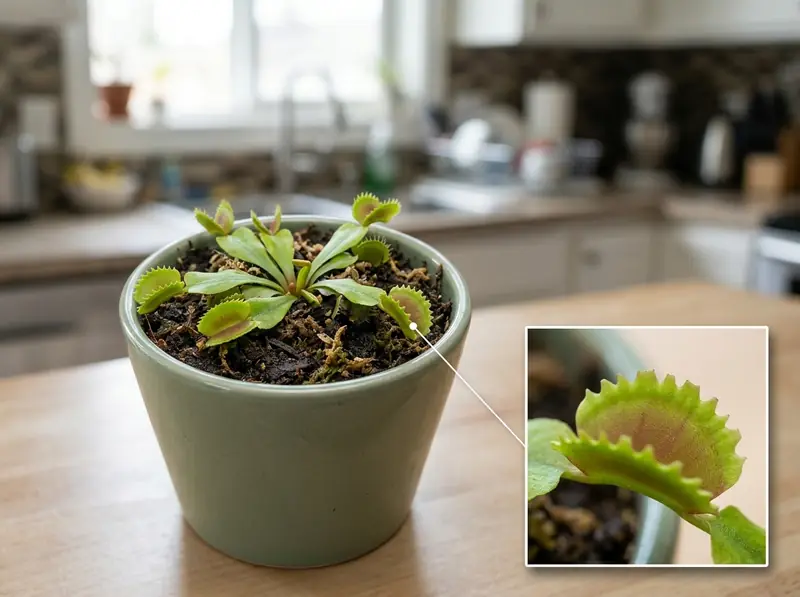
Fused Tooth Flytrap
Dionaea muscipula 'Fused Tooth'
'Fused Tooth' is a Venus flytrap cultivar whose marginal teeth are fused together into broad plates, so the trap edges look like short, blunt flaps. It is slower to produce new traps than typical forms but is otherwise grown like any flytrap.
Non-toxic to cats and dogs
💡
Saving is free with a KinClub account, and it works here and in the KinClub app. Sign up free
Give 4 to 6 hours of direct sun daily, such as an unobstructed south window, or a strong full-spectrum grow light about 6 inches above the plant for 12 to 14 hours.
Watering
Use only distilled, rainwater or reverse-osmosis water. Stand the pot in 1 inch of water through spring and summer and let the tray run dry briefly before refilling; in winter keep the soil just damp.
Soil
Use a nutrient-free mix of 1 part peat moss to 1 part perlite or silica sand, in a plastic pot with drainage holes. Never use regular potting soil or fertilizer.
Feeding
Do not fertilize. A plant outdoors or by a sunny window catches enough insects; if it cannot, feed one small live or rehydrated insect per trap now and then.
Repotting
Repot every year or two in late winter before growth starts, into fresh peat and perlite. Divide the rhizome clumps at the same time to make new plants.
Propagation
Divide offset rosettes from the rhizome in spring, or pull a whole leaf with its white base and lay it on damp sphagnum under bright light; new plantlets take months.
Common problems
Black traps are normal aging, and each trap dies after 3 to 5 closures; trim black leaves and keep growing.
Winter dormancy is required: from November to February keep it at 35 to 50 F in bright light, with damp soil, or it declines within two years.
Aphids and fungus gnats show up on soft growth; rinse aphids off and use yellow sticky cards for gnats, avoiding systemic insecticides.
Mineral buildup from tap water browns the roots; flush the pot with distilled water and switch to pure water.
Cut off flower stalks in spring to save the plant energy for traps, unless you want seed.

 AI-generated
 AI-generated
 AI-generated
 AI-generated
 AI-generated