
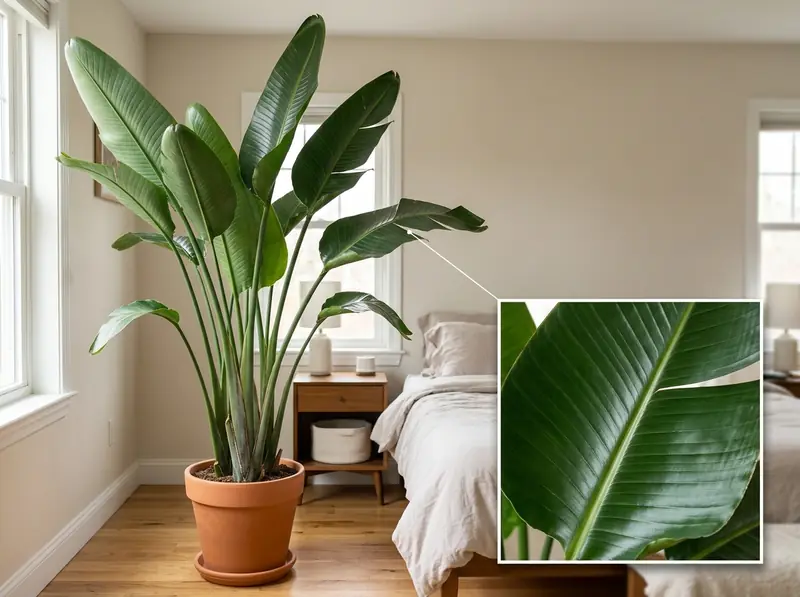
 AI-generated
Giant White Bird of Paradise
Strelitzia nicolai
Giant White Bird of Paradise is a bold, banana-like floor plant that can reach 6 feet or more indoors with large paddle leaves. It needs lots of bright light, regular deep watering, and room to grow. Leaf splitting is normal, and indoor plants rarely flower.
Saving is free with a KinClub account, and it works here and in the KinClub app. Sign up free
Care profile
- Light
- Bright, indirect to direct sunLow → direct sun
- Water
- Moderate wateringAbout every 7 days
- Difficulty
- Easy to moderateTricky → easy
- Coldest it tolerates
- 50°F
- Humidity
- Medium to high
- Mature size
- Tree-sizeSmall → tree-size
- Growth rate
- Fast
- How common
- Very commonRare → everywhere
- Plant family
- Strelitziaceae
Pets and toxicity
Cats and dogs: not yet checked
Not yet checked against ASPCA — don't assume it's safe for pets.
No toxicity source on record for this plant yet. If a pet eats any houseplant, call your vet or an animal poison helpline.
How to care for Giant White Bird of Paradise
Light
Give it as much bright light as you can: a spot near a south- or west-facing window with a few hours of gentle direct sun is ideal. It tolerates medium light but grows slowly and leans toward the window, so turn the pot a quarter turn every week or two.
Watering
Water thoroughly when the top 2 inches of soil are dry, roughly every 7 days in summer, until water runs from the drainage holes. Empty the saucer, and water less often in winter, about every 10 to 14 days.
Soil
Use a rich, well-draining potting mix, such as standard indoor mix with about 20 percent perlite or orchid bark added. The pot must have drainage holes and be heavy or wide enough to stop the plant tipping over.
Feeding
Feed every 2 to 4 weeks from spring through summer with a balanced liquid houseplant fertilizer at half the label strength. Stop or cut back to every 6 to 8 weeks in winter.
Repotting
Repot every 2 to 3 years in spring, going up only 2 inches in pot diameter, when roots circle the pot or push out of the drainage holes. Mature plants can stay in the same pot if you refresh the top few inches of soil each year.
Propagation
Divide clumps in spring by separating a section of stems with its own roots and fans, using a clean sharp knife. Seed is possible but very slow, and plants divided this way often sulk for a few months.
Common problems
- Split leaves: this is natural and worsened by wind, low humidity, and brushing; move it away from drafts and vents and accept some splitting.
- Brown, crispy leaf edges: usually dry air or irregular watering; water deeply and evenly and mist or use a humidifier if the room is very dry.
- Yellow lower leaves: often overwatering or old leaves dying off; check that the soil dries on top between waterings and trim the old stems at the base.
- Sticky residue or fine webbing on leaves: scale or spider mites; wipe the leaves with soapy water and treat with insecticidal soap every 7 days for a few weeks.
- Leaves that curl tightly: thirst or root-bound roots; soak the pot thoroughly and repot if roots fill the container.
Similar plants
Same light needs and difficulty.
 AI-generated
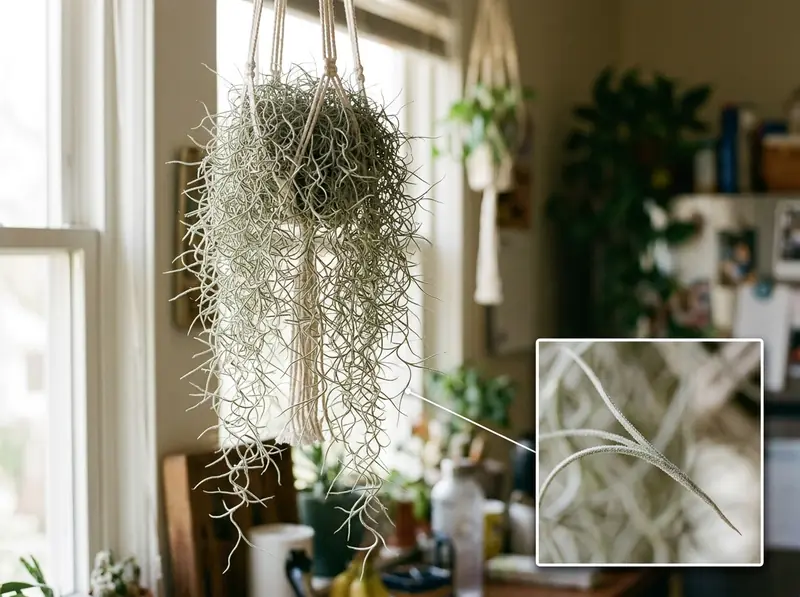 AI-generated
Spanish Moss
Tillandsia usneoides
- Bright, indirect light
- Moderate to moist watering
Pets: not yet checked AI-generated
 AI-generated