
 AI-generated
Ginseng Ficus
Ficus microcarpa 'Ginseng'
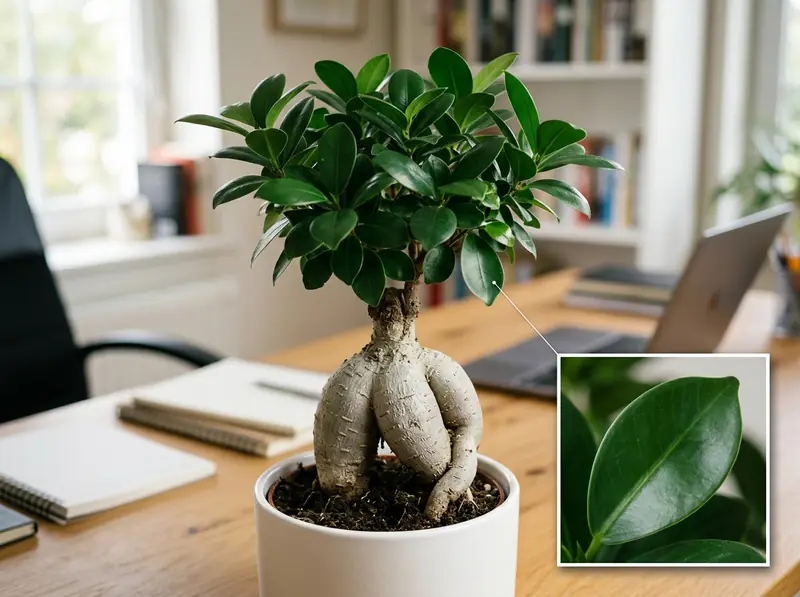
Ginseng ficus is a bonsai-like form of Ficus microcarpa with a thick, swollen, bulbous root-trunk topped by a small canopy of glossy green leaves. It is usually kept as a compact tabletop plant and grows slowly, so it stays far smaller than the species indoors. Give it bright indirect light and a steady spot, and water only once the top inch or two of soil has dried.
Saving is free with a KinClub account, and it works here and in the KinClub app. Sign up free
Care profile
- Light
- Bright, indirect lightLow → direct sun
- Water
- Moderate wateringAbout every 10 days
- Difficulty
- Easy to moderateTricky → easy
- Coldest it tolerates
- 50°F
- Humidity
- Medium
- Mature size
- MediumSmall → tree-size
- Growth rate
- Slow
- How common
- CommonRare → everywhere
- Plant family
- Moraceae
Pets and toxicity
Toxic to cats
Keep away from cats. Call your vet or a pet poison helpline if a cat chews it.
Toxic to dogs
Keep away from dogs. Call your vet or a pet poison helpline if a dog chews it.
Source: ASPCA toxic and non-toxic plants. If a pet eats any houseplant, call your vet or an animal poison helpline.
How to care for Ginseng Ficus
Light
Give it bright light, ideally a few hours of gentle morning sun or a spot close to an east or south window with a sheer curtain. It tolerates medium light but grows thinner and drops more leaves there.
Watering
Water thoroughly when the top 1-2 inches of soil are dry, until water runs from the drainage holes, then empty the saucer. This is usually every 7-14 days in summer and less often in winter.
Soil
Use a well-draining peat- or coir-based potting mix with about 20-30% perlite or bark added. The pot must have drainage holes.
Feeding
Feed every 2-4 weeks from spring to early autumn with a balanced liquid houseplant fertilizer at half the label strength. Stop or reduce in winter.
Repotting
Repot every 2-3 years in spring when roots circle the pot or poke out of the drainage holes, moving up only 1-2 inches in pot diameter. Wear gloves, as the milky sap can irritate skin.
Propagation
Take 4-6 inch stem cuttings in spring or summer, let the sticky sap dry briefly, then root in moist potting mix with bottom warmth and high humidity. Rooting takes several weeks and is not always reliable.
Common problems
- Sudden leaf drop after a move or draft: keep it in a steady spot away from vents and doors, and it will usually regrow leaves.
- Yellow leaves with constantly wet soil: let the soil dry more between waterings and check the roots for rot.
- Fine webbing and stippled leaves mean spider mites: rinse the plant, wipe leaves, and use insecticidal soap weekly for a few weeks.
- Brown, bumpy bumps on stems or leaf undersides are scale: scrape or dab with rubbing alcohol and treat repeatedly.
- Leggy growth from low light: move it closer to a bright window and prune back to encourage branching.
Similar plants
Same light needs and difficulty.
 AI-generated
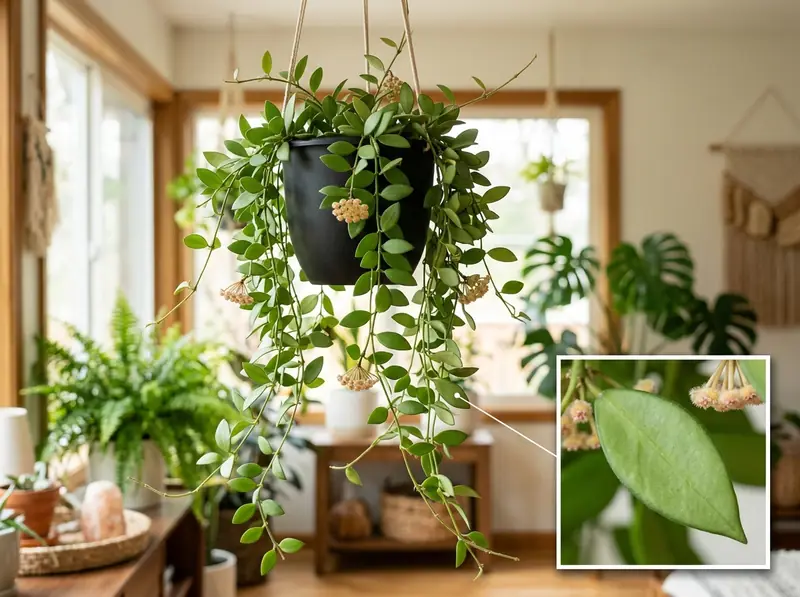
Heuschkeliana Hoya
Hoya heuschkeliana
- Bright, indirect light
- Dry to moderate watering
Pets: not yet checked AI-generated
 AI-generated
 AI-generated