
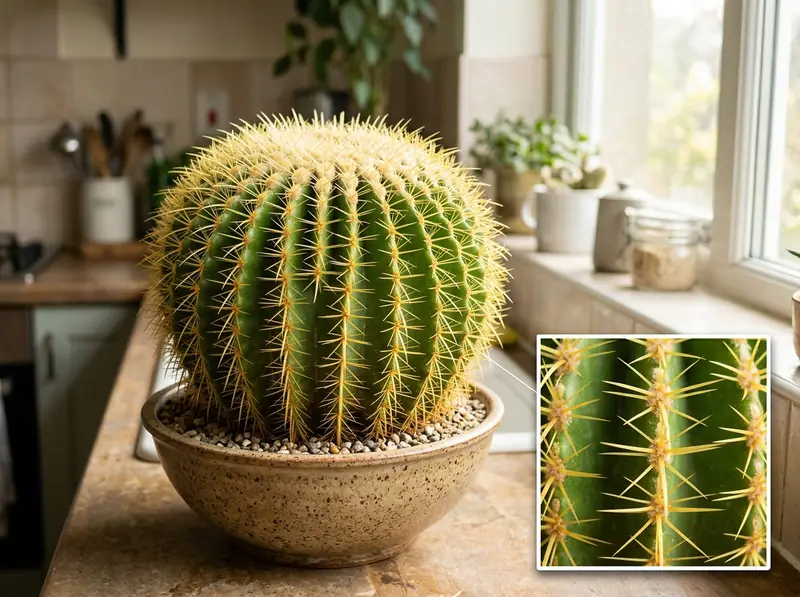
 AI-generated
Golden Barrel Cactus
Echinocactus grusonii
Golden barrel cactus is a slow-growing, round, ribbed cactus covered in golden spines. It needs a sunny spot, gritty fast-draining soil and infrequent watering, with a dry, cool rest in winter. It is easy to keep as long as it is never left in wet soil.
Saving is free with a KinClub account, and it works here and in the KinClub app. Sign up free
Care profile
- Light
- Direct sunLow → direct sun
- Water
- Let it dry outAbout every 21 days
- Difficulty
- EasyTricky → easy
- Coldest it tolerates
- 40°F
- Humidity
- Low
- Mature size
- Small to mediumSmall → tree-size
- Growth rate
- Slow
- How common
- Very commonRare → everywhere
- Plant family
- Cactaceae
Pets and toxicity
Cats and dogs: not yet checked
Not yet checked against ASPCA — don't assume it's safe for pets.
No toxicity source on record for this plant yet. If a pet eats any houseplant, call your vet or an animal poison helpline.
How to care for Golden Barrel Cactus
Light
Give it at least 4-6 hours of direct sun daily, ideally in a south- or west-facing window. Introduce it gradually to stronger sun to avoid scorching, and use a grow light if the window is dim.
Watering
From spring to early autumn, soak the soil thoroughly every 2-4 weeks, only once it is completely dry. In winter, water very little or not at all (about once every 6-8 weeks at most) while it rests in a cool spot.
Soil
Use a gritty cactus mix, with extra perlite or pumice added to make roughly half the mix mineral grit. Use a pot with a drainage hole, ideally unglazed terracotta.
Feeding
Feed with a low-nitrogen cactus fertilizer at half strength about once a month in spring and summer. Do not feed in autumn and winter.
Repotting
Repot every 2-4 years in spring, only when it fills its pot, into a pot 1-2 inches wider. Wear thick gloves or use folded newspaper to handle it, and wait about a week after repotting before watering.
Propagation
It is grown from seed, which is slow and needs warmth and patience. It rarely produces offsets, so most home growers buy a plant instead of propagating.
Common problems
- Soft, dark, mushy base from rot: stop watering, and if the rot is limited, cut out the damaged tissue, let it dry for a week and repot in fresh dry mix; severe rot usually cannot be saved.
- Stretched, pale, thin new growth: move it to a much sunnier spot or add a grow light; existing stretched growth will not shrink back.
- Brown corky scars or bleached patches from sunburn: move it gradually into sun and avoid sudden changes; scars are permanent but harmless.
- White cottony mealybugs or brown scale bumps between the ribs and spines: dab with cotton swabs dipped in rubbing alcohol and repeat weekly until gone.
Similar plants
Same light needs and difficulty.
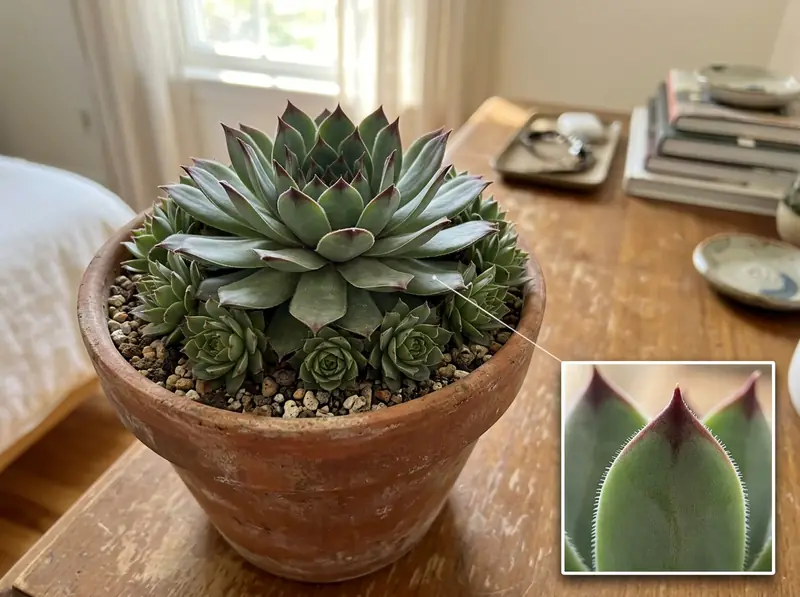 AI-generated
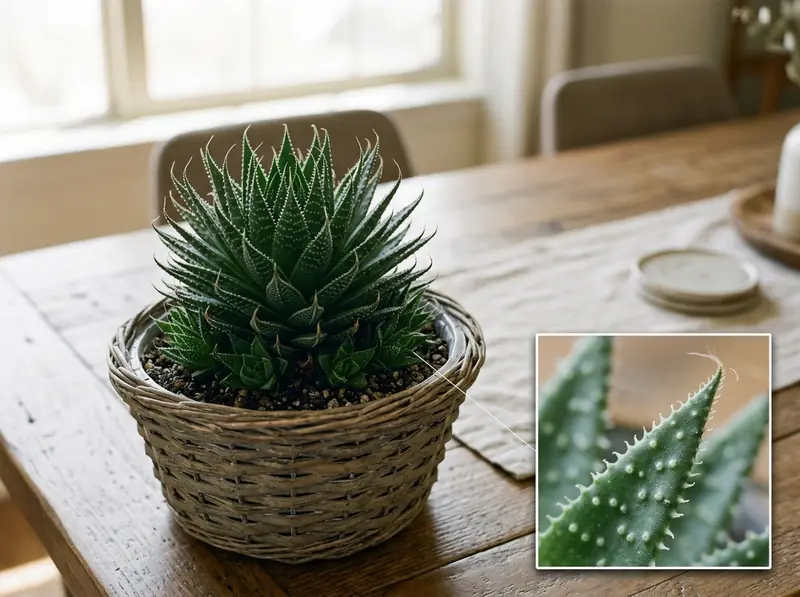 AI-generated
 AI-generated
 AI-generated