
 AI-generated
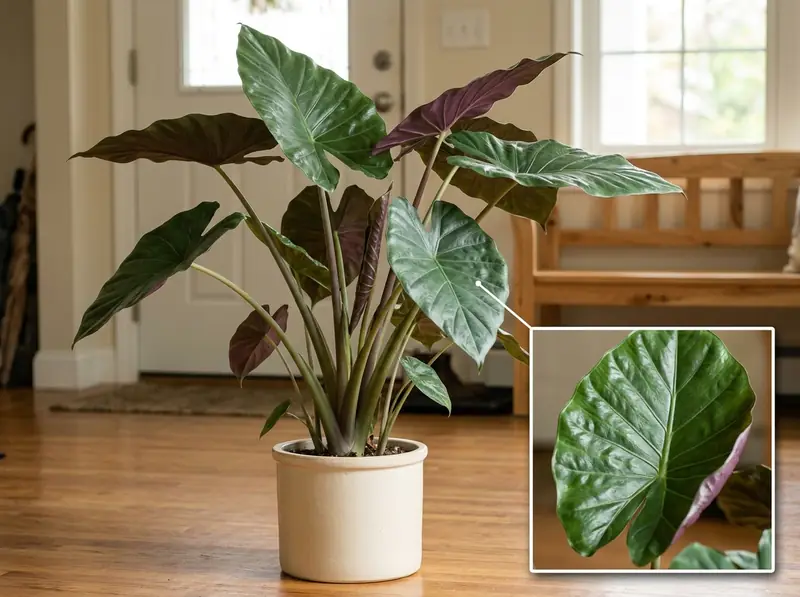
Hardy Elephant Ear
Alocasia wentii
Hardy Elephant Ear (Alocasia wentii) has glossy, dark green leaves with purplish undersides, held on sturdy upright stems. It does best in bright, indirect light with evenly moist but never soggy soil. It may die back in cool winter conditions, then regrow from the tuber in spring.
Saving is free with a KinClub account, and it works here and in the KinClub app. Sign up free
Care profile
- Light
- Bright, indirect lightLow → direct sun
- Water
- Moderate wateringAbout every 7 days
- Difficulty
- ModerateTricky → easy
- Coldest it tolerates
- 55°F
- Humidity
- Medium to high
- Mature size
- Medium to largeSmall → tree-size
- Growth rate
- Moderate
- How common
- CommonRare → everywhere
- Plant family
- Araceae
Pets and toxicity
Toxic to cats
Keep away from cats. Call your vet or a pet poison helpline if a cat chews it.
Toxic to dogs
Keep away from dogs. Call your vet or a pet poison helpline if a dog chews it.
Source: ASPCA toxic and non-toxic plants. If a pet eats any houseplant, call your vet or an animal poison helpline.
How to care for Hardy Elephant Ear
Light
Give bright, indirect light, such as a spot near an east window or a few feet back from a south or west window. Avoid strong direct afternoon sun, which scorches the leaves.
Watering
Water when the top inch or two of soil feels dry, about once a week in the growing season. Water thoroughly until it drains, then empty the saucer. Reduce watering in winter.
Soil
Use a chunky, well-draining potting mix, such as standard houseplant soil with about one-third perlite or orchid bark added. The pot must have drainage holes.
Feeding
Feed every 2 to 4 weeks in spring and summer with a balanced liquid fertilizer at half the label strength. Stop feeding in fall and winter.
Repotting
Repot every 1 to 2 years in spring, moving up only 1 to 2 inches in pot diameter, or when roots fill the pot. Handle the tubers and roots gently.
Propagation
Divide offsets with their own roots or tubers from the base in spring, and pot each in fresh mix. Keep them warm and lightly moist until new growth appears.
Common problems
- Yellowing lower leaves are often from overwatering; let the top inch or two of soil dry out and check drainage.
- Brown, crispy leaf edges point to dry air or irregular watering; water more evenly and group the plant with others or use a humidifier.
- Fine webbing and speckled leaves indicate spider mites; wipe the leaves and treat with insecticidal soap every 7 days.
- Leaves dying back in cool winter weather is normal dormancy; water sparingly and wait for spring growth.
Similar plants
Same light needs and difficulty.
 AI-generated
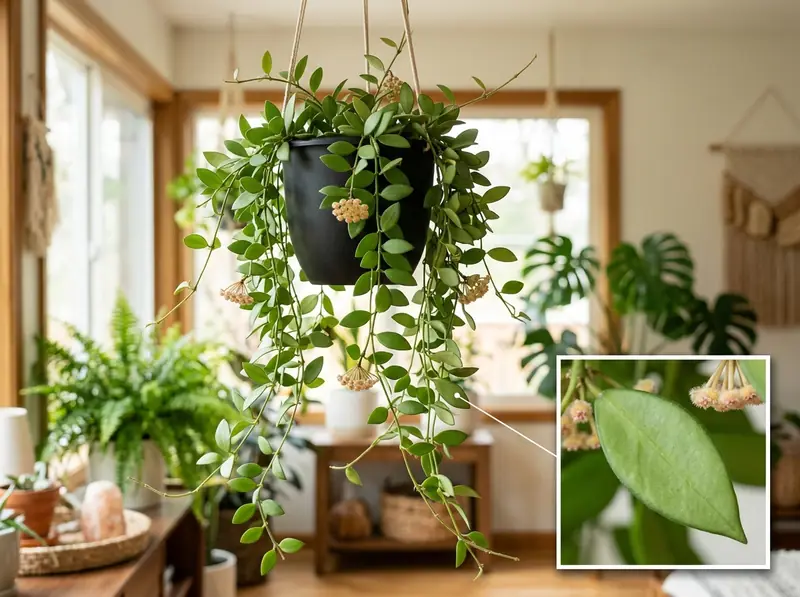
Heuschkeliana Hoya
Hoya heuschkeliana
- Bright, indirect light
- Dry to moderate watering
Pets: not yet checked AI-generated
 AI-generated
 AI-generated