
 AI-generated
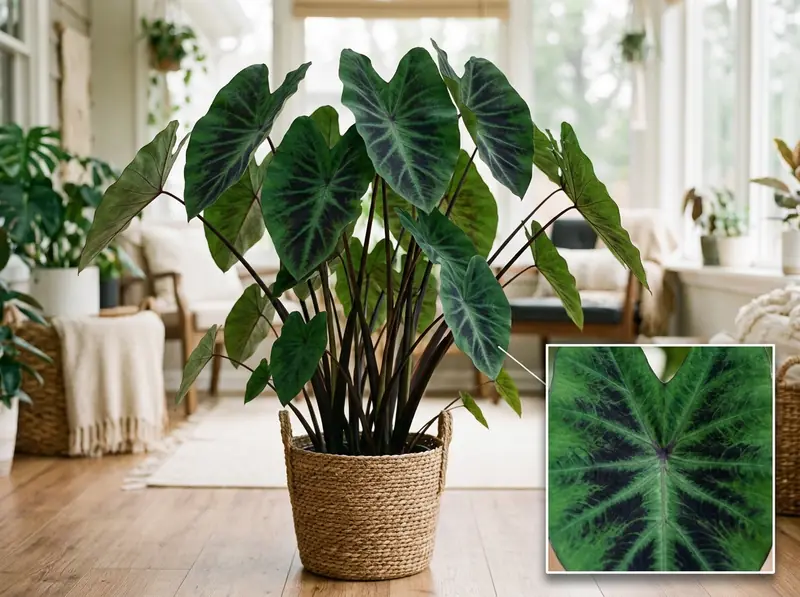
Illustris Elephant Ear
Colocasia 'Illustris'
'Illustris' is a Colocasia elephant ear with big, arrowhead leaves in deep green marked with a black-purple network along the veins. It reaches 3 to 4 feet in a big pot, grows fast and needs constant moisture and warmth.
Saving is free with a KinClub account, and it works here and in the KinClub app. Sign up free
Care profile
- Light
- Bright, indirect lightLow → direct sun
- Water
- Keep moistAbout every 5 days
- Difficulty
- ModerateTricky → easy
- Coldest it tolerates
- 50°F
- Humidity
- High
- Mature size
- LargeSmall → tree-size
- Growth rate
- Fast
- How common
- RareRare → everywhere
Pets and toxicity
Cats and dogs: not yet checked
Not yet checked against ASPCA — don't assume it's safe for pets.
No toxicity source on record for this plant yet. If a pet eats any houseplant, call your vet or an animal poison helpline.
How to care for Illustris Elephant Ear
Light
Bright light with some morning sun, or a bright spot away from hot afternoon sun. Strong light keeps the dark leaf color; deep shade makes it stretch.
Watering
Keep the soil evenly moist and never let it dry out in the growing season; this tuber loves wet feet. Water about every 4 to 6 days in spring and summer, and much less in winter when it slows.
Soil
Use a rich, moisture-retentive potting mix with some compost and a handful of perlite, in a pot with drainage holes.
Feeding
Feed every 2 to 3 weeks in spring and summer with a balanced liquid fertilizer at half strength; it is a heavy feeder. Skip in winter.
Repotting
Repot yearly in spring into a pot 2 inches wider, or divide the tubers when it is crowded.
Propagation
Divide the tubers or separate offsets (pups) in spring, and pot each with at least one shoot. Rooting is easy in moist soil.
Common problems
- Spider mites thrive on dry indoor air; wipe the undersides of the leaves and raise humidity.
- Leaves dying back in winter is normal dormancy; reduce water and let it rest, then resume in spring.
- Brown crispy edges mean low humidity or dry soil; mist, group plants, or add a humidifier.
- Cold drafts below about 50 F cause leaf collapse.
Similar plants
Same light needs and difficulty.
 AI-generated
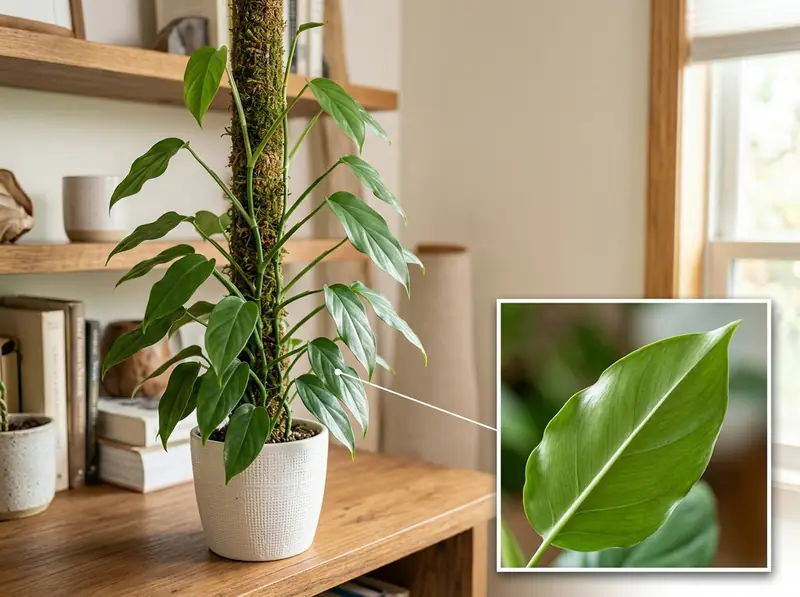
Zippelianum Amydrium
Amydrium zippelianum
- Bright, indirect light
- Moderate watering
Pets: not yet checked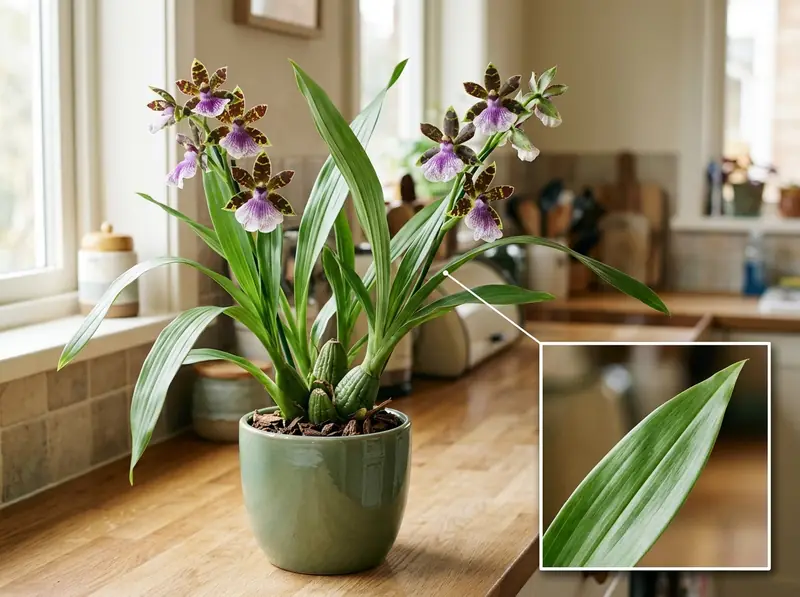 AI-generated
Zygo Orchid
Zygopetalum hybrids
- Bright, indirect light
- Moderate to moist watering
Pets: not yet checked AI-generated
 AI-generated