AI-generated image, not a photograph of this plant. Real plants look different depending on light, soil, temperature and age.
OrchidaceaeEnthusiast in stores
Zygo Orchid
Zygopetalum hybrids
Zygo orchids are prized for their fragrant, boldly marked flowers in shades of green, purple and white, usually in autumn and winter. They like bright indirect light, cool nights and even moisture with sharp drainage. They are a bit more demanding than a Phalaenopsis but reward attention with long-lasting blooms.
Pets: not yet checked
💡
Saving is free with a KinClub account, and it works here and in the KinClub app. Sign up free
🪴 Care profile
Light
Bright, indirect lightLow → direct sun
Water
Moderate to moist wateringAbout every 7 days
Difficulty
ModerateTricky → easy
Coldest it tolerates
50°F
Humidity
Medium to high
Mature size
MediumSmall → tree-size
Growth rate
Moderate
How common
EnthusiastRare → everywhere
Plant family
Orchidaceae
🐾 Pets and toxicity
Cats and dogs: not yet checked
Not yet checked against ASPCA — don't assume it's safe for pets.
No toxicity source on record for this plant yet. If a pet eats any houseplant, call your vet or an animal poison helpline.
🌿 How to care for Zygo Orchid
Light
Give bright, filtered light such as an east window or a south or west window with a sheer curtain. Leaves should be light to medium green; avoid hot direct midday sun, which scorches the broad leaves.
Watering
Water thoroughly when the top inch of the mix is just drying, usually about every 5-8 days in the growing season. Do not let it dry out fully, because the pseudobulbs shrivel; water less in winter after growth matures, but never leave it bone dry.
Soil
Use a coarse, fast-draining orchid mix of fir bark with some perlite or charcoal, sometimes with a little sphagnum moss. Choose a pot with drainage holes; clear plastic lets you check the roots.
Feeding
Feed with a balanced orchid fertilizer at quarter to half strength every 1-2 weeks while growing. Flush the pot with plain water monthly to prevent salt buildup, and feed less in winter.
Repotting
Repot every 2 years, or when the mix breaks down, after flowering as new growth starts. Move up only one pot size, as Zygopetalum like to be snug, and place the oldest pseudobulbs against the pot's edge.
Propagation
Divide large clumps when repotting, leaving at least 3-4 pseudobulbs in each division. Raising from seed is a laboratory technique and not practical at home.
Common problems
Black-tipped, spotted or pleated leaves: often caused by salt buildup or irregular watering, so flush the pot with plain water and keep watering even.
No flowers: usually too little light or no cool autumn nights, so move to brighter light and provide a cooler night period.
Soft, mushy pseudobulbs and roots: root rot from old mix or overwatering, so repot into fresh bark and trim dead roots.
Sticky residue or white cottony fluff on leaves: scale or mealybugs, so wipe with rubbing alcohol on a cotton swab and repeat weekly.
Fine stippling and webbing under leaves: spider mites in dry air, so wipe leaves and raise humidity.

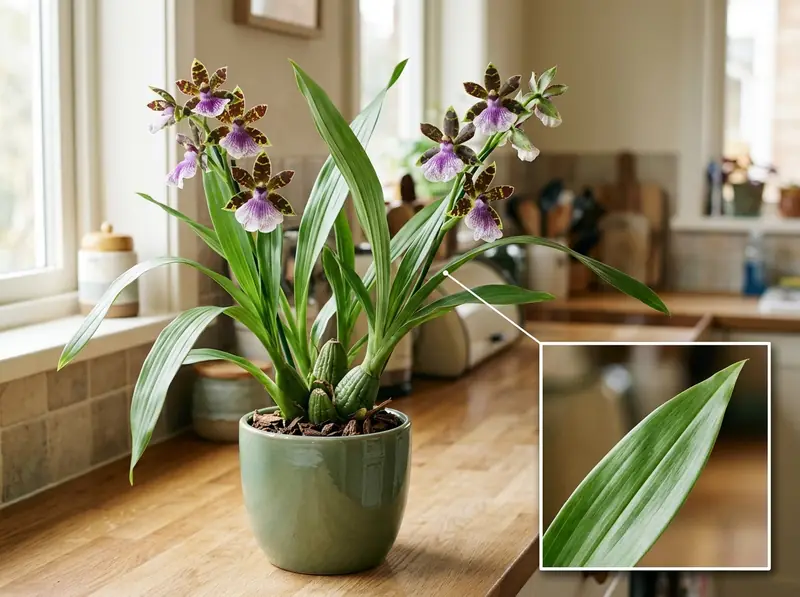 AI-generated
 AI-generated
 AI-generated
 AI-generated
 AI-generated