
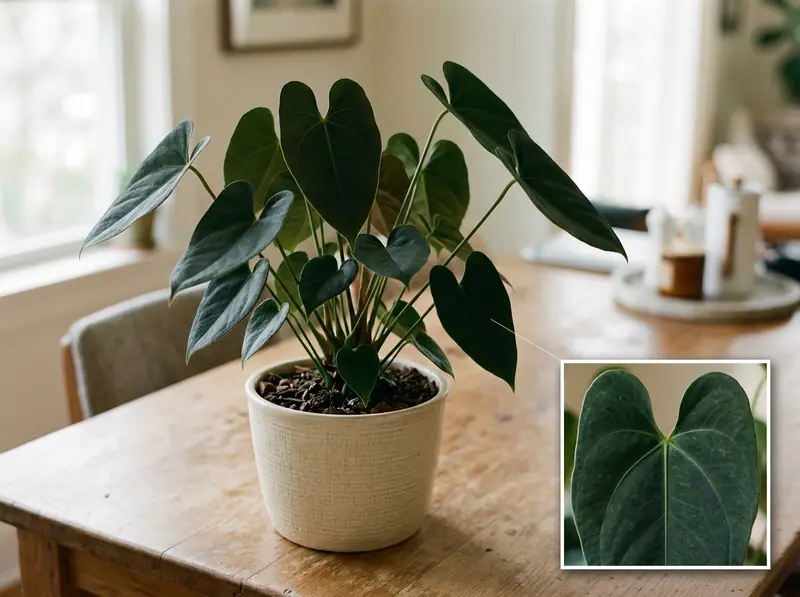
 AI-generated
Ace of Spades Anthurium
Anthurium 'Ace of Spades'
Ace of Spades is a hybrid Anthurium with dark, velvety, spade-shaped leaves held on a compact plant. It needs bright indirect light, humid air, and a chunky, airy mix.
Saving is free with a KinClub account, and it works here and in the KinClub app. Sign up free
Care profile
- Light
- Bright, indirect lightLow → direct sun
- Water
- Moderate wateringAbout every 7 days
- Difficulty
- ModerateTricky → easy
- Coldest it tolerates
- 60°F
- Humidity
- High
- Mature size
- MediumSmall → tree-size
- Growth rate
- Slow
- How common
- RareRare → everywhere
Pets and toxicity
Cats and dogs: not yet checked
Not yet checked against ASPCA — don't assume it's safe for pets.
No toxicity source on record for this plant yet. If a pet eats any houseplant, call your vet or an animal poison helpline.
How to care for Ace of Spades Anthurium
Light
Bright, indirect light, such as a spot near an east window or set back from a south window. Direct sun will scorch the velvety leaves.
Watering
Water when the top 1 to 2 inches of mix feel dry, about weekly in warm months and less in winter. Use lukewarm water and empty the saucer.
Soil
A chunky aroid mix: roughly equal parts orchid bark, perlite, and coco coir or peat. Roots need air, so avoid dense potting soil.
Feeding
Feed every 2 to 4 weeks in the growing season with a balanced fertilizer at quarter to half strength.
Repotting
Repot every 1 to 2 years in spring, using a pot that is only slightly larger. Replace the old chunky mix and check roots for rot.
Propagation
Take stem cuttings with a node and aerial root, or divide offshoots at repotting. Root in damp sphagnum in a warm, humid spot.
Common problems
- Brown, crispy leaf edges point to dry air. Aim for 60 percent humidity or higher with a humidifier or grouped plants.
- Yellow leaves with soft roots mean overwatering. Repot into fresh, airy mix and water less.
- Thrips and spider mites cause stippled, silvery leaves. Wipe leaves and use insecticidal soap weekly until clear.
Similar plants
Same light needs and difficulty.
 AI-generated
 AI-generated
 AI-generated
 AI-generated