
 AI-generated
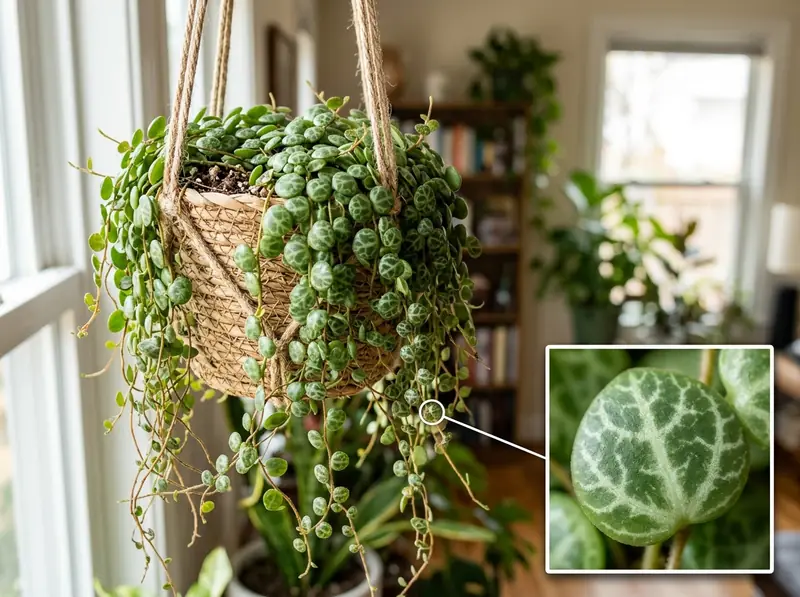
String of Turtles
Peperomia prostrata
String of Turtles is a small trailing Peperomia with tiny round leaves marked like turtle shells. It grows well in a hanging pot or on a shelf in bright, indirect light. Its semi-succulent leaves store water, so it needs a gritty mix and should be allowed to dry between waterings.
Saving is free with a KinClub account, and it works here and in the KinClub app. Sign up free
Care profile
- Light
- Bright, indirect lightLow → direct sun
- Water
- Let it dry outAbout every 10 days
- Difficulty
- ModerateTricky → easy
- Coldest it tolerates
- 50°F
- Humidity
- Medium
- Mature size
- SmallSmall → tree-size
- Growth rate
- Slow to moderate
- How common
- Very commonRare → everywhere
- Plant family
- Piperaceae
Pets and toxicity
Cats and dogs: not yet checked
Not yet checked against ASPCA — don't assume it's safe for pets.
No toxicity source on record for this plant yet. If a pet eats any houseplant, call your vet or an animal poison helpline.
How to care for String of Turtles
Light
Give bright, indirect light, such as a spot near an east window or a few feet back from a south or west window. Gentle morning sun is fine, but avoid hot midday sun.
Watering
Water thoroughly when the soil is dry through most of the pot, about every 7 to 14 days in the growing season. Water less in winter, and never leave the pot standing in water.
Soil
Use a fast-draining mix, such as cactus or succulent soil with about one-third extra perlite or pumice. Use a shallow pot with drainage holes.
Feeding
Feed monthly in spring and summer with a balanced houseplant fertilizer diluted to half strength. Do not feed in fall and winter.
Repotting
Repot only every 2 to 3 years, or when roots fill the pot. Move up just one pot size (1 to 2 inches wider), because extra soil stays wet too long.
Propagation
Take 2 to 3 inch stem cuttings with a few leaves and lay them on moist, gritty mix or root them in water. Roots usually form in 2 to 4 weeks. Stems can also be pinned to soil.
Common problems
- Stems rot at the soil line: the soil is staying too wet. Cut off healthy stems to root, and repot in gritty mix.
- Leaves shrivel and wrinkle: the plant is thirsty. Soak the pot from the bottom for 15 to 20 minutes.
- Long, sparse stems with small leaves: there is too little light. Move to a brighter spot and trim back to encourage bushier growth.
- White cottony spots on stems or leaf joints are mealybugs: dab them with cotton swabs dipped in rubbing alcohol and repeat weekly.
- Leaves drop in cold drafts: keep the plant above 50°F and away from cold windows and vents.
Similar plants
Same light needs and difficulty.
 AI-generated
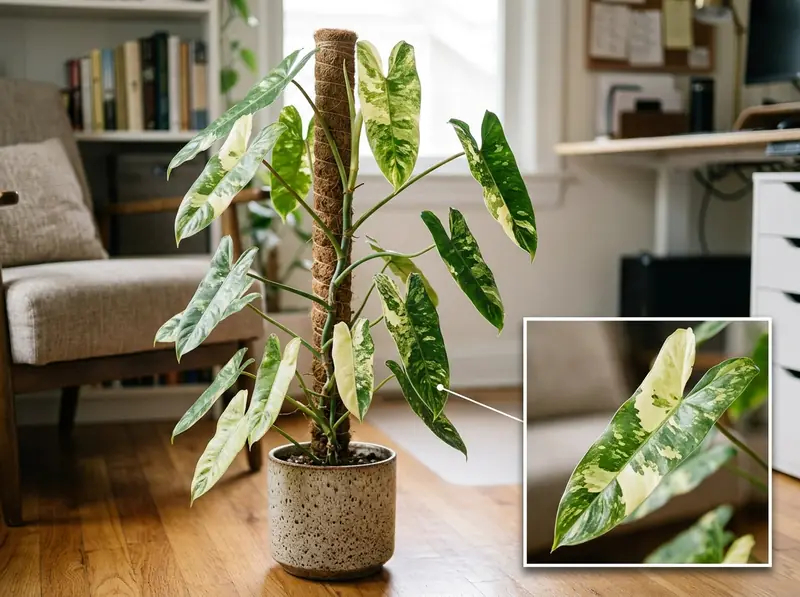
Ilsemanii Philodendron
Philodendron ilsemanii
- Bright, indirect light
- Moderate watering
Toxic to cats and dogs AI-generated
 AI-generated
 AI-generated