
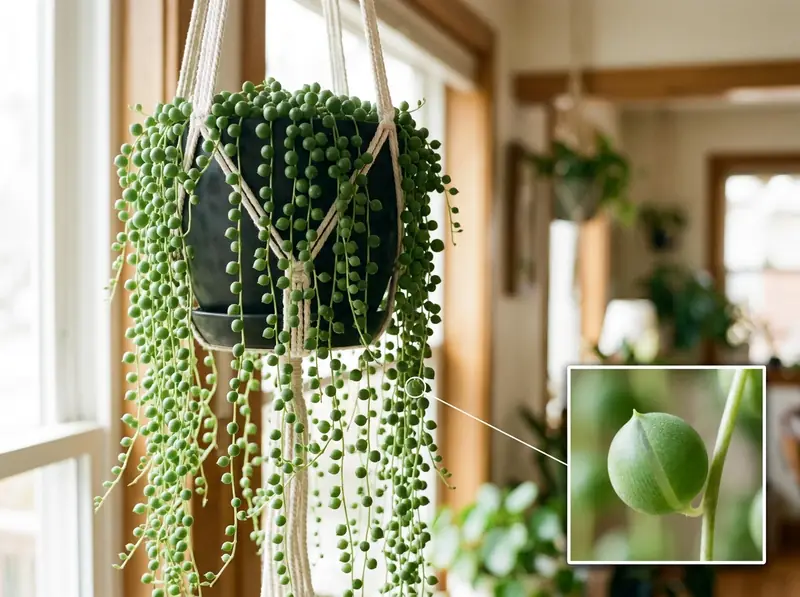
 AI-generated
String of Pearls
Senecio rowleyanus
String of Pearls is a trailing succulent with bead-like round leaves on thin stems, best in a hanging pot or on a shelf edge. It needs bright light and a gritty, fast-draining soil, and it is easiest to lose by overwatering. Water only after the soil has dried out, and it will reward you with long, dense strands.
Saving is free with a KinClub account, and it works here and in the KinClub app. Sign up free
Care profile
- Light
- Bright, indirect lightLow → direct sun
- Water
- Let it dry outAbout every 14 days
- Difficulty
- ModerateTricky → easy
- Coldest it tolerates
- 50°F
- Humidity
- Low
- Mature size
- Small to mediumSmall → tree-size
- Growth rate
- Moderate
- How common
- Very commonRare → everywhere
- Plant family
- Asteraceae
Pets and toxicity
Toxic to cats
Keep away from cats. Call your vet or a pet poison helpline if a cat chews it.
Toxic to dogs
Keep away from dogs. Call your vet or a pet poison helpline if a dog chews it.
Source: ASPCA toxic and non-toxic plants. If a pet eats any houseplant, call your vet or an animal poison helpline.
How to care for String of Pearls
Light
Give it very bright light, such as an east window or a spot a few feet from a south or west window. Gentle direct morning sun is fine, but hot midday sun through glass can scorch the pearls.
Watering
Soak thoroughly, then let the soil dry out almost completely before watering again, about every 2 weeks in summer. In winter water only about once every 3 to 5 weeks, just enough to keep the pearls plump.
Soil
Use a gritty cactus or succulent mix, ideally with extra perlite or coarse sand added, in a pot with drainage holes. Shallow terracotta pots help the soil dry quickly.
Feeding
Feed with a half-strength balanced or succulent fertilizer once a month in spring and summer. Do not feed in fall and winter.
Repotting
Repot only every 2 to 3 years, in spring, when the pot is crowded. Choose a shallow pot only slightly larger, and handle gently because the stems break easily.
Propagation
Take 3 to 4 inch stem cuttings in spring or summer, let the cut ends dry for a day, and lay them on or press them into barely moist succulent mix. Roots usually form in 2 to 3 weeks.
Common problems
- Shriveled pearls: the plant is thirsty, so give a thorough soak and then let it dry out again.
- Mushy, translucent pearls and stem rot: overwatering. Cut off rotted sections, repot into dry gritty mix, and water less often.
- Bare, leggy strands: too little light. Move to a brighter spot and trim back to encourage fuller growth.
- Cottony white mealybugs in the stems: dab with cotton swabs dipped in rubbing alcohol and repeat weekly until gone.
- Bald or sparse top of the pot: tuck cuttings back into the soil to thicken it.
Similar plants
Same light needs and difficulty.
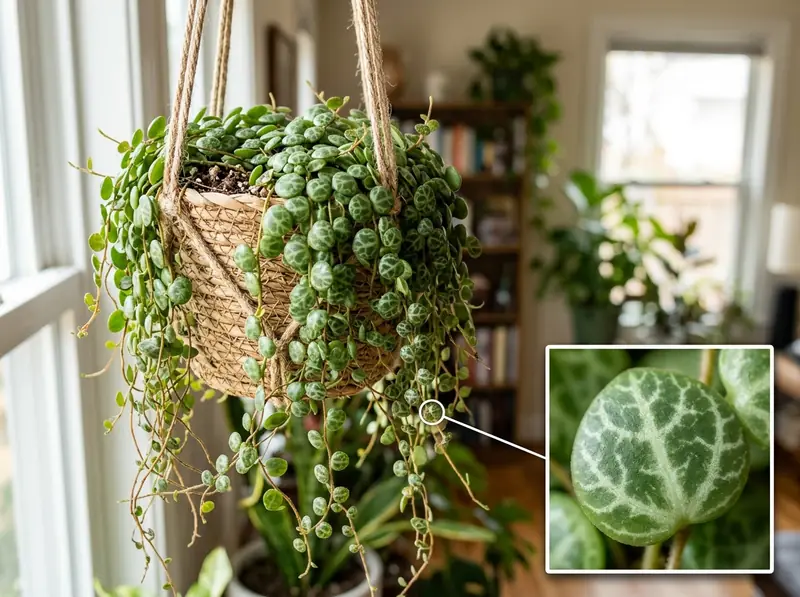 AI-generated
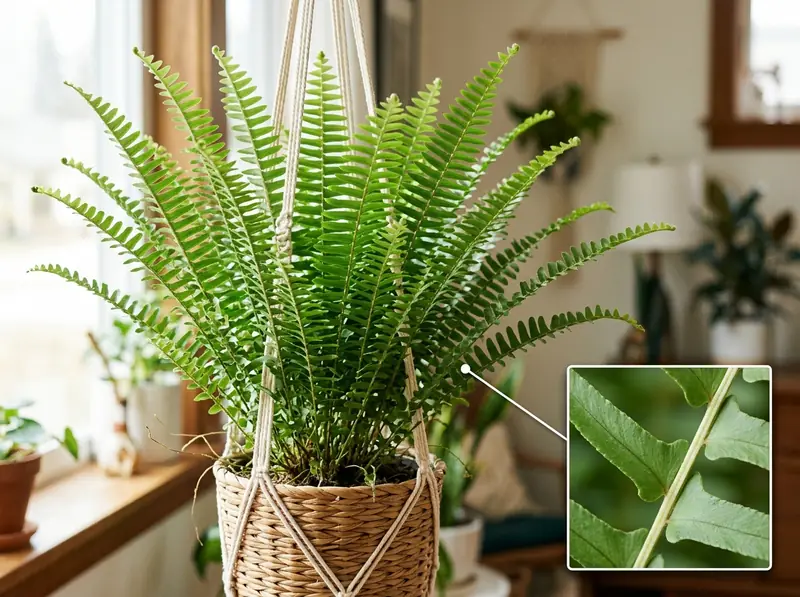 AI-generated
 AI-generated
 AI-generated