
 AI-generated
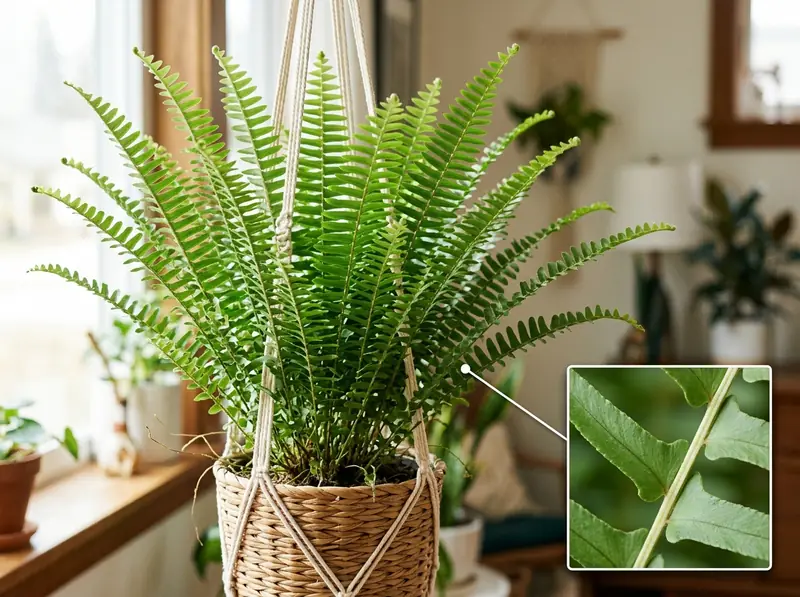
Sword Fern
Nephrolepis cordifolia
Also known as Davallia falcata
Sword fern is a classic arching fern with bright green, feathery fronds that looks great in a hanging basket or on a plant stand. It is easy to grow if you give it bright indirect light, steady moisture, and humid air. It grows fast in warm months and is simple to divide into new plants.
Saving is free with a KinClub account, and it works here and in the KinClub app. Sign up free
Care profile
- Light
- Bright, indirect lightLow → direct sun
- Water
- Keep moistAbout every 5 days
- Difficulty
- ModerateTricky → easy
- Coldest it tolerates
- 45°F
- Humidity
- High
- Mature size
- MediumSmall → tree-size
- Growth rate
- Fast
- How common
- Very commonRare → everywhere
- Plant family
- Nephrolepidaceae
Pets and toxicity
Cats and dogs: not yet checked
Not yet checked against ASPCA — don't assume it's safe for pets.
Source: ASPCA toxic and non-toxic plants. If a pet eats any houseplant, call your vet or an animal poison helpline.
How to care for Sword Fern
Light
Give it bright, indirect light, such as near an east window or a few feet back from a south or west one. It tolerates medium light but grows more thinly, and direct afternoon sun scorches the fronds.
Watering
Keep the soil evenly damp like a wrung-out sponge, usually watering every 4 to 6 days in the growing season. Let only the top half inch dry slightly, and water less in winter, but never let the root ball dry out completely.
Soil
Use a peat- or coco-based potting mix with some perlite or bark that holds moisture but still drains. Make sure the pot has drainage holes.
Feeding
Feed monthly from spring to early autumn with a balanced liquid fertilizer diluted to half strength. Skip feeding in winter, since ferns are sensitive to fertilizer salts.
Repotting
Repot every 1 to 2 years in spring when roots fill the pot or push up out of the soil. Go up only one pot size, about 2 inches wider, or divide the plant.
Propagation
Divide a crowded clump in spring into sections that each have roots and several fronds, and pot them up in moist mix. It also spreads by runners, which can be pinned to damp soil until they root.
Common problems
- Crispy brown leaflets and heavy shedding: usually dry air or dry soil, so water more consistently and group it with other plants or use a humidifier.
- Yellowing lower fronds: often overwatering or poor drainage, so let the top of the soil dry slightly and empty the saucer.
- Brown scorched patches: too much direct sun, so move it to filtered light.
- Small bumps or sticky residue on fronds: scale or mealybugs, so wipe them off with rubbing-alcohol-dampened cotton and repeat weekly.
- Fine webbing and stippled fronds: spider mites in dry air, so rinse the plant and raise the humidity.
Similar plants
Same light needs and difficulty.
 AI-generated
 AI-generated
 AI-generated
 AI-generated