
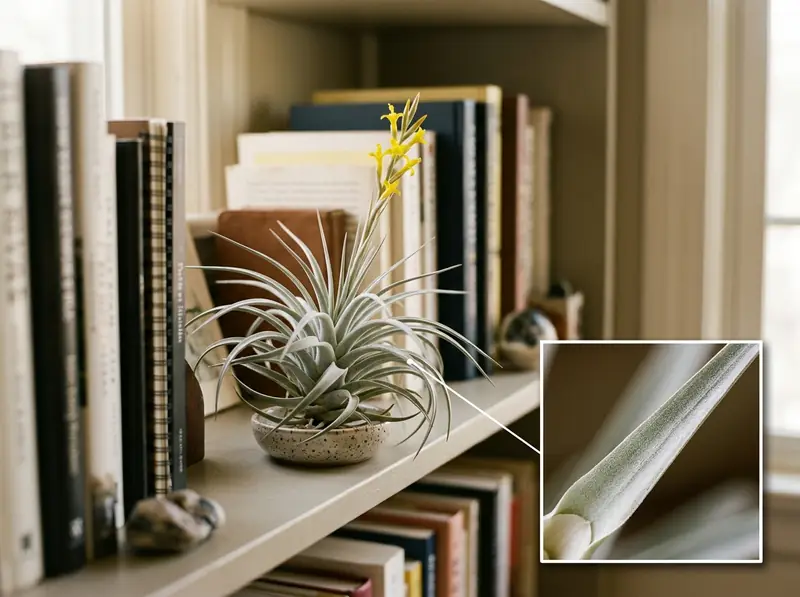
 AI-generated
Ixioides Air Plant
Tillandsia ixioides
Tillandsia ixioides is a small, slow-growing air plant with slender, silvery-gray leaves in a tidy rosette, and it can produce yellow flowers. It has no need for soil and is forgiving, as long as it gets bright indirect light, a weekly soak, and quick drying afterward. It clumps slowly from pups, making it a good choice for shelves, mounts and small displays.
Saving is free with a KinClub account, and it works here and in the KinClub app. Sign up free
Care profile
- Light
- Bright, indirect lightLow → direct sun
- Water
- Let it dry outAbout every 7 days
- Difficulty
- EasyTricky → easy
- Coldest it tolerates
- 45°F
- Humidity
- Medium
- Mature size
- SmallSmall → tree-size
- Growth rate
- Slow
- How common
- EnthusiastRare → everywhere
- Plant family
- Bromeliaceae
Pets and toxicity
Cats and dogs: not yet checked
Not yet checked against ASPCA — don't assume it's safe for pets.
No toxicity source on record for this plant yet. If a pet eats any houseplant, call your vet or an animal poison helpline.
How to care for Ixioides Air Plant
Light
Give bright indirect light, such as a spot within a few feet of an east or south window. Gentle morning sun is fine, but avoid hot midday sun through glass. Under grow lights, 10-12 hours a day works.
Watering
Soak in room-temperature water for 10-20 minutes about once a week, or every 10-14 days in winter. Shake off the excess and let the plant dry fully within about 4 hours. Occasional misting between soaks helps in dry air but does not replace soaking.
Soil
It needs no soil, because it is an epiphyte that takes in water through its leaves. Display it loose on a shelf or tray, in an open holder, or mounted on cork or wood. Avoid closed glass globes that hold moisture.
Feeding
Feed once a month in spring and summer with a bromeliad or air plant fertilizer at quarter strength, added to the soaking water. Skip feeding in winter.
Repotting
It never needs repotting. If you want a mounted plant, attach it to bark or cork with soft wire or aquarium-safe glue, leaving the base uncovered and the leaves free.
Propagation
Separate pups when they are about one-third to half the size of the parent, by gently twisting or cutting them away at the base. Mature plants may bloom with small yellow flowers, after which pups form at the base.
Common problems
- Mushy, dark base from rot: remove the affected leaves, soak less often, and make sure the plant dries within 4 hours after watering.
- Brown, crispy leaf tips and tightly curled leaves from thirst: soak for 30-60 minutes once, then keep to a regular weekly soak.
- Loss of silvery gray color or bleaching from too much sun: move it back from the window or use a sheer curtain.
- White cottony bumps (mealybugs) or small brown shells (scale): dab with alcohol on a cotton swab, then rinse by soaking.
Similar plants
Same light needs and difficulty.
 AI-generated
 AI-generated
 AI-generated
Chinese Money Plant
Pilea peperomioides
- Bright, indirect light
- Dry to moderate watering
Pets: not yet checked AI-generated
Christmas Cactus
Schlumbergera × buckleyi
- Bright, indirect light
- Moderate watering
Pets: not yet checked