
 AI-generated
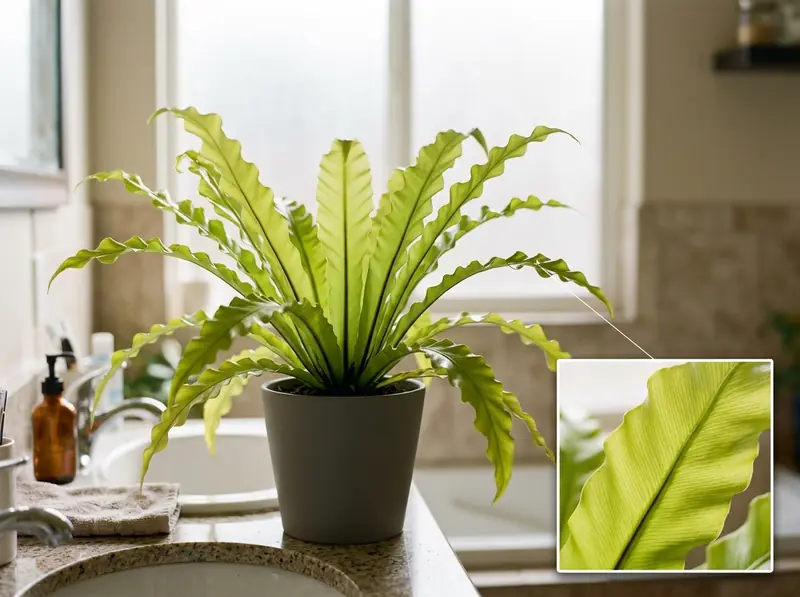
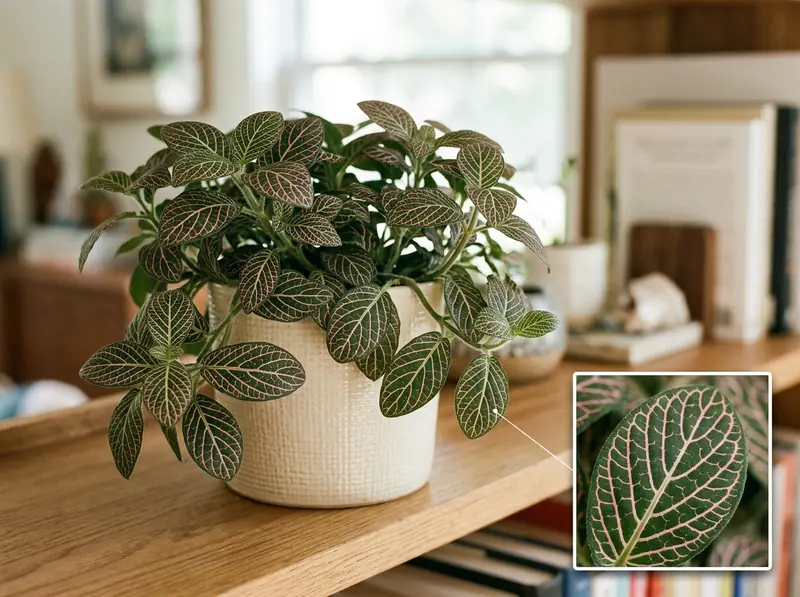
Japanese Bird's Nest Fern
Asplenium antiquum
Japanese Bird's Nest Fern forms a rosette of bright green, wavy-edged, undivided fronds from a central crown. It likes steady moisture, humidity, and indirect light, and it does best in a bathroom or other humid spot. Keep the center of the plant dry and don't touch the delicate new fronds.
Saving is free with a KinClub account, and it works here and in the KinClub app. Sign up free
Care profile
- Light
- Medium to bright, indirect lightLow → direct sun
- Water
- Keep moistAbout every 7 days
- Difficulty
- ModerateTricky → easy
- Coldest it tolerates
- 55°F
- Humidity
- High
- Mature size
- MediumSmall → tree-size
- Growth rate
- Slow to moderate
- How common
- CommonRare → everywhere
- Plant family
- Aspleniaceae
Pets and toxicity
Cats and dogs: not yet checked
Not yet checked against ASPCA — don't assume it's safe for pets.
No toxicity source on record for this plant yet. If a pet eats any houseplant, call your vet or an animal poison helpline.
How to care for Japanese Bird's Nest Fern
Light
Give it medium to bright-indirect light, such as a spot a few feet from an east or north window. Avoid direct sun, which scorches the fronds, though it tolerates fairly dim rooms with slower growth.
Watering
Keep the soil evenly damp but never soggy, usually about once a week in the growing season and less in winter. Water around the rim of the pot, not into the center, and let the top half inch dry slightly between waterings.
Soil
Use a light, airy, peat-based or coco-coir potting mix with added orchid bark or perlite, about one-third by volume. It should hold moisture yet drain freely through the pot's holes.
Feeding
Feed monthly in spring and summer with a balanced liquid fertilizer diluted to half the label strength. Skip feeding in fall and winter, as ferns are sensitive to fertilizer burn.
Repotting
Repot only every two to three years, when roots fill the pot, moving up just one size (1 to 2 inches wider). Spring is best; keep the crown at soil level and don't bury it.
Propagation
Hard at home: this fern grows from a single crown and makes no pups, and it is normally raised from spores under controlled humid conditions. Buying a new plant is the practical route.
Common problems
- Brown frond tips: usually dry air or irregular watering. Group it with other plants, use a pebble tray, and keep the soil evenly damp.
- Crushed, wavy, or torn new fronds: the crown was touched or the plant was moved often. Avoid handling the center and leave it in one spot.
- Rotting center: water sitting in the rosette. Water at the pot's edge and let any pooled water drain or blot it out.
- Pale, scorched fronds: too much sun. Move it back from the window or behind a sheer curtain.
- Small brown bumps or white cottony spots: scale or mealybugs. Wipe them off with cotton swabs dipped in rubbing alcohol and repeat weekly.
Similar plants
Same light needs and difficulty.
 AI-generated
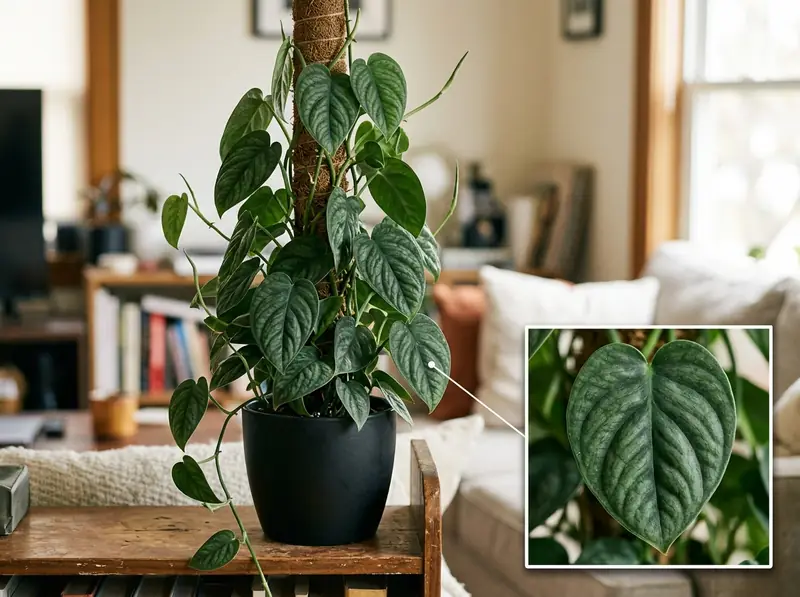
Mayari Scindapsus
Scindapsus mayari
- Medium to bright, indirect light
- Dry to moderate watering
Toxic to cats and dogs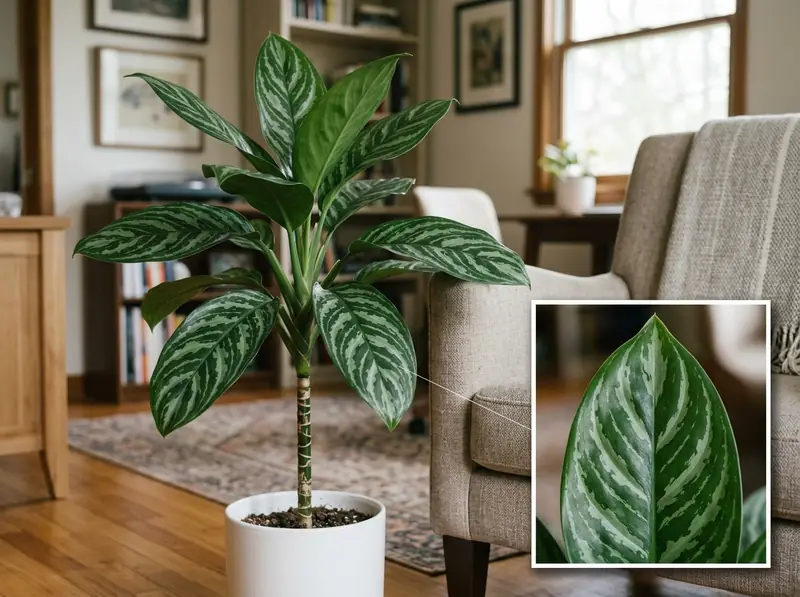 AI-generated
Queen of Dracaenas
Dracaena goldieana
- Medium to bright, indirect light
- Moderate watering
Toxic to cats and dogs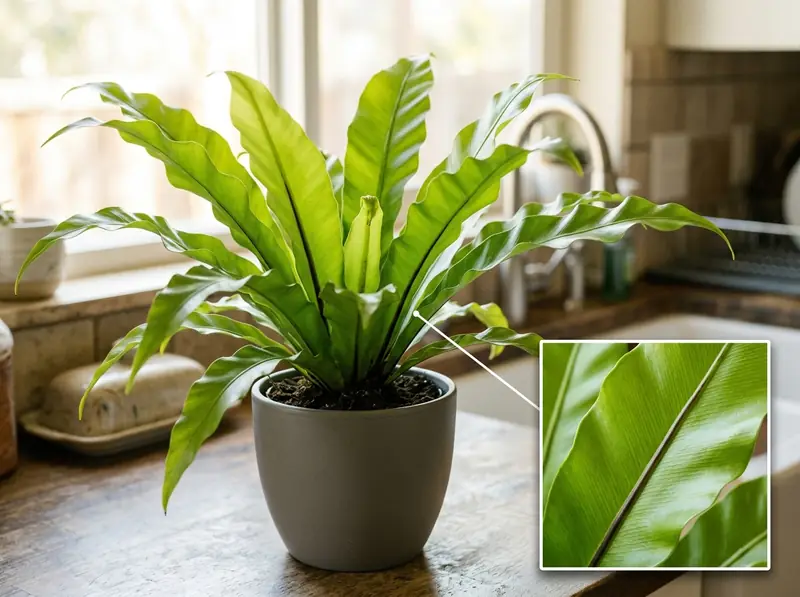 AI-generated
 AI-generated