
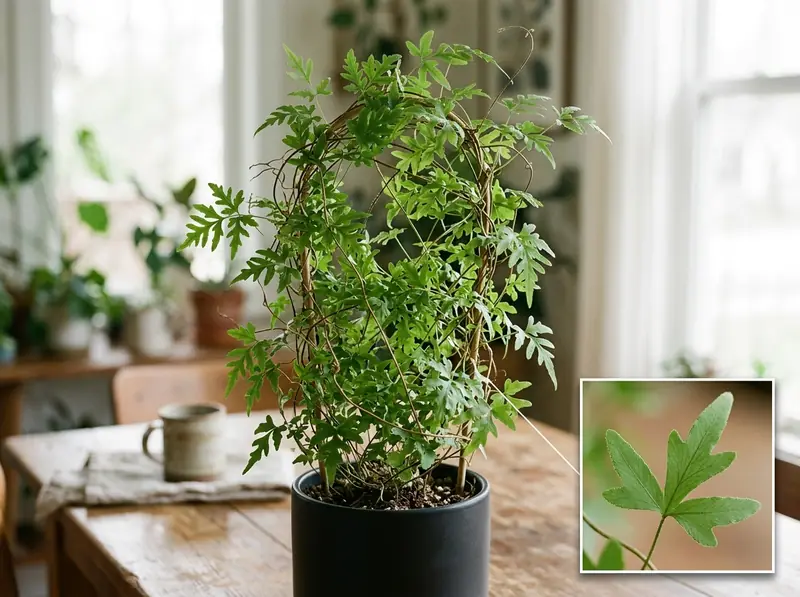
 AI-generated
Japanese Climbing Fern
Lygodium japonicum
Also known as Davallia scandens
Japanese climbing fern is a delicate, vining fern with lacy, finely divided fronds that twine up a trellis or strings. It needs steady moisture, high humidity and bright, indirect light, so it suits attentive owners more than beginners. Keep it out of dry drafts and hot sun for the best results.
Saving is free with a KinClub account, and it works here and in the KinClub app. Sign up free
Care profile
- Light
- Bright, indirect lightLow → direct sun
- Water
- Keep moistAbout every 4 days
- Difficulty
- Moderate to challengingTricky → easy
- Coldest it tolerates
- 45°F
- Humidity
- High
- Mature size
- Medium to largeSmall → tree-size
- Growth rate
- Moderate to fast
- How common
- CommonRare → everywhere
- Plant family
- Lygodiaceae
Pets and toxicity
Cats and dogs: not yet checked
Not yet checked against ASPCA — don't assume it's safe for pets.
Source: ASPCA toxic and non-toxic plants. If a pet eats any houseplant, call your vet or an animal poison helpline.
How to care for Japanese Climbing Fern
Light
Give bright, indirect light, such as near an east window or a few feet back from a south or west window. Avoid hot midday sun, which scorches the delicate fronds.
Watering
Keep the soil evenly damp but never soggy, checking every few days; the top half inch should not dry out. Use room-temperature water and water less in winter when growth slows.
Soil
Use a peat-based or coco-coir potting mix with some perlite, about 3 parts mix to 1 part perlite. It should hold moisture but still drain freely through the pot holes.
Feeding
Feed monthly in spring and summer with a balanced liquid fertilizer diluted to half strength. Skip feeding in fall and winter.
Repotting
Repot every 2 years in spring, only moving up 1-2 inches in pot size, as it likes being slightly snug. Handle the wiry roots and stems gently.
Propagation
Divide the rhizomes carefully in spring, making sure each piece has roots and stems. Spores are possible but slow and difficult for home growers, so division is the practical method.
Common problems
- Crispy brown fronds: air or soil is too dry, so raise humidity with a pebble tray or humidifier and keep the soil evenly damp.
- Yellowing fronds: usually overwatering or poor drainage, so let the top of the soil dry slightly and empty the saucer.
- Whole plant dies back: often from a dry spell or cold draft, so trim dead stems and keep the soil damp, as new fronds may regrow.
- Fine webbing and stippled leaflets: spider mites, so rinse the foliage gently and raise humidity.
Similar plants
Same light needs and difficulty.
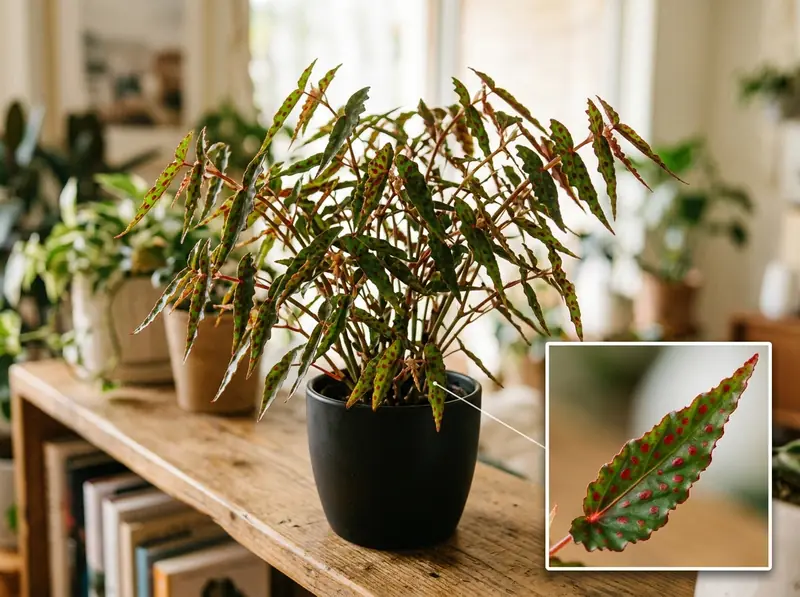 AI-generated
Amphioxus Begonia
Begonia amphioxus
- Medium to bright, indirect light
- Moderate to moist watering
Toxic to cats and dogs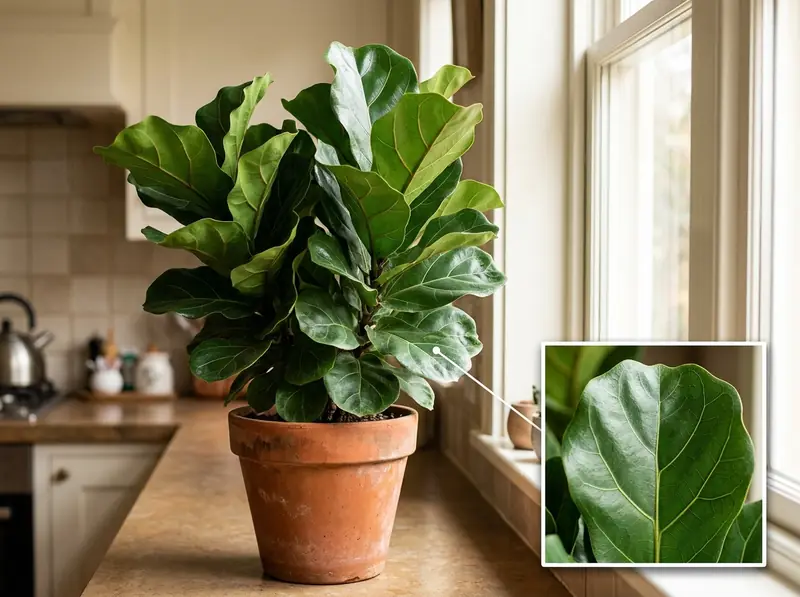 AI-generated
Bambino Fiddle-Leaf Fig
Ficus lyrata 'Bambino'
- Bright, indirect light
- Moderate watering
Toxic to cats and dogs AI-generated
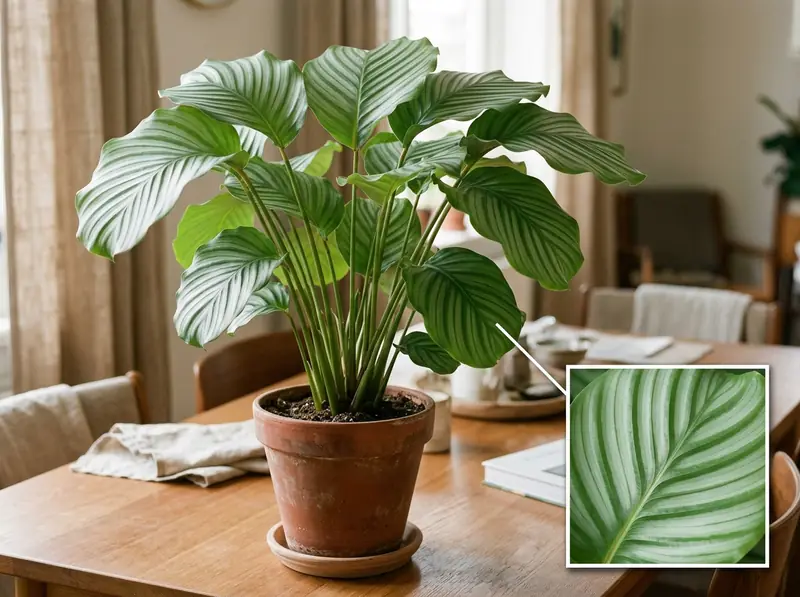 AI-generated
Calathea Orbifolia
Goeppertia orbifolia
- Medium to bright, indirect light
- Keep moist
Pets: not yet checked