
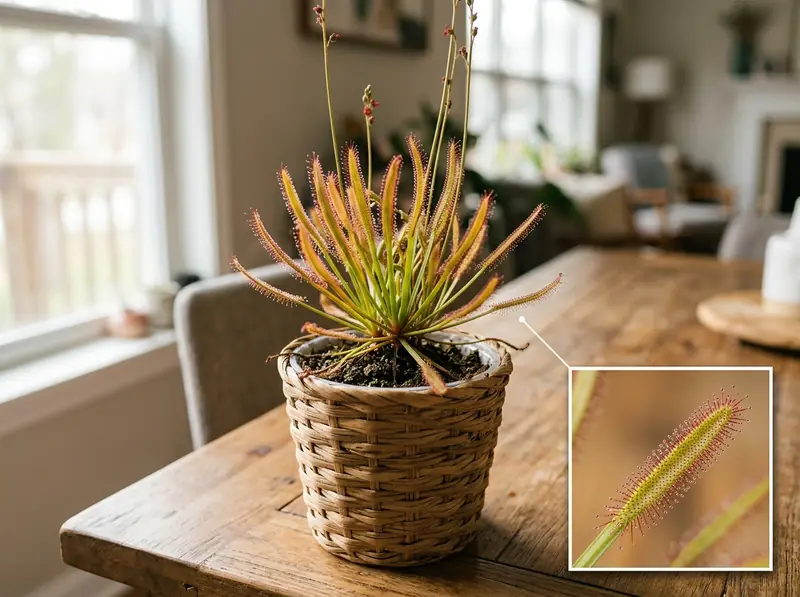
 AI-generated
Lance-Leaved Sundew
Drosera adelae
Lance-leaved sundew is a tropical Queensland sundew with narrow, upright red-green leaves covered in sticky tentacles and small red flowers. It is one of the easier sundews for a bright window if you use pure water.
Saving is free with a KinClub account, and it works here and in the KinClub app. Sign up free
Care profile
- Light
- Bright, indirect lightLow → direct sun
- Water
- Keep moistAbout every 3 days
- Difficulty
- ModerateTricky → easy
- Coldest it tolerates
- 45°F
- Humidity
- Medium to high
- Mature size
- SmallSmall → tree-size
- Growth rate
- Moderate
- How common
- RareRare → everywhere
- Plant family
- Droseraceae
Pets and toxicity
Cats and dogs: not yet checked
Not yet checked against ASPCA — don't assume it's safe for pets.
No toxicity source on record for this plant yet. If a pet eats any houseplant, call your vet or an animal poison helpline.
How to care for Lance-Leaved Sundew
Light
Bright light, ideally 4 hours of direct morning sun in an east window or a grow light for 12 hours. It takes bright shade better than most sundews.
Watering
Use only distilled, rain or reverse-osmosis water. Keep the pot standing in about 1 inch of water year-round; the plant is from damp rainforest edges.
Soil
Use a mix of 1 part peat moss to 1 part perlite or silica sand, with no fertilizer, in a plastic pot with drainage holes.
Feeding
Do not fertilize the soil. It catches tiny gnats on its leaves, and extra feeding is not needed.
Repotting
Repot yearly or every other year in spring into fresh peat and perlite, as the old mix goes sour.
Propagation
Take root cuttings or pull off the leaves with plantlets, and lay on damp peat; it also makes suckers from roots that you can pot separately.
Common problems
- No dew on the leaves means low light, dry air or the soil drying out; move it brighter and refill the tray.
- Tap water or fertilizer browns the leaf tips and kills the roots; use only distilled or rain water, and no fertilizer.
- Aphids and fungus gnats occasionally show up; rinse aphids off and use yellow sticky traps for the gnats.
- Do not touch the leaves, which can damage the sticky glands; let the plant catch its own insects.
Similar plants
Same light needs and difficulty.
 AI-generated
 AI-generated
 AI-generated
 AI-generated