
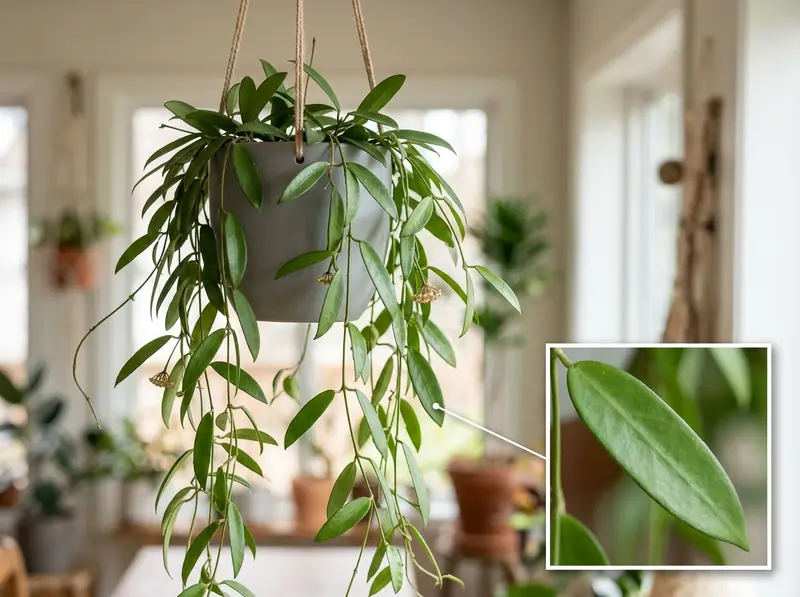
 AI-generated
Lauterbachii Hoya
Hoya lauterbachii
Hoya lauterbachii is a less common hoya from New Guinea with a trailing habit and clusters of small flowers. It is more demanding than the usual hoyas and appreciates humidity and steady warmth. Go slowly with water and light.
Saving is free with a KinClub account, and it works here and in the KinClub app. Sign up free
Care profile
- Light
- Bright, indirect lightLow → direct sun
- Water
- Dry to moderate wateringAbout every 9 days
- Difficulty
- Moderate to challengingTricky → easy
- Coldest it tolerates
- 60°F
- Humidity
- High
- Mature size
- Medium to largeSmall → tree-size
- Growth rate
- Moderate
- How common
- EnthusiastRare → everywhere
- Plant family
- Apocynaceae
Pets and toxicity
Cats and dogs: not yet checked
Not yet checked against ASPCA — don't assume it's safe for pets.
No toxicity source on record for this plant yet. If a pet eats any houseplant, call your vet or an animal poison helpline.
How to care for Lauterbachii Hoya
Light
Bright, indirect light with no hot midday sun. A spot near an east window or under a grow light works well.
Watering
Water when the top inch of mix has dried, about every 8-10 days, and keep the mix lightly damp but never soggy. It dislikes both drought and wet feet.
Soil
Airy, moisture-retentive but quick-draining mix: orchid bark, perlite and a little coco coir or sphagnum.
Feeding
Feed every 3-4 weeks in spring and summer with a balanced fertilizer at half strength; skip it in winter. A bloom-booster with more phosphorus helps flowering.
Repotting
Repot every 2-3 years in spring into a pot only slightly bigger. Fresh mix helps if the old bark breaks down.
Propagation
Take a 4-6 inch stem cutting with at least two nodes. Root it in water, moist perlite or sphagnum moss; roots appear in 3-6 weeks.
Common problems
- Dry air browns leaf edges and stalls growth. Raise humidity with a humidifier or a small greenhouse cabinet.
- Black, soft stem tips mean root or stem rot. Cut back to healthy tissue and let the mix dry.
- Thrips cause silvery streaks on leaves. Isolate the plant and spray with insecticidal soap.
Similar plants
Same light needs and difficulty.
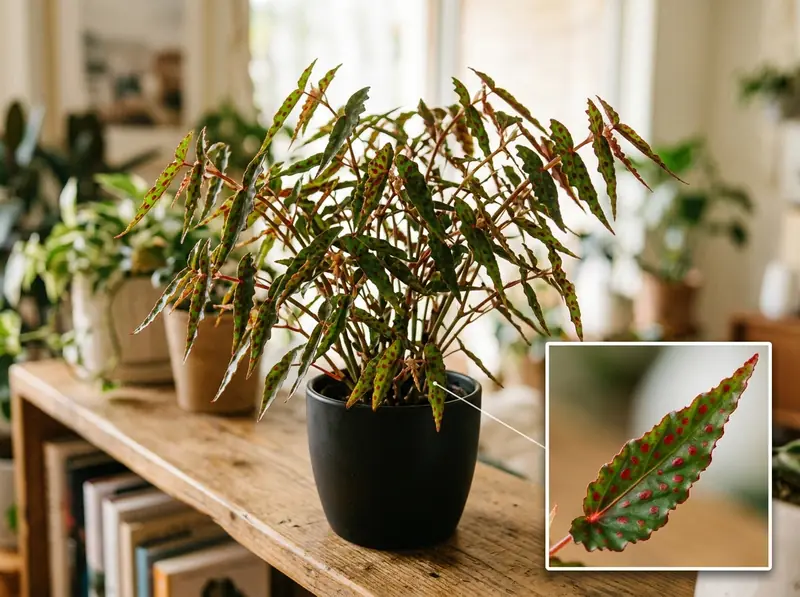 AI-generated
Amphioxus Begonia
Begonia amphioxus
- Medium to bright, indirect light
- Moderate to moist watering
Toxic to cats and dogs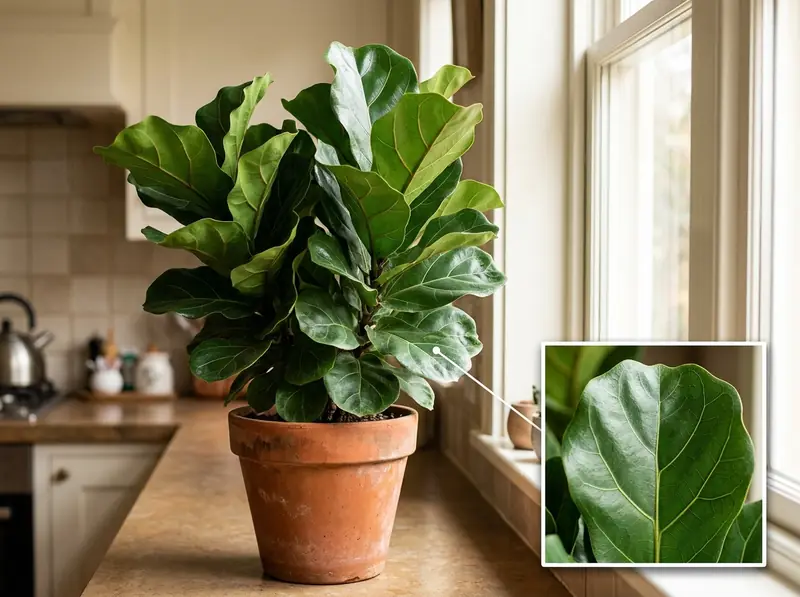 AI-generated
Bambino Fiddle-Leaf Fig
Ficus lyrata 'Bambino'
- Bright, indirect light
- Moderate watering
Toxic to cats and dogs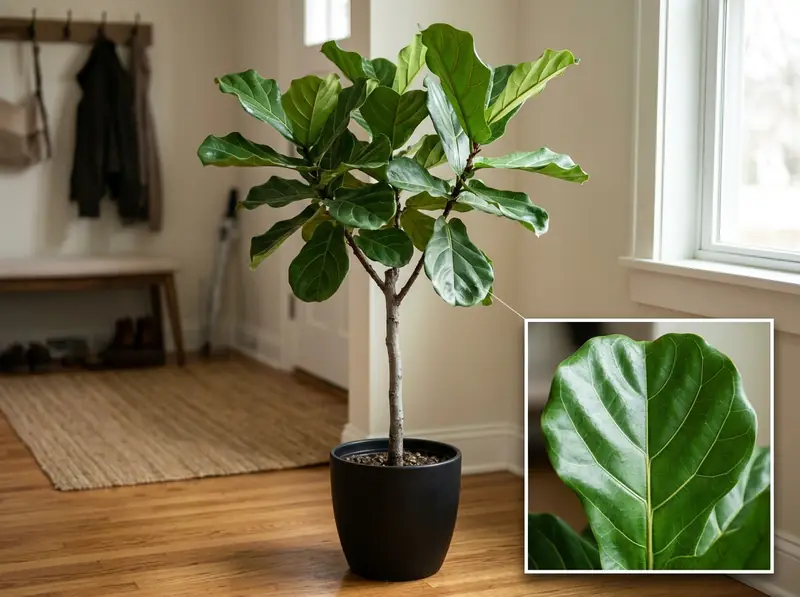 AI-generated
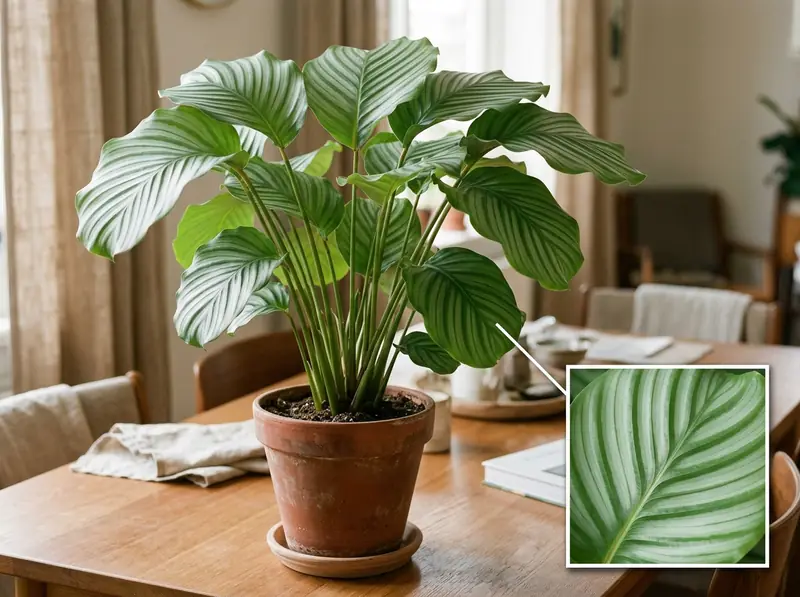 AI-generated
Calathea Orbifolia
Goeppertia orbifolia
- Medium to bright, indirect light
- Keep moist
Pets: not yet checked