
 AI-generated
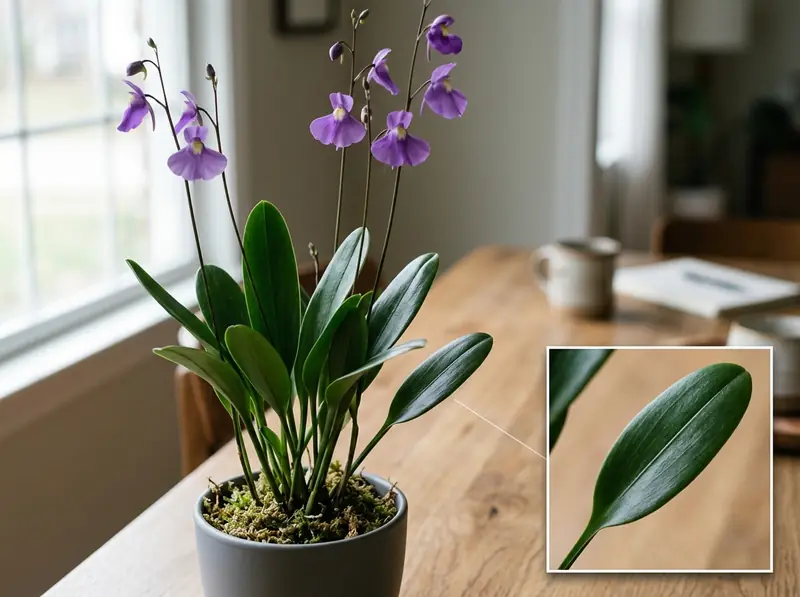
Long-Leaved Bladderwort
Utricularia longifolia
Long-leaved bladderwort (Utricularia longifolia) is a Brazilian terrestrial with thick, paddle-shaped leaves up to 6 inches long and tall violet flowers. It likes cool, humid air.
Saving is free with a KinClub account, and it works here and in the KinClub app. Sign up free
Care profile
- Light
- Bright, indirect lightLow → direct sun
- Water
- Keep moistAbout every 3 days
- Difficulty
- ModerateTricky → easy
- Coldest it tolerates
- 40°F
- Humidity
- High
- Mature size
- SmallSmall → tree-size
- Growth rate
- Moderate
- How common
- RareRare → everywhere
- Plant family
- Lentibulariaceae
Pets and toxicity
Cats and dogs: not yet checked
Not yet checked against ASPCA — don't assume it's safe for pets.
No toxicity source on record for this plant yet. If a pet eats any houseplant, call your vet or an animal poison helpline.
How to care for Long-Leaved Bladderwort
Light
Bright indirect light or several hours of gentle sun, or 12 hours under a grow light. Dim light stops flowering. Avoid hot afternoon sun behind glass.
Watering
Keep the pot standing in about an inch of distilled or rainwater at all times. Never let it dry out. Tap water minerals harm it.
Soil
Use a mix of peat moss with sand or perlite, or live sphagnum moss. No fertilizer or lime.
Feeding
Do not fertilize. The tiny bladders catch microscopic prey from the damp soil. Fertilizer burns the roots.
Repotting
Repot only when crowded, every 1 to 2 years in spring, in fresh peat and perlite. Divide the clumps while you do it.
Propagation
Divide the clump in spring and replant each piece in wet peat. It also spreads by runners.
Common problems
- Algae on the surface is common in wet pots; scrape it off and improve light and airflow.
- Leaves that turn pale and limp mean too much heat; keep it in a cool room.
- Brown leaf tips come from mineral-rich water; always use distilled or rainwater.
- Black, mushy growth comes from stale water; refresh the tray every week or two.
Similar plants
Same light needs and difficulty.
 AI-generated
 AI-generated
 AI-generated
 AI-generated