
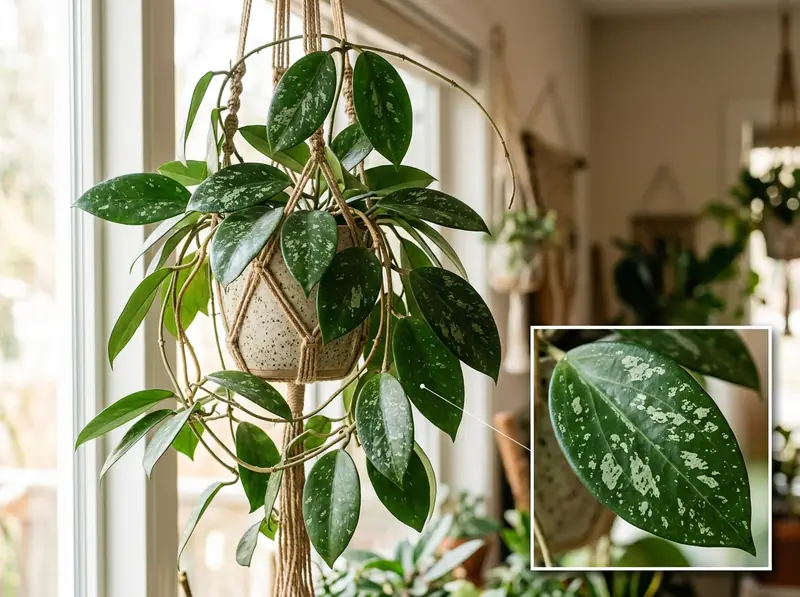
 AI-generated
Macrophylla Hoya
Hoya macrophylla
Hoya macrophylla is a climbing, vining hoya with thick, glossy, oval leaves that are often splashed with pale green or silver flecks. It is tolerant and easy to grow if you let it dry between waterings and give it bright light. Mature plants can produce rounded clusters of small, fragrant, star-shaped flowers. Grow it on a trellis or in a hanging basket.
Saving is free with a KinClub account, and it works here and in the KinClub app. Sign up free
Care profile
- Light
- Bright, indirect lightLow → direct sun
- Water
- Let it dry outAbout every 10 days
- Difficulty
- EasyTricky → easy
- Coldest it tolerates
- 55°F
- Humidity
- Medium
- Mature size
- Medium to largeSmall → tree-size
- Growth rate
- Moderate
- How common
- CommonRare → everywhere
- Plant family
- Apocynaceae
Pets and toxicity
Cats and dogs: not yet checked
Not yet checked against ASPCA — don't assume it's safe for pets.
No toxicity source on record for this plant yet. If a pet eats any houseplant, call your vet or an animal poison helpline.
How to care for Macrophylla Hoya
Light
Give it bright, indirect light, such as a spot near an east window or a few feet back from a south or west window. A little gentle morning sun is fine, but avoid hot midday sun.
Watering
Water thoroughly when the top 1–2 inches of soil are dry and the leaves feel slightly less firm, then empty the saucer. In an average home this is about every 10–14 days in the growing season, and every 3–4 weeks in winter.
Soil
Use a chunky, fast-draining mix, such as 2 parts potting soil to 1 part perlite and 1 part orchid bark. The pot must have drainage holes.
Feeding
Feed every 2–4 weeks in spring and summer with a balanced liquid houseplant fertilizer diluted to half strength. Stop feeding in fall and winter.
Repotting
Repot only every 2–3 years, when roots fill the pot, and go up just 1–2 inches in pot size. Hoyas bloom best when slightly root-bound. Repot in spring.
Propagation
Take a stem cutting with at least 2 nodes and 2 leaves, and remove the lowest leaf. Root it in water or a moist perlite and peat mix in bright light. Roots usually form in 3–6 weeks.
Common problems
- Yellow, mushy leaves: the plant is overwatered. Let the soil dry well, and repot into fresh chunky mix if the roots are brown and soft.
- No flowers: usually too little light or a young plant. Move it to brighter indirect light and leave old flower stalks on.
- Cottony white fluff in leaf joints is mealybugs: dab them with rubbing alcohol on a cotton swab and repeat weekly.
- Wrinkled, limp leaves: the plant is thirsty or the roots are damaged. Water deeply, and check the roots if it doesn't recover.
- Buds dropping before opening: caused by moving the plant or a sudden change in light or temperature. Keep it in one spot while it is budding.
Similar plants
Same light needs and difficulty.
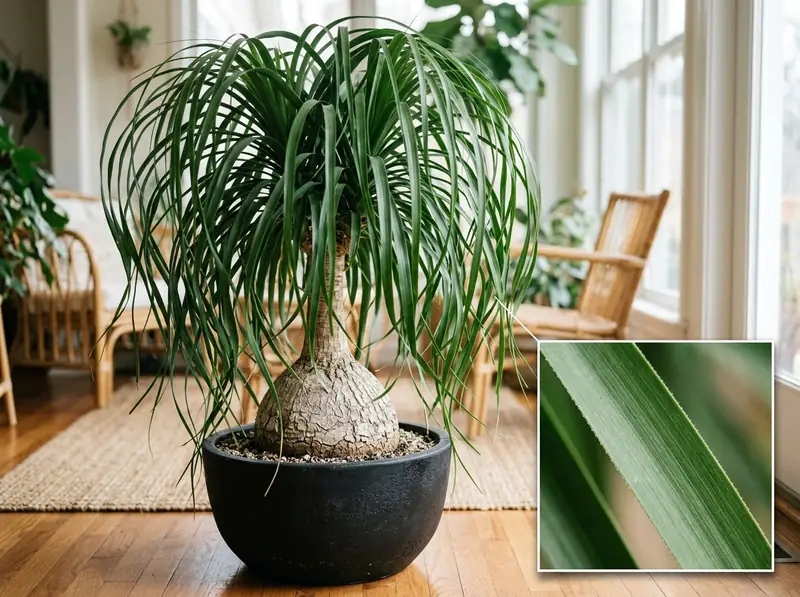 AI-generated
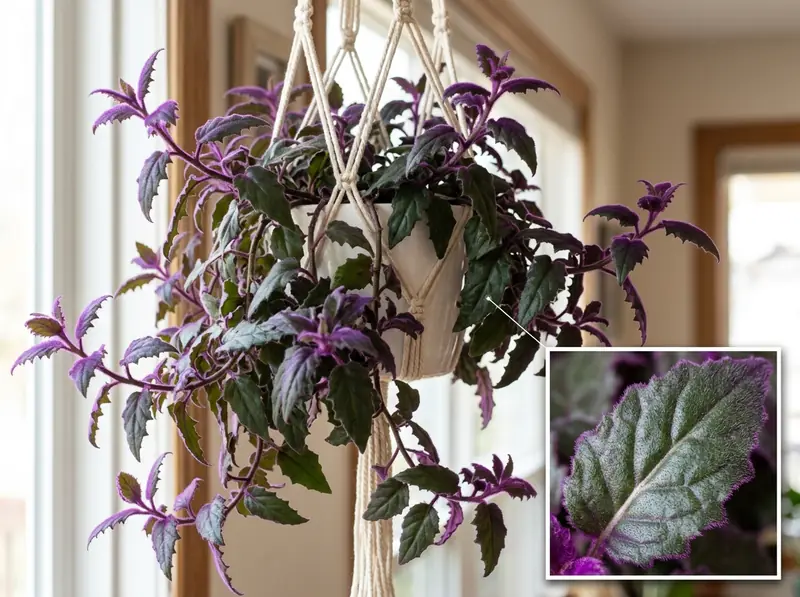 AI-generated
Purple Passion Plant
Gynura aurantiaca
- Bright, indirect light
- Moderate to moist watering
Toxic to cats and dogs AI-generated
Chinese Money Plant
Pilea peperomioides
- Bright, indirect light
- Dry to moderate watering
Pets: not yet checked AI-generated
Christmas Cactus
Schlumbergera × buckleyi
- Bright, indirect light
- Moderate watering
Pets: not yet checked