
 AI-generated
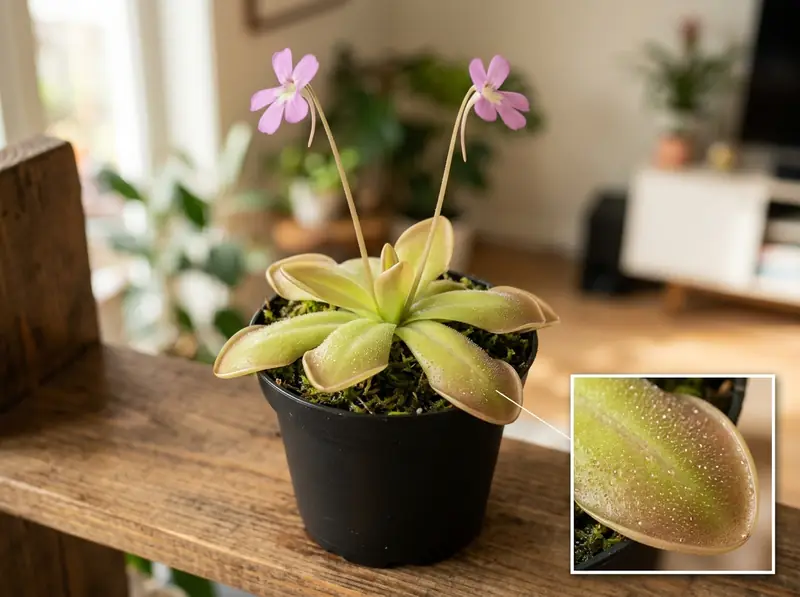
Mexican Butterwort
Pinguicula moranensis
Mexican butterwort is a small rosette plant with sticky, dew-covered leaves that catch tiny gnats, and it produces pretty purple-pink flowers on thin stalks in spring. It grows well on a bright windowsill if watered with mineral-free water. It changes form in winter into a compact non-sticky rosette, which is natural.
Saving is free with a KinClub account, and it works here and in the KinClub app. Sign up free
Care profile
- Light
- Bright, indirect lightLow → direct sun
- Water
- Keep moistAbout every 7 days
- Difficulty
- ModerateTricky → easy
- Coldest it tolerates
- 40°F
- Humidity
- Medium
- Mature size
- SmallSmall → tree-size
- Growth rate
- Slow to moderate
- How common
- CommonRare → everywhere
- Plant family
- Lentibulariaceae
Pets and toxicity
Cats and dogs: not yet checked
Not yet checked against ASPCA — don't assume it's safe for pets.
No toxicity source on record for this plant yet. If a pet eats any houseplant, call your vet or an animal poison helpline.
How to care for Mexican Butterwort
Light
Give it a bright windowsill with several hours of gentle morning or filtered sun, such as an east window. Under grow lights, 12 to 14 hours a day about 6 to 10 inches away works well.
Watering
Keep the soil evenly damp in summer by standing the pot in about half an inch of distilled or rain water, and let it soak up from below. In winter, when the plant forms a small succulent rosette, water less so the mix is just barely damp.
Soil
Use a gritty, low-nutrient mix such as 1 part peat or coco coir to 1 part perlite or coarse sand. Avoid ordinary potting soil with added fertilizer, and avoid limestone or dolomite in any amount.
Feeding
Do not fertilize the soil. If the plant looks weak, mist the leaves once a month with a very dilute (quarter strength) orchid fertilizer, or simply let it catch a few gnats.
Repotting
Repot once a year in spring, or when the rosette fills the pot, into fresh mix in a 3 to 4 inch pot. Shake off the old soil gently and keep the roots, which are short and shallow.
Propagation
In spring or summer, pull a healthy outer leaf off cleanly and lay it on damp peat and perlite under bright light and humidity. Tiny plantlets form in a few weeks. The small gemmae (bud-like offsets) produced in winter can also be planted.
Common problems
- Fungus gnats in the damp soil: let the top of the mix dry briefly, and lay yellow sticky traps nearby.
- Brown, crispy leaf tips from mineral build-up: switch to distilled or rain water and flush the pot once.
- Rot at the crown in cold, wet winter conditions: water less, improve airflow, and remove any mushy leaves.
- Plant looks dull and non-sticky: move it to a brighter spot, and check that the soil isn't drying out.
Similar plants
Same light needs and difficulty.
 AI-generated
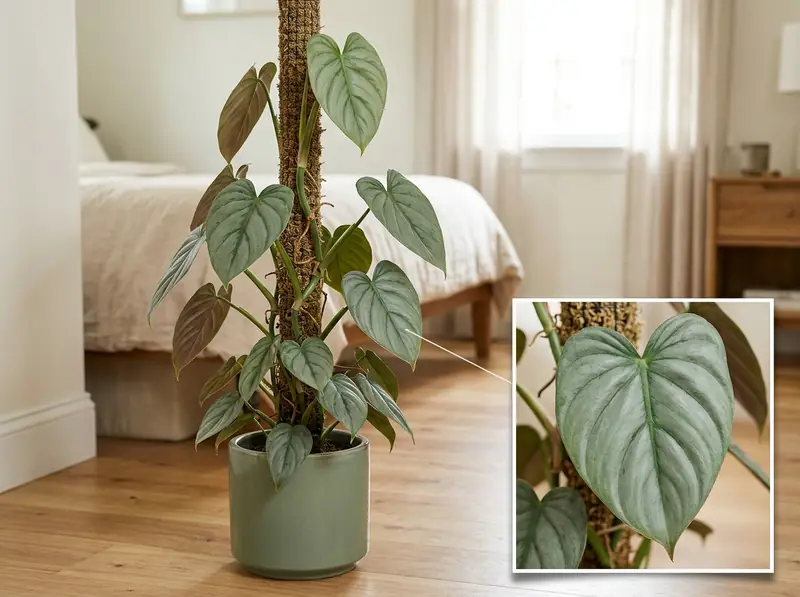
Sodiroi Philodendron
Philodendron sodiroi
- Bright, indirect light
- Moderate watering
Toxic to cats and dogs AI-generated
 AI-generated
 AI-generated