
 AI-generated
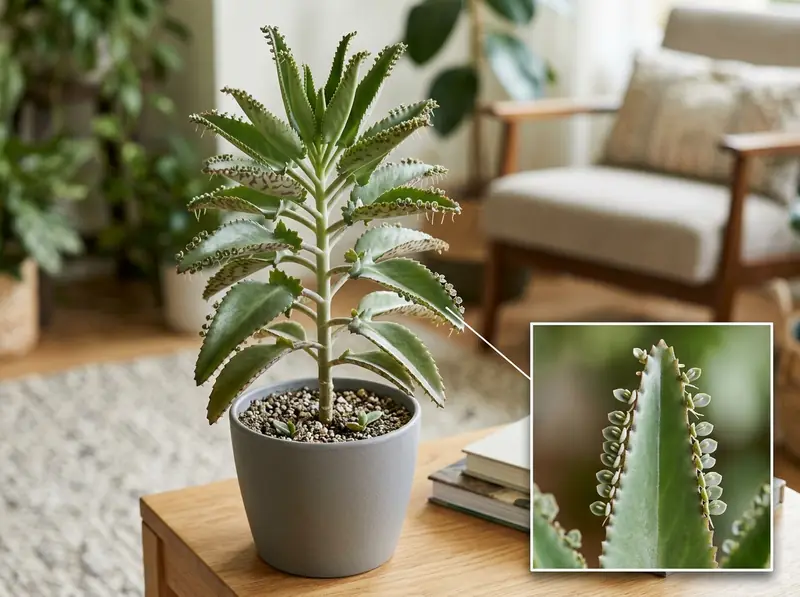
Mother of Thousands
Kalanchoe daigremontiana
Mother of Thousands is a tough succulent with upright stems and gray-green, spotted leaves that grow tiny plantlets along their edges. It wants strong sun, a gritty mix and infrequent watering. The plantlets drop and root easily, so it can spread quickly if you don't remove them.
Saving is free with a KinClub account, and it works here and in the KinClub app. Sign up free
Care profile
- Light
- Direct sunLow → direct sun
- Water
- Let it dry outAbout every 14 days
- Difficulty
- EasyTricky → easy
- Coldest it tolerates
- 45°F
- Humidity
- Low
- Mature size
- MediumSmall → tree-size
- Growth rate
- Moderate to fast
- How common
- Very commonRare → everywhere
- Plant family
- Crassulaceae
Pets and toxicity
Toxic to cats
Keep away from cats. Call your vet or a pet poison helpline if a cat chews it.
Toxic to dogs
Keep away from dogs. Call your vet or a pet poison helpline if a dog chews it.
Source: ASPCA toxic and non-toxic plants. If a pet eats any houseplant, call your vet or an animal poison helpline.
How to care for Mother of Thousands
Light
Give it bright light with at least 4 hours of direct sun, such as a south or west window. It tolerates bright indirect light but grows leggier and produces fewer plantlets.
Watering
Water thoroughly, then let the soil dry out almost completely before watering again, about every 2 weeks in summer. In winter, water only every 3 to 5 weeks, just enough to keep leaves from wrinkling.
Soil
Use a gritty cactus or succulent mix, or regular potting mix with about one third perlite or coarse sand. Use a pot with drainage holes; terracotta helps the soil dry.
Feeding
Feed with a half-strength balanced fertilizer or cactus fertilizer once a month in spring and summer. Do not feed in fall and winter.
Repotting
Repot every 2 to 3 years in spring, only when roots fill the pot. Choose a pot just one size larger, since the shallow roots prefer a snug fit.
Propagation
Pot up the plantlets that form along the leaf edges once they have small roots, or simply press them onto dry succulent mix. They root in 1 to 2 weeks with light watering.
Common problems
- Yellow, mushy lower leaves mean overwatering: let the soil dry out fully and check for rot at the stem base.
- Tall, stretched growth means too little light: move to a sunnier window.
- Plantlets falling and sprouting in other pots: remove them regularly and check neighboring pots.
- Cottony white mealybugs in leaf joints: dab with rubbing alcohol on a cotton swab and repeat weekly.
- Plant becomes bare and tall after flowering or with age: take a stem cutting or replant the top.
Similar plants
Same light needs and difficulty.
 AI-generated
 AI-generated
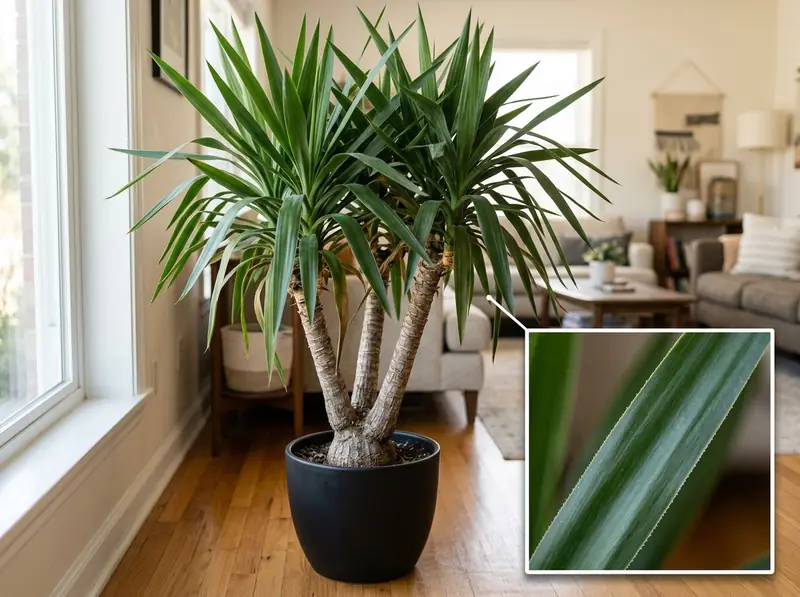
Spineless Yucca
Yucca elephantipes
- Bright, indirect to direct sun
- Let it dry out
Toxic to cats and dogs AI-generated
 AI-generated