
 AI-generated
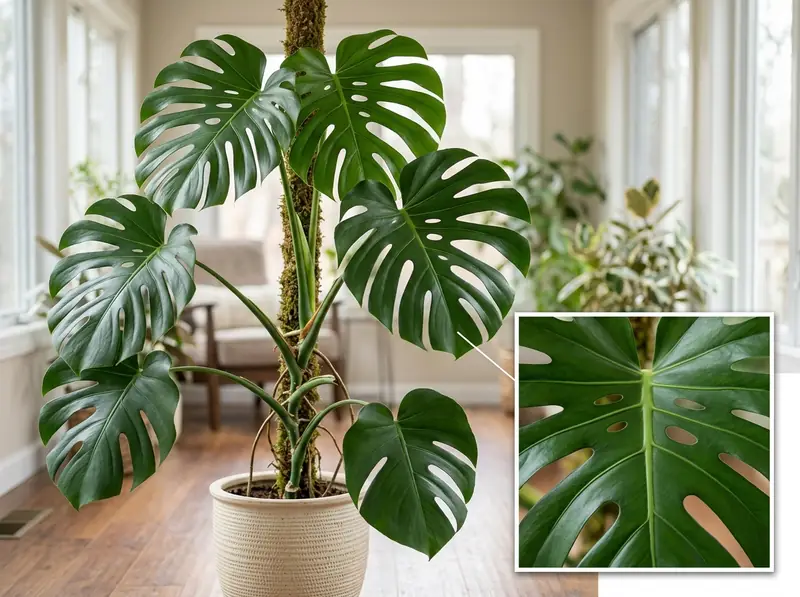
Nakamura Monstera
Monstera deliciosa 'Nakamura'
Nakamura monstera is a Monstera deliciosa selection grown for large leaves with deep cuts and holes. Care is the same as for the standard monstera, and it rewards bright light and a pole with big, dramatic leaves.
Saving is free with a KinClub account, and it works here and in the KinClub app. Sign up free
Care profile
- Light
- Bright, indirect lightLow → direct sun
- Water
- Moderate wateringAbout every 8 days
- Difficulty
- EasyTricky → easy
- Coldest it tolerates
- 50°F
- Humidity
- Medium
- Mature size
- Tree-sizeSmall → tree-size
- Growth rate
- Fast
- How common
- RareRare → everywhere
- Plant family
- Araceae
Pets and toxicity
Toxic to cats
Keep away from cats. Call your vet or a pet poison helpline if a cat chews it.
Toxic to dogs
Keep away from dogs. Call your vet or a pet poison helpline if a dog chews it.
Source: ASPCA toxic and non-toxic plants. If a pet eats any houseplant, call your vet or an animal poison helpline.
How to care for Nakamura Monstera
Light
Prefers bright, indirect light, such as near an east window or set back from a south window. Good light is needed for the large, deeply cut leaves to develop; low light gives small, plain leaves.
Watering
Water when the top 2 in of soil are dry, about every 8 days in the growing season and every 2 weeks in winter. Water thoroughly and discard the saucer water.
Soil
Use a chunky aroid mix of 2 parts potting soil, 1 part orchid bark and 1 part perlite, in a pot with drainage holes.
Feeding
Feed every 4 weeks in spring and summer with a balanced houseplant fertilizer at half strength. Reduce or skip in winter.
Repotting
Repot every 1 to 2 years in spring into a pot 2 in wider, and add a moss pole at the same time.
Propagation
Cut below a node with an aerial root, and root in water or damp moss in 3 to 5 weeks. Each cutting should have a node and one leaf.
Common problems
- Small unsplit leaves usually mean too little light or no pole; improve both.
- Yellow lower leaves with wet soil show overwatering; let the soil dry down.
- Spider mites and thrips cause speckling; wipe the leaves and spray with insecticidal soap.
- Brown leaf edges come from dry air or irregular watering; water deeply, then let it dry.
Similar plants
Same light needs and difficulty.
 AI-generated
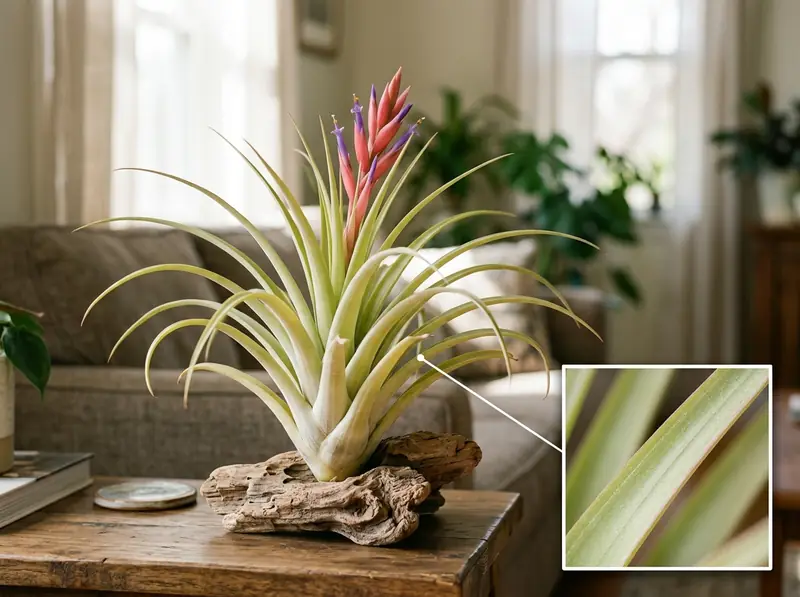
Leiboldiana Air Plant
Tillandsia leiboldiana
- Bright, indirect light
- Let it dry out
Pets: not yet checked AI-generated
 AI-generated
Chinese Money Plant
Pilea peperomioides
- Bright, indirect light
- Dry to moderate watering
Pets: not yet checked AI-generated
Christmas Cactus
Schlumbergera × buckleyi
- Bright, indirect light
- Moderate watering
Pets: not yet checked