
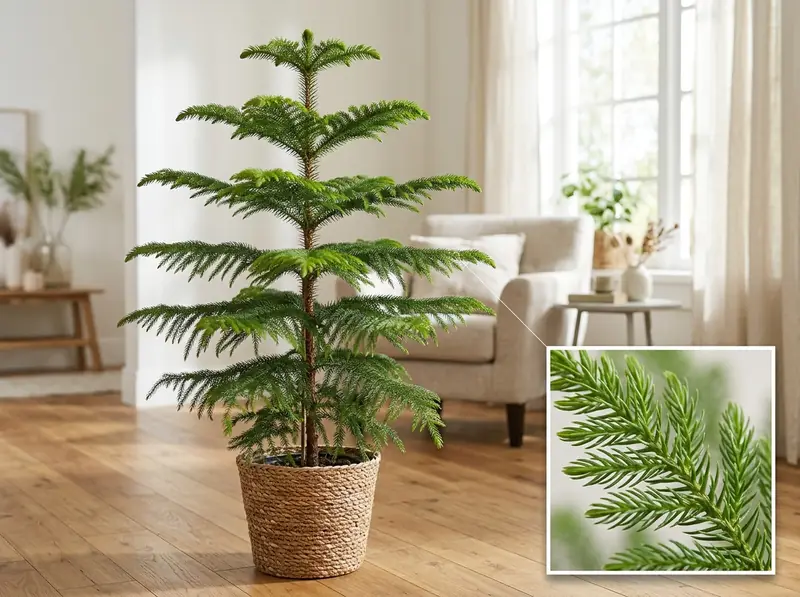
 AI-generated
Norfolk Island Pine
Araucaria heterophylla
Also known as Australian Pine, Norfolk Pine, House Pine
Norfolk Island Pine is a soft-needled evergreen that forms tidy tiers of branches and is often used as a living Christmas tree. It needs bright light, steady moisture, and humid, cool-ish air to stay full. Lower branches that dry out and fall will not regrow, so consistent care matters.
Saving is free with a KinClub account, and it works here and in the KinClub app. Sign up free
Care profile
- Light
- Bright, indirect lightLow → direct sun
- Water
- Moderate wateringAbout every 10 days
- Difficulty
- ModerateTricky → easy
- Coldest it tolerates
- 45°F
- Humidity
- Medium to high
- Mature size
- Tree-sizeSmall → tree-size
- Growth rate
- Slow
- How common
- Very commonRare → everywhere
- Plant family
- Araucariaceae
Pets and toxicity
Non-toxic to cats
Listed as non-toxic to cats by the ASPCA.
Non-toxic to dogs
Listed as non-toxic to dogs by the ASPCA.
Source: ASPCA toxic and non-toxic plants. If a pet eats any houseplant, call your vet or an animal poison helpline.
How to care for Norfolk Island Pine
Light
Give it bright light, ideally a south or west window with a few hours of gentle sun, or bright indirect light. Rotate it regularly so it grows evenly.
Watering
Water thoroughly when the top inch of soil feels dry, about every 7 to 14 days, and empty the saucer afterward. Never let the root ball dry out completely or sit in water.
Soil
Use a well-draining, peat-based potting mix with some perlite or coarse sand added. The pot must have drainage holes.
Feeding
Feed monthly in spring and summer with a balanced liquid houseplant fertilizer at half strength. Skip feeding in fall and winter.
Repotting
Repot only every 2 to 3 years in spring, going up just one pot size (about 2 inches wider). It dislikes root disturbance, so handle the root ball gently.
Propagation
Hard for home growers: it is grown from seed or from the top tip of a tree, and side branches will not form a new upright tree. Buying a young plant is the practical option.
Common problems
- Brown, crispy branch tips from dry air or irregular watering: mist is not enough, so use a humidifier or pebble tray and water more consistently.
- Lower branches yellowing and dropping from overwatering or poor drainage: let the soil dry more between waterings and check drainage holes.
- Leaning or crooked growth from uneven light: rotate a quarter turn every week or two.
- Sticky residue or fine webbing from mealybugs, scale or spider mites: wipe with soapy water or rubbing alcohol and repeat weekly.
Similar plants
Same light needs and difficulty.
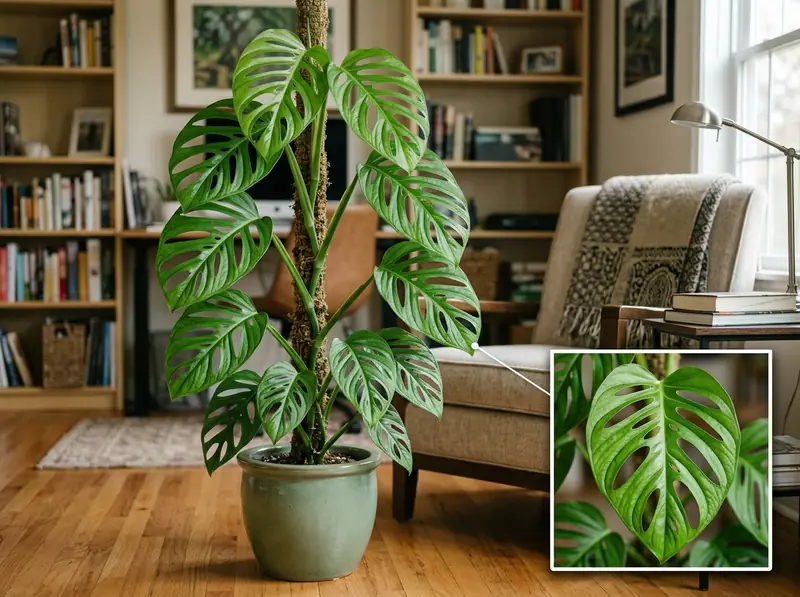 AI-generated
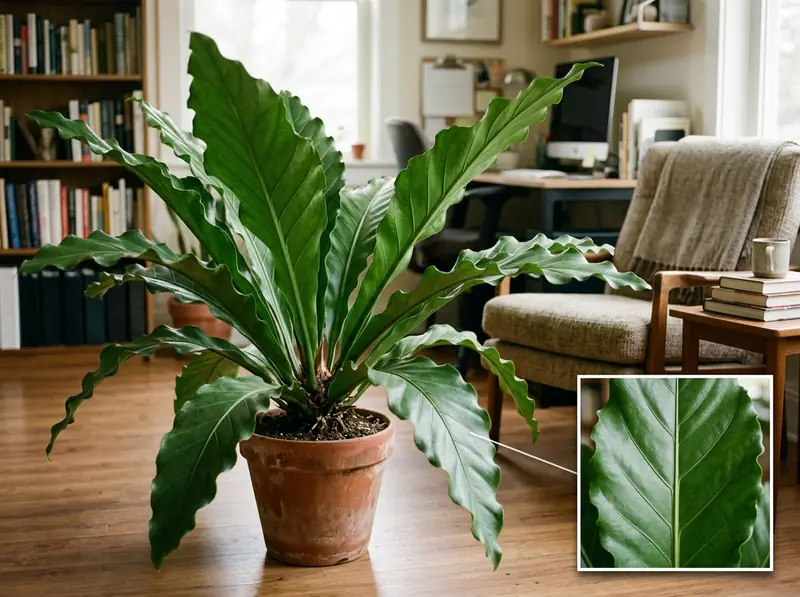 AI-generated
Faustomirandae Anthurium
Anthurium faustomirandae
- Bright, indirect light
- Moderate watering
Pets: not yet checked AI-generated
 AI-generated