
 AI-generated
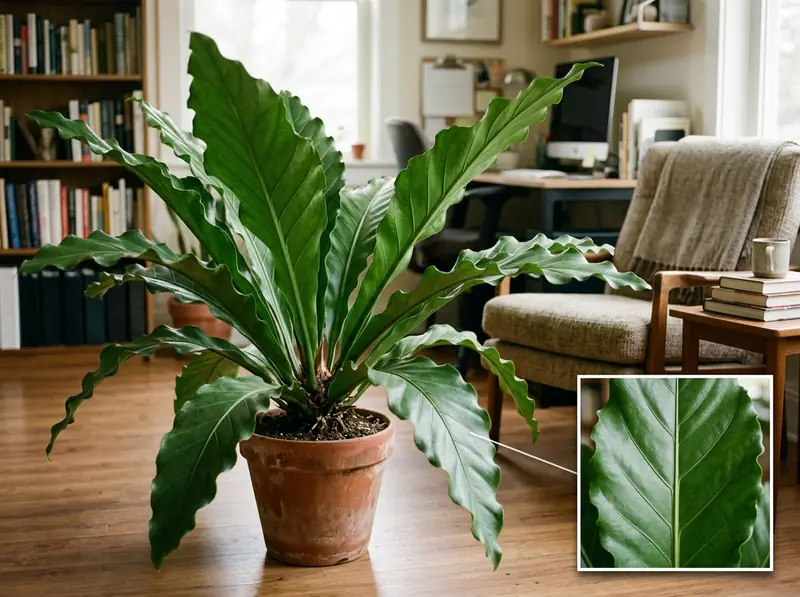
Faustomirandae Anthurium
Anthurium faustomirandae
Faustomirandae anthurium is a large bird's-nest-style species with long, wavy, glossy green leaves. It needs room and plenty of warmth and humidity. It is a rare collector's plant and slow to propagate.
Saving is free with a KinClub account, and it works here and in the KinClub app. Sign up free
Care profile
- Light
- Bright, indirect lightLow → direct sun
- Water
- Moderate wateringAbout every 7 days
- Difficulty
- ModerateTricky → easy
- Coldest it tolerates
- 60°F
- Humidity
- High
- Mature size
- LargeSmall → tree-size
- Growth rate
- Slow to moderate
- How common
- EnthusiastRare → everywhere
- Plant family
- Araceae
Pets and toxicity
Cats and dogs: not yet checked
Not yet checked against ASPCA — don't assume it's safe for pets.
No toxicity source on record for this plant yet. If a pet eats any houseplant, call your vet or an animal poison helpline.
How to care for Faustomirandae Anthurium
Light
Bright indirect light supports the huge leaves. Avoid hot afternoon sun; low light makes them flop and slows growth.
Watering
Water when the top 2 inches are dry, about weekly in summer and every 10 to 14 days in winter. Let excess drain fully.
Soil
Use a very chunky, airy mix such as orchid bark, perlite, and coco coir with a little potting soil, in a pot with drainage.
Feeding
Feed every 3 to 4 weeks in spring and summer with balanced fertilizer at half strength; skip it in winter.
Repotting
Repot every 2 to 3 years in spring into a heavy pot only slightly larger.
Propagation
Grown from seed, or by dividing offsets in rare cases; it is slow and difficult for home growers.
Common problems
- Thrips and mites scar leaves; rinse them and use insecticidal soap.
- Crispy edges mean dry air; aim for 60 percent humidity.
- Yellowing lower leaves are normal slowly, but many at once means wet mix.
Similar plants
Same light needs and difficulty.
 AI-generated
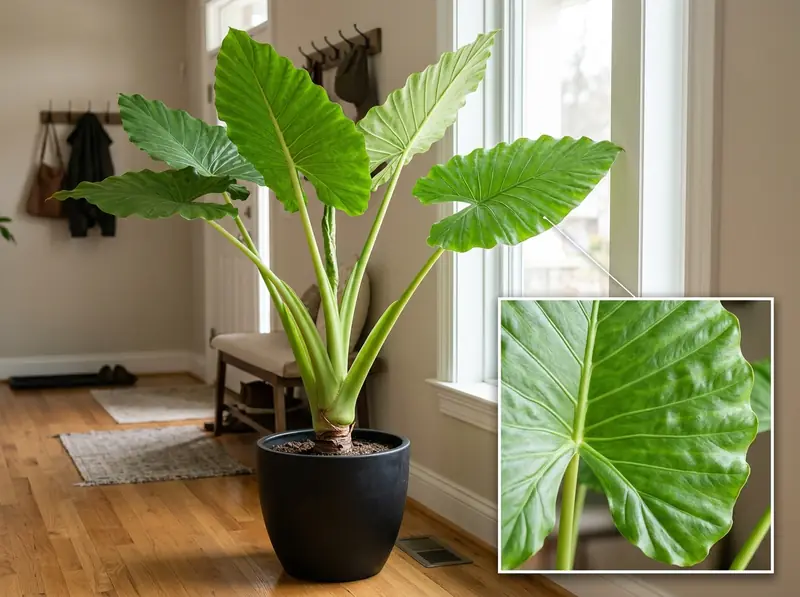
Giant Taro
Alocasia macrorrhizos
- Bright, indirect light
- Moderate to moist watering
Toxic to cats and dogs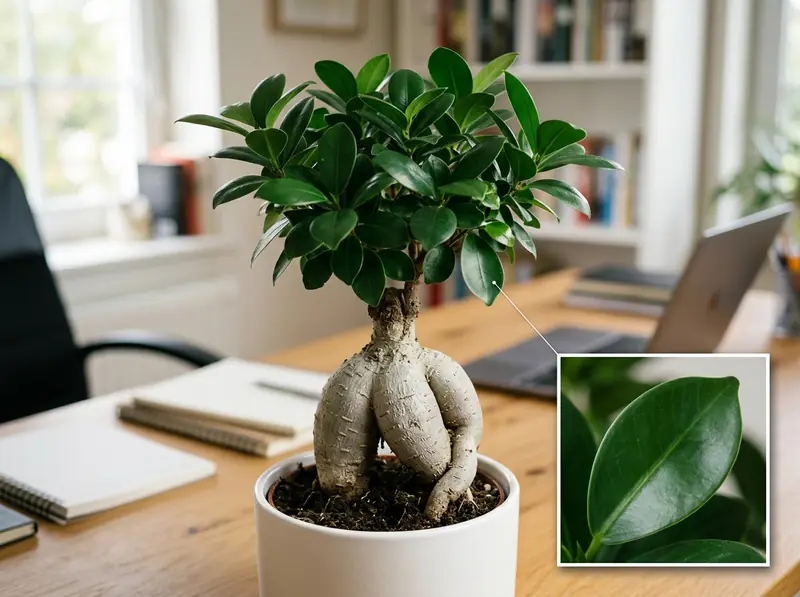 AI-generated
Ginseng Ficus
Ficus microcarpa 'Ginseng'
- Bright, indirect light
- Moderate watering
Toxic to cats and dogs AI-generated
 AI-generated