
 AI-generated
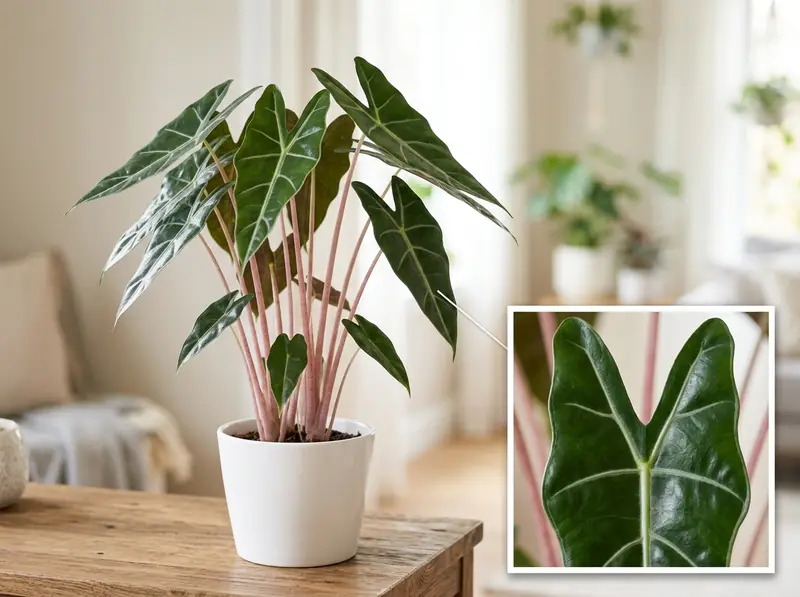
Pink Dragon Alocasia
Alocasia 'Pink Dragon'
Pink Dragon is a glossy Alocasia with dark green leaves held on striking pink stems. It stays manageable at about 2 feet indoors and does best with bright light, warmth, and humidity.
Saving is free with a KinClub account, and it works here and in the KinClub app. Sign up free
Care profile
- Light
- Bright, indirect lightLow → direct sun
- Water
- Moderate wateringAbout every 7 days
- Difficulty
- ModerateTricky → easy
- Coldest it tolerates
- 60°F
- Humidity
- High
- Mature size
- MediumSmall → tree-size
- Growth rate
- Moderate
- How common
- RareRare → everywhere
Pets and toxicity
Toxic to cats
Keep away from cats. Call your vet or a pet poison helpline if a cat chews it.
Toxic to dogs
Keep away from dogs. Call your vet or a pet poison helpline if a dog chews it.
Source: ASPCA toxic and non-toxic plants. If a pet eats any houseplant, call your vet or an animal poison helpline.
How to care for Pink Dragon Alocasia
Light
Bright, indirect light keeps the pink stems colorful and growth compact. A few feet from an east or south window works well; avoid harsh midday sun.
Watering
Water when the top 1 to 2 inches of soil feel dry, roughly weekly in summer and every 10 to 14 days in winter. Drain the saucer after each watering.
Soil
Chunky, fast-draining aroid mix: about 2 parts potting soil, 1 part orchid bark, and 1 part perlite. Soil should never stay waterlogged.
Feeding
Feed every 2 to 3 weeks in spring and summer with a balanced fertilizer at half strength. Skip it in fall and winter.
Repotting
Repot every 1 to 2 years in spring, moving up one size only. Use this chance to separate any offset corms with roots.
Propagation
Pot up the offset corms that form around the base, or divide clumps at repotting. Keep warm and humid until established.
Common problems
- Spider mites and thrips cause speckling and silvery streaks. Rinse the foliage and treat with insecticidal soap every week for 3 weeks.
- Yellow lower leaves with mushy stems signal overwatering. Let the soil dry more and check for rot at the base.
- Brown leaf edges come from dry air or cold drafts. Raise humidity above 50 percent and keep it away from vents.
Similar plants
Same light needs and difficulty.
 AI-generated
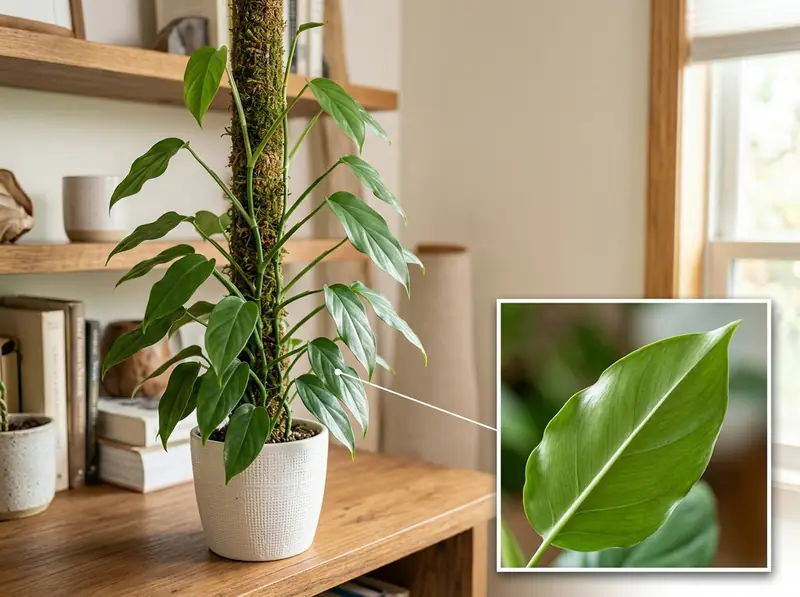
Zippelianum Amydrium
Amydrium zippelianum
- Bright, indirect light
- Moderate watering
Pets: not yet checked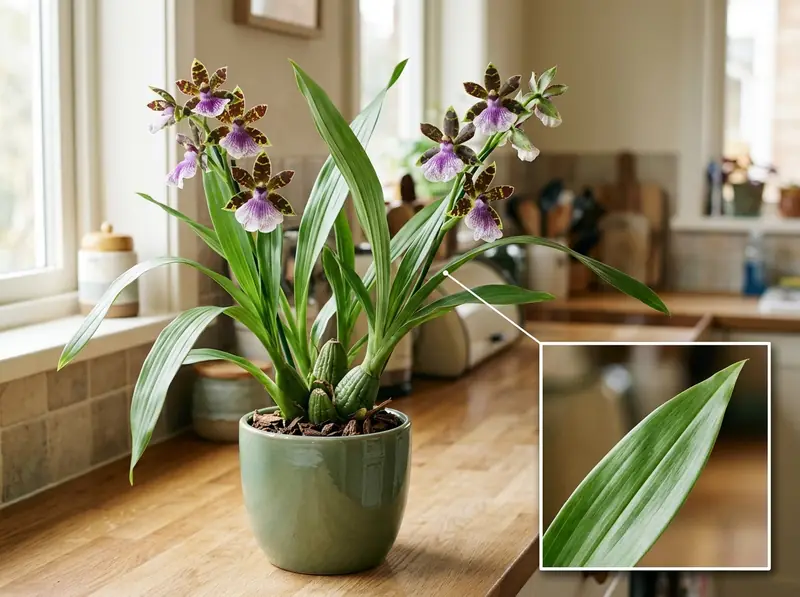 AI-generated
Zygo Orchid
Zygopetalum hybrids
- Bright, indirect light
- Moderate to moist watering
Pets: not yet checked AI-generated
 AI-generated