
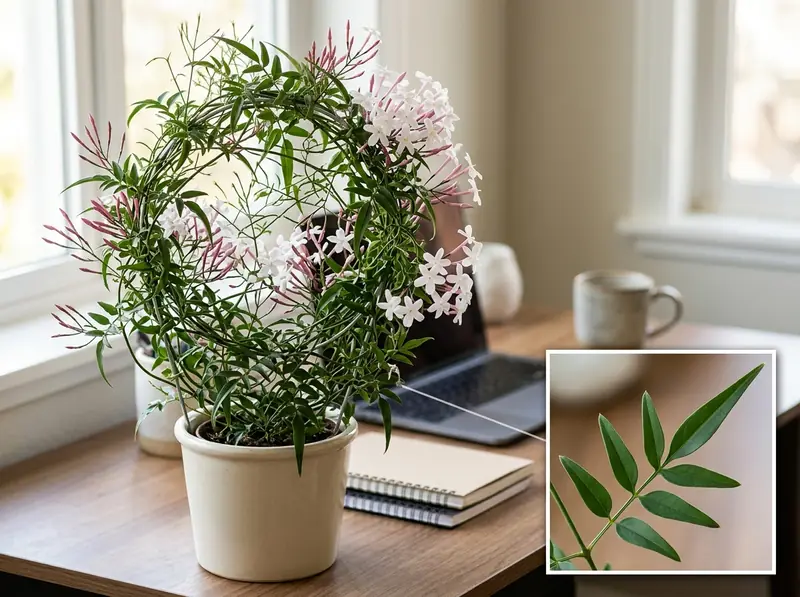
 AI-generated
Pink Jasmine
Jasminum polyanthum
Also known as Jasminum blinii, Jasminum delafieldii, Jasminum excellens
Pink jasmine is a vigorous twining vine with fragrant white flowers that open from pink buds in late winter and spring. It needs bright light, a trellis or hoop for support, and a cool winter rest to set buds. Keep the soil lightly moist and it is a rewarding, fast-growing climber.
Saving is free with a KinClub account, and it works here and in the KinClub app. Sign up free
Care profile
- Light
- Bright, indirect to direct sunLow → direct sun
- Water
- Moderate wateringAbout every 7 days
- Difficulty
- ModerateTricky → easy
- Coldest it tolerates
- 35°F
- Humidity
- Medium
- Mature size
- LargeSmall → tree-size
- Growth rate
- Fast
- How common
- Very commonRare → everywhere
- Plant family
- Oleaceae
Pets and toxicity
Cats and dogs: not yet checked
Not yet checked against ASPCA — don't assume it's safe for pets.
Source: ASPCA toxic and non-toxic plants. If a pet eats any houseplant, call your vet or an animal poison helpline.
How to care for Pink Jasmine
Light
Give it bright light, including 3-4 hours of gentle direct morning sun from an east or south window. Avoid hot midday sun through glass in summer.
Watering
Water when the top inch of soil feels dry, and keep it lightly moist during spring and summer, roughly weekly. Water less in winter, but never let the root ball dry out completely.
Soil
Use a well-draining, peat-based or all-purpose potting mix with some perlite added. The pot must have drainage holes.
Feeding
Feed every 2-4 weeks in spring and summer with a balanced liquid fertilizer at half strength. Switch to a high-potash (bloom) feed as buds form, and stop feeding in winter.
Repotting
Repot every 1-2 years in spring, going up one pot size (1-2 inches wider), or when roots fill the pot. It blooms better when slightly root-bound.
Propagation
Take 4-6 inch stem cuttings in spring or summer, dip them in rooting hormone, and push them into moist potting mix. Keep them warm and humid, and they usually root in 4-6 weeks.
Common problems
- Plant grows lots of foliage but doesn't flower: give it a cool rest at 40-50°F for 4-6 weeks in autumn or winter, and provide brighter light.
- Leaf drop in winter: usually caused by dry heated air, drafts or overwatering; move it away from vents and water only when the top inch is dry.
- Sticky leaves or cottony fluff: this points to scale, mealybugs or aphids; wipe the pests off with rubbing alcohol on a cotton swab or spray with insecticidal soap weekly.
- Fine webbing and stippled leaves: spider mites thrive in dry warm air; rinse the foliage and raise the humidity.
- Tangled, sprawling vines: prune after flowering and train them on a hoop or trellis.
Similar plants
Same light needs and difficulty.
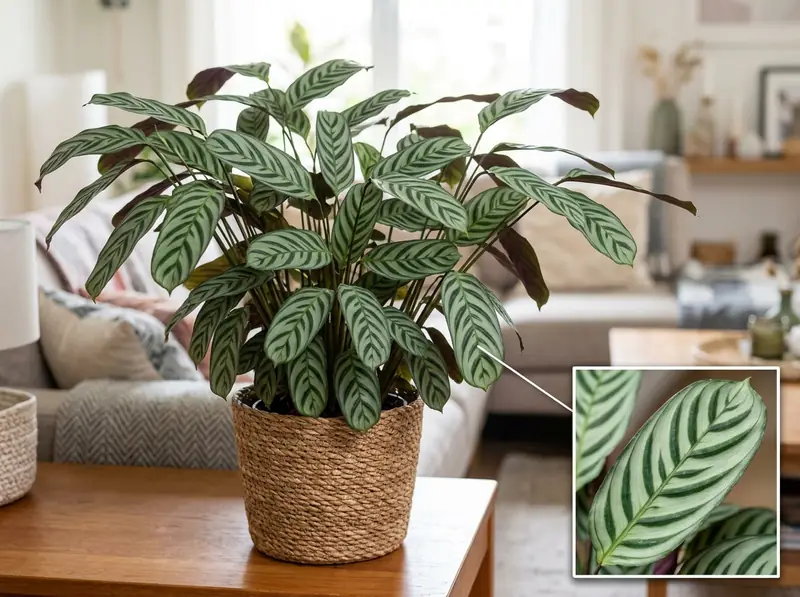 AI-generated
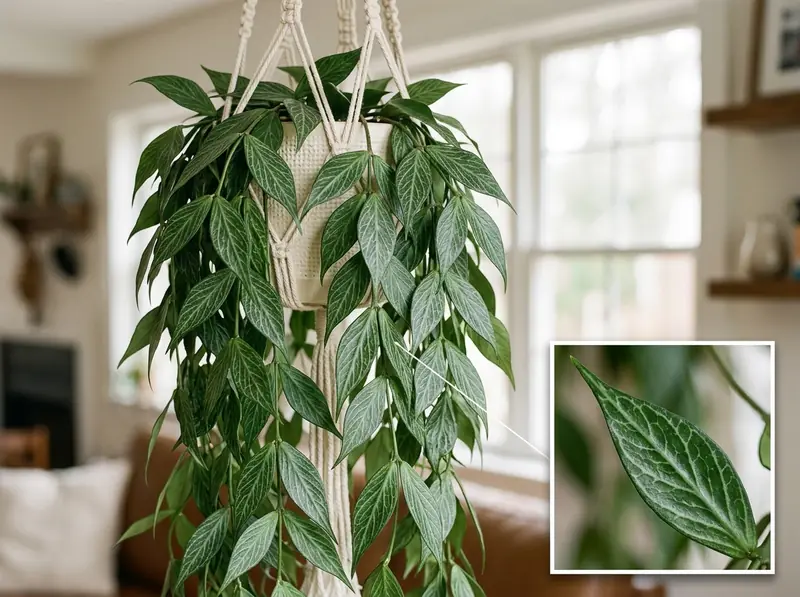 AI-generated
 AI-generated
 AI-generated