
 AI-generated
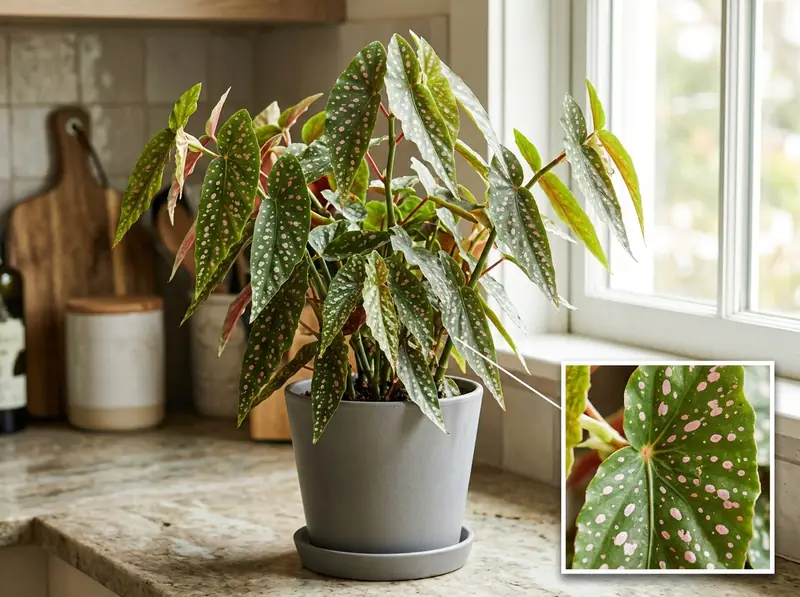
Pink Spot Begonia
Begonia 'Pink Spot'
A spotted begonia with pink-flecked foliage that adds color to a bright shelf or table. It is easy to keep looking good with bright indirect light, moderate watering and a trim every spring.
Saving is free with a KinClub account, and it works here and in the KinClub app. Sign up free
Care profile
- Light
- Bright, indirect lightLow → direct sun
- Water
- Moderate wateringAbout every 7 days
- Difficulty
- ModerateTricky → easy
- Coldest it tolerates
- 55°F
- Humidity
- Medium to high
- Mature size
- MediumSmall → tree-size
- Growth rate
- Moderate
- How common
- EnthusiastRare → everywhere
Pets and toxicity
Toxic to cats
Keep away from cats. Call your vet or a pet poison helpline if a cat chews it.
Toxic to dogs
Keep away from dogs. Call your vet or a pet poison helpline if a dog chews it.
Source: ASPCA toxic and non-toxic plants. If a pet eats any houseplant, call your vet or an animal poison helpline.
How to care for Pink Spot Begonia
Light
Bright indirect light from an east window, or a few feet back from a south or west one. Gentle morning sun is fine, but hot afternoon sun burns the leaves.
Watering
Water when the top inch of soil is dry, about once a week, and empty the saucer. Keep the soil lightly moist but never soggy, and drier in winter.
Soil
Use a light, airy potting mix with extra perlite or bark for fast drainage. Always use a pot with drainage holes.
Feeding
Feed with a half-strength balanced fertilizer every 3 to 4 weeks in spring and summer, and stop in winter.
Repotting
Repot every 1 to 2 years in spring, only when roots fill the pot, into a pot one size larger.
Propagation
Root 4 to 6 inch stem cuttings in water or moist mix, or root leaf sections, in a warm, bright spot out of direct sun.
Common problems
- Powdery white film on leaves: mildew from damp, still air. Increase airflow, remove affected leaves and water only at the soil.
- Leaves dropping in winter: cold drafts or low light. Keep the plant above 55 degrees F and in the brightest spot you have.
- Webbing or stippled leaves: spider mites in dry air. Rinse leaves and treat with insecticidal soap weekly.
Similar plants
Same light needs and difficulty.
 AI-generated
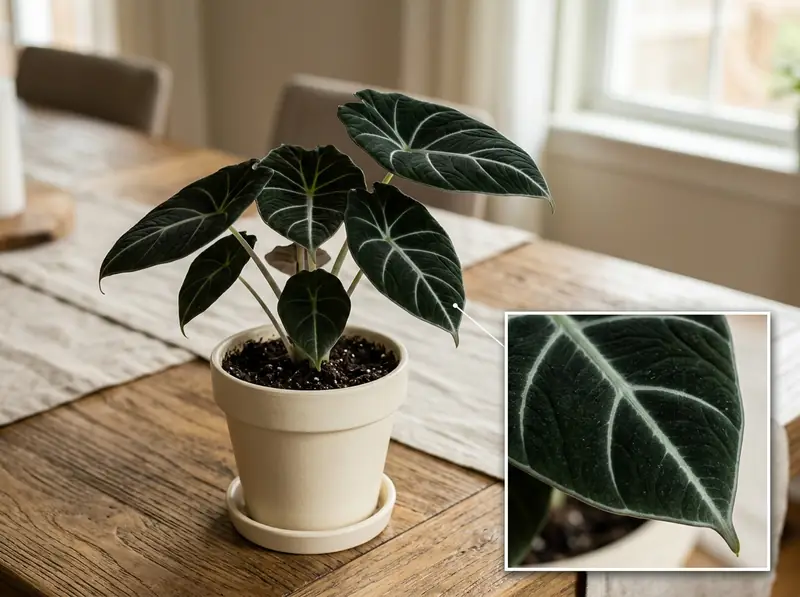
Black Velvet Alocasia
Alocasia reginula 'Black Velvet'
- Bright, indirect light
- Moderate watering
Toxic to cats and dogs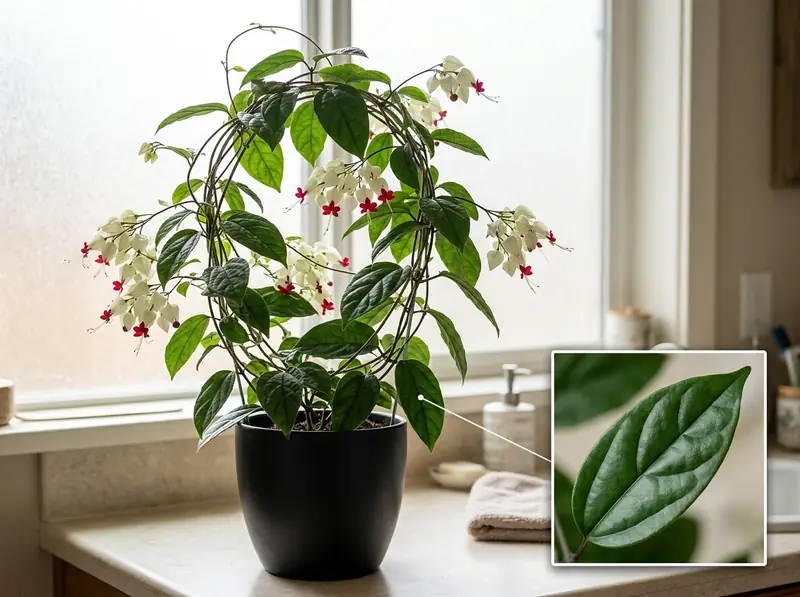 AI-generated
Bleeding Heart Vine
Clerodendrum thomsoniae
- Bright, indirect light
- Moderate watering
Pets: not yet checked AI-generated
 AI-generated