
 AI-generated
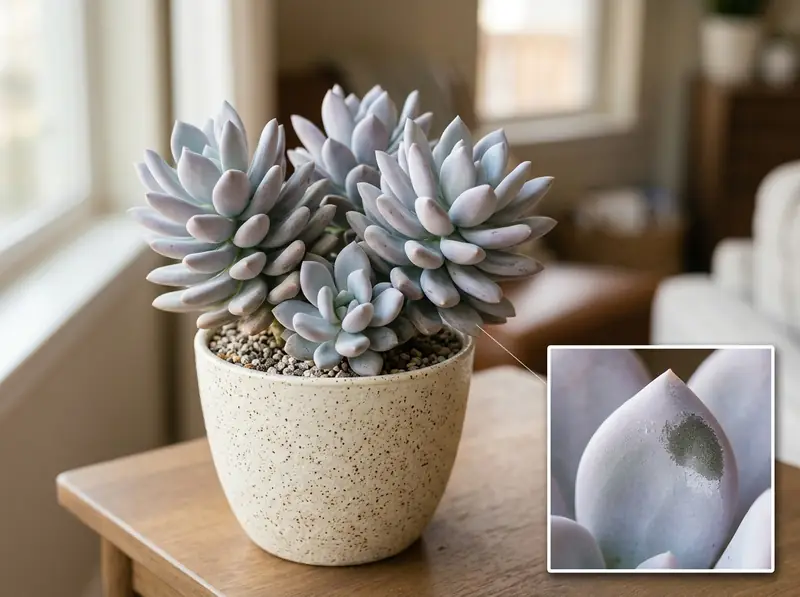
Powder Puff Pachyveria
Pachyveria 'Powder Puff'
Powder Puff Pachyveria is a slow-growing succulent hybrid that forms tight rosettes of plump, silvery-lavender leaves with a powdery coating. It needs bright direct sun, gritty fast-draining soil and infrequent watering. It is easy to start new plants from fallen leaves.
Saving is free with a KinClub account, and it works here and in the KinClub app. Sign up free
Care profile
- Light
- Direct sunLow → direct sun
- Water
- Let it dry outAbout every 14 days
- Difficulty
- EasyTricky → easy
- Coldest it tolerates
- 40°F
- Humidity
- Low
- Mature size
- SmallSmall → tree-size
- Growth rate
- Slow
- How common
- CommonRare → everywhere
Pets and toxicity
Cats and dogs: not yet checked
Not yet checked against ASPCA — don't assume it's safe for pets.
No toxicity source on record for this plant yet. If a pet eats any houseplant, call your vet or an animal poison helpline.
How to care for Powder Puff Pachyveria
Light
Give at least 4 to 6 hours of direct sun, such as a south or west window, for the best silvery-lavender color and a compact shape. Move it gradually into stronger sun to avoid scorch.
Watering
Soak the soil thoroughly, then let it dry out completely before watering again, roughly every 2 to 3 weeks in summer. In winter water only about once a month or less.
Soil
Use a gritty cactus and succulent mix, ideally with extra perlite or pumice added. Use a pot with drainage holes, and terracotta helps the soil dry faster.
Feeding
Feed with a half-strength cactus fertilizer once or twice in spring and summer. Do not feed in fall and winter.
Repotting
Repot every 2 to 3 years, or when it outgrows the pot, in spring. Wait a few days after repotting before watering to let any root damage heal.
Propagation
Twist off a healthy leaf or cut a stem section, let it callus for a few days, then lay it on dry succulent mix. Mist lightly once roots and baby rosettes begin to form.
Common problems
- Stretched, leggy growth from low light: move to a sunnier window and behead the rosette to restart it.
- Mushy leaves and a soft stem from overwatering: stop watering, and cut off and re-root any healthy top.
- White cottony mealybugs in leaf axils: dab with cotton swabs dipped in rubbing alcohol and repeat weekly.
- Fingerprints or water marks on the powdery coating: avoid touching, as the marks do not fade until new growth.
Similar plants
Same light needs and difficulty.
 AI-generated
 AI-generated
 AI-generated
 AI-generated