
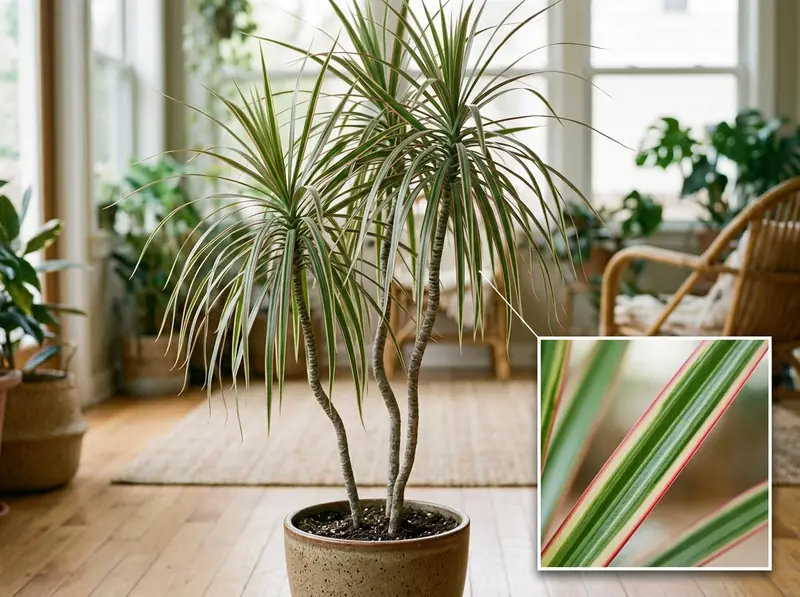
 AI-generated
Rainbow Dragon Tree
Dracaena marginata 'Tricolor'
Rainbow dragon tree is a variegated form of Dracaena marginata with slender green leaves striped in cream and edged in pink to red. It is an easy, slow-growing floor or tabletop plant that keeps its best color in bright indirect light. Let the soil dry between waterings and it will stay handsome for years.
Saving is free with a KinClub account, and it works here and in the KinClub app. Sign up free
Care profile
- Light
- Bright, indirect lightLow → direct sun
- Water
- Let it dry outAbout every 14 days
- Difficulty
- EasyTricky → easy
- Coldest it tolerates
- 55°F
- Humidity
- Low to medium
- Mature size
- Large to tree-sizeSmall → tree-size
- Growth rate
- Slow
- How common
- CommonRare → everywhere
- Plant family
- Asparagaceae
Pets and toxicity
Toxic to cats
Keep away from cats. Call your vet or a pet poison helpline if a cat chews it.
Toxic to dogs
Keep away from dogs. Call your vet or a pet poison helpline if a dog chews it.
Source: ASPCA toxic and non-toxic plants. If a pet eats any houseplant, call your vet or an animal poison helpline.
How to care for Rainbow Dragon Tree
Light
Does best in bright indirect light, which keeps the pink and cream striping vivid. It tolerates medium light but loses color and grows more slowly; avoid hours of direct midday sun, which can scorch the narrow leaves.
Watering
Water thoroughly when the top 2 inches of soil are dry, usually every 10 to 14 days in the growing season, and less in winter. Empty the saucer afterward, as it dislikes sitting in water.
Soil
Use a well-draining potting mix, such as regular indoor mix with about a quarter perlite or coarse sand added. The pot must have drainage holes.
Feeding
Feed with a balanced liquid houseplant fertilizer at half strength about once a month from spring through summer. Skip feeding in fall and winter.
Repotting
Repot every 2 to 3 years in spring into a pot only 1 to 2 inches wider. It is happy slightly root-bound, so don't repot too often.
Propagation
Cut a cane into 4 to 6 inch sections, or take a leafy top cutting, and keep track of which end is up. Root in water or damp mix in a warm spot, which takes several weeks.
Common problems
- Brown leaf tips: caused by fluoride or salts in tap water or by dry soil; use filtered or rain water and flush the soil periodically.
- Yellowing and dropping lower leaves: some is normal aging, but many at once points to overwatering; let the soil dry more between waterings.
- Spider mites: fine webbing and speckled leaves; wipe leaves with a damp cloth and spray with insecticidal soap.
- Leggy, bare canes: prune the top back in spring and new shoots will sprout below the cut.
- Fading color: stripes turn green in low light; move the plant to a brighter spot.
Similar plants
Same light needs and difficulty.
 AI-generated
 AI-generated
 AI-generated
Chinese Money Plant
Pilea peperomioides
- Bright, indirect light
- Dry to moderate watering
Pets: not yet checked AI-generated
Christmas Cactus
Schlumbergera × buckleyi
- Bright, indirect light
- Moderate watering
Pets: not yet checked