
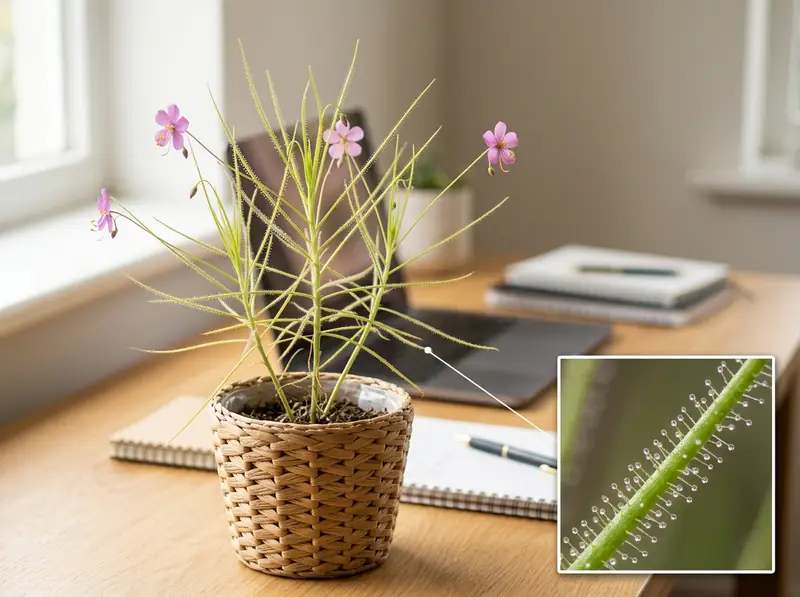
 AI-generated
Rainbow Plant
Byblis liniflora
Rainbow plant is a small carnivorous annual from northern Australia whose thin, sticky leaves shimmer with dew like a sundew, topped by pink flowers. It is demanding about pure water and strong light, and is usually grown fresh from seed each year.
Saving is free with a KinClub account, and it works here and in the KinClub app. Sign up free
Care profile
- Light
- Direct sunLow → direct sun
- Water
- Keep moistAbout every day
- Difficulty
- Moderate to challengingTricky → easy
- Coldest it tolerates
- 50°F
- Humidity
- Medium to high
- Mature size
- SmallSmall → tree-size
- Growth rate
- Fast
- How common
- RareRare → everywhere
- Plant family
- Byblidaceae
Pets and toxicity
Cats and dogs: not yet checked
Not yet checked against ASPCA — don't assume it's safe for pets.
No toxicity source on record for this plant yet. If a pet eats any houseplant, call your vet or an animal poison helpline.
How to care for Rainbow Plant
Light
Needs full sun, such as an unobstructed south or west window with 5 or more hours of direct light, or a strong grow light for 12 to 14 hours. The sticky glands only form well in strong light.
Watering
Use only distilled, rain or reverse-osmosis water. Keep the pot standing in about 1 inch of water at all times in warm weather; it comes from seasonally wet Australian sands.
Soil
Use a mix of 1 part peat moss to 1 part silica sand or perlite, with no fertilizer or lime. Plastic pot with drainage holes.
Feeding
Do not fertilize. The sticky leaves catch tiny gnats and fruit flies, which is enough; a feed of liquid orchid fertilizer at 1/4 strength on leaves is optional.
Repotting
Rarely needed; it is an annual or short-lived perennial, so start fresh pots from seed or divisions each spring instead of repotting a mature plant.
Propagation
Grow from seed sown on the surface of damp peat and sand at 70 to 80 F; it self-sows readily. Seedlings flower in a few months. Root cuttings are also possible.
Common problems
- Sticky leaves attract gnats and dust; do not wash the leaves, which remove the sticky droplets.
- Cold below about 50 F stunts or kills it; keep it in a warm window in winter.
- Aphids may colonize the flower buds; rinse gently or use a cotton swab.
- Mineral tap water browns the roots; switch to distilled water and flush the pot.
Similar plants
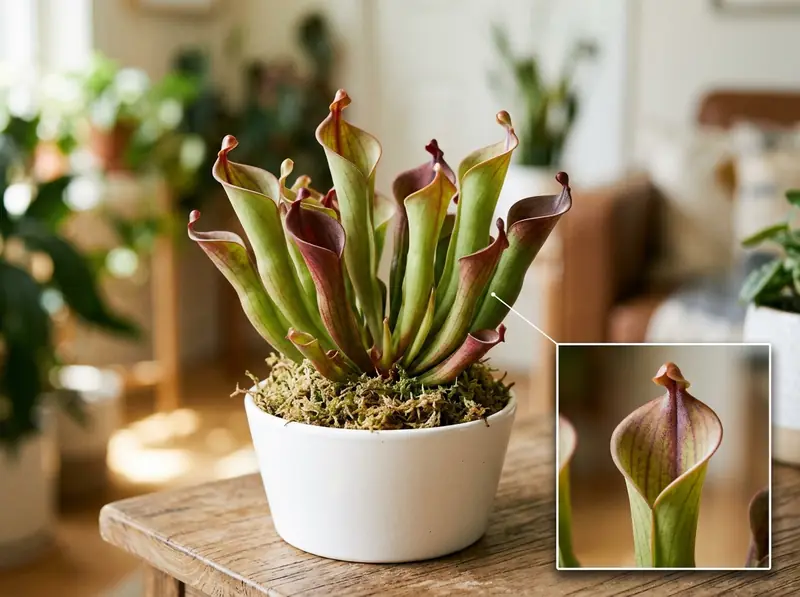
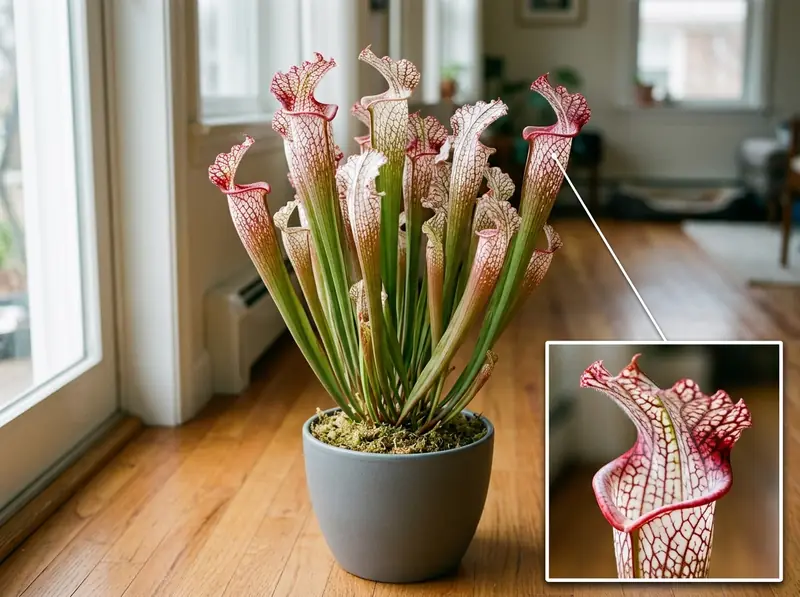
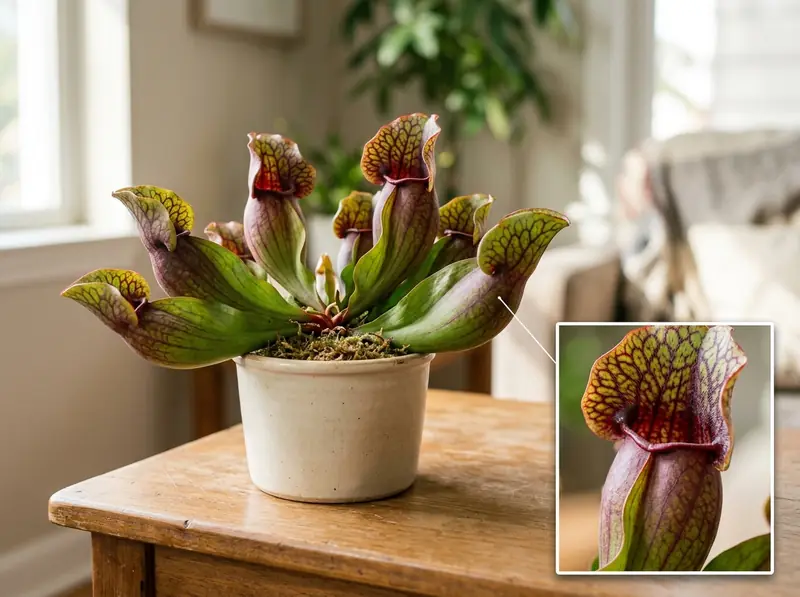
Same light needs and difficulty.
 AI-generated
 AI-generated
 AI-generated
 AI-generated