
 AI-generated
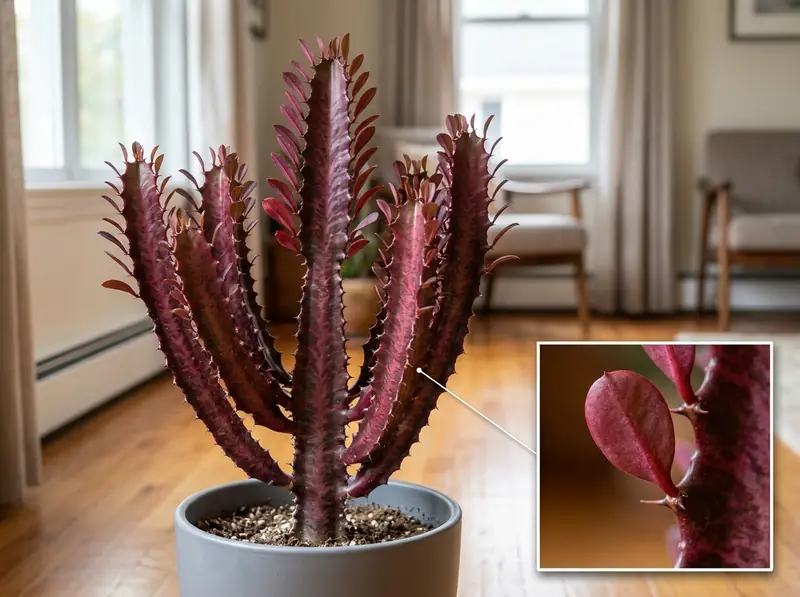
Red African Milk Tree
Euphorbia trigona 'Rubra'
Red African milk tree is a branching, three-sided succulent with burgundy-red stems and small leaves. It grows into a tall, architectural plant and keeps its color best in strong sun.
Saving is free with a KinClub account, and it works here and in the KinClub app. Sign up free
Care profile
- Light
- Direct sunLow → direct sun
- Water
- Let it dry outAbout every 14 days
- Difficulty
- EasyTricky → easy
- Coldest it tolerates
- 50°F
- Humidity
- Low
- Mature size
- LargeSmall → tree-size
- Growth rate
- Moderate to fast
- How common
- EnthusiastRare → everywhere
- Plant family
- Euphorbiaceae
Pets and toxicity
Cats and dogs: not yet checked
Not yet checked against ASPCA — don't assume it's safe for pets.
No toxicity source on record for this plant yet. If a pet eats any houseplant, call your vet or an animal poison helpline.
How to care for Red African Milk Tree
Light
Bright light with several hours of direct sun keeps the red-purple color. In dim light it turns green and stretches toward the window.
Watering
Water deeply when the soil is fully dry, about every 2 weeks in summer. In winter water only once a month or less.
Soil
Use a gritty cactus mix with extra pumice, in a heavy pot with drainage holes so it does not tip over.
Feeding
Feed with half-strength cactus fertilizer once a month from spring to late summer.
Repotting
Repot every 2 to 3 years in spring. Use gloves because the milky sap irritates skin and eyes.
Propagation
Cut a branch, let the cut dry and callus for a week or more, then plant in dry gritty mix and water only after a couple of weeks.
Common problems
- Fading color means too little light: move to a south or west window.
- Root rot from wet soil: unpot, cut away soft roots, and repot in dry gritty mix.
- Spider mites cause fine speckles: wipe stems and spray with water, then repeat weekly.
Similar plants
Same light needs and difficulty.
 AI-generated
 AI-generated
 AI-generated
 AI-generated