
 AI-generated
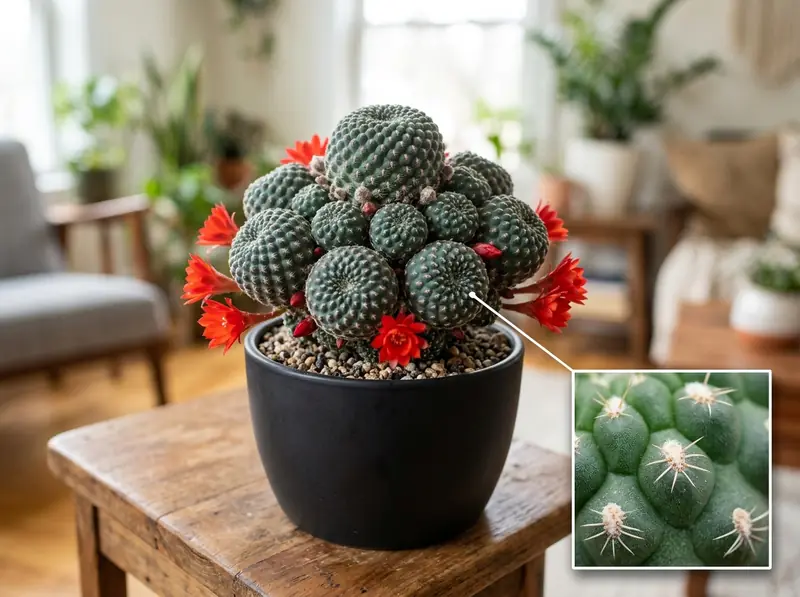
Red Crown Cactus
Rebutia minuscula
Red Crown Cactus is a small, clumping cactus that forms clusters of green globes and, in spring, bears many bright red-orange flowers. It likes full sun, a gritty mix and infrequent watering. A cool, dry winter rest is the secret to good flowering.
Saving is free with a KinClub account, and it works here and in the KinClub app. Sign up free
Care profile
- Light
- Direct sunLow → direct sun
- Water
- Let it dry outAbout every 14 days
- Difficulty
- EasyTricky → easy
- Coldest it tolerates
- 40°F
- Humidity
- Low
- Mature size
- SmallSmall → tree-size
- Growth rate
- Slow
- How common
- Very commonRare → everywhere
- Plant family
- Cactaceae
Pets and toxicity
Cats and dogs: not yet checked
Not yet checked against ASPCA — don't assume it's safe for pets.
No toxicity source on record for this plant yet. If a pet eats any houseplant, call your vet or an animal poison helpline.
How to care for Red Crown Cactus
Light
Give it several hours of bright light, including some direct sun, such as a south or west window. Shade it lightly from harsh midsummer sun through glass to avoid scorch.
Watering
From spring to early autumn, soak the soil thoroughly and let it dry out completely before watering again, usually every 10 to 14 days. Water very little or not at all from late autumn to late winter.
Soil
Use a gritty cactus mix, ideally with extra pumice or coarse sand (about one-third to one-half by volume). Use a pot with drainage holes, and terracotta helps the soil dry faster.
Feeding
During spring and summer, feed about once a month with a low-nitrogen, high-potash cactus fertiliser at half strength. Do not feed in autumn or winter.
Repotting
Repot every 2 to 3 years in spring, when the clump fills the pot, into a pot only one size larger. Wait a week after repotting before you water.
Propagation
Remove offsets that form around the base, let the cut ends callus for several days, then set them on dry gritty mix. Water lightly once roots form, after 2 to 4 weeks. It can also be grown from seed.
Common problems
- No flowers: the plant missed its cool winter rest; keep it at 40-50°F and dry from November to February, then bring it back to bright light.
- Soft, rotting base: overwatering; unpot it, cut away rotted tissue, let it dry for a week and repot in fresh gritty mix.
- White cottony tufts between the stems: mealybugs; dab them with cotton swabs dipped in rubbing alcohol and repeat weekly.
- Fine webbing and speckled, dull skin: spider mites; rinse the plant and treat with insecticidal soap, and raise airflow.
- Stretched, pale growth: too little light; move it to a sunnier window.
Similar plants
Same light needs and difficulty.
 AI-generated
 AI-generated
 AI-generated
 AI-generated
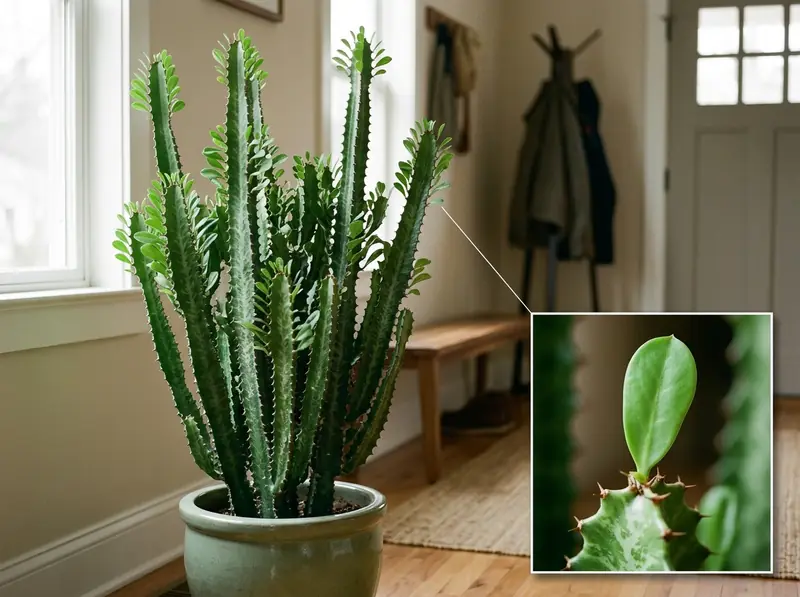
African Milk Tree
Euphorbia trigona
- Bright, indirect to direct sun
- Let it dry out
Pets: not yet checked