
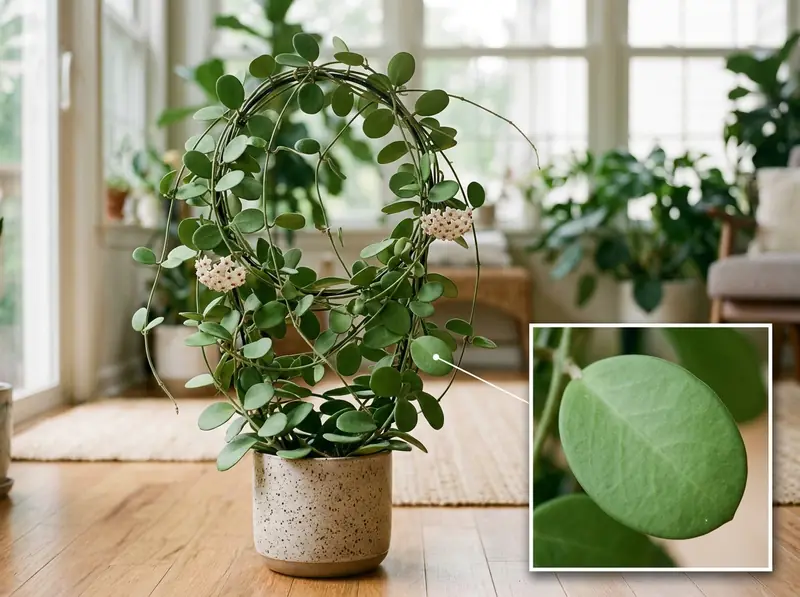
 AI-generated
Rotundiflora Hoya
Hoya rotundiflora
Hoya rotundiflora is a twining hoya with thin, rounded leaves and clusters of small flowers. It is an uncommon species that responds well to standard hoya care. Provide a support, bright light and a mix that dries out between waterings.
Saving is free with a KinClub account, and it works here and in the KinClub app. Sign up free
Care profile
- Light
- Bright, indirect lightLow → direct sun
- Water
- Dry to moderate wateringAbout every 9 days
- Difficulty
- ModerateTricky → easy
- Coldest it tolerates
- 55°F
- Humidity
- Medium
- Mature size
- Medium to largeSmall → tree-size
- Growth rate
- Slow to moderate
- How common
- EnthusiastRare → everywhere
- Plant family
- Apocynaceae
Pets and toxicity
Cats and dogs: not yet checked
Not yet checked against ASPCA — don't assume it's safe for pets.
No toxicity source on record for this plant yet. If a pet eats any houseplant, call your vet or an animal poison helpline.
How to care for Rotundiflora Hoya
Light
Bright, indirect light, including gentle morning sun. In low light it survives but grows thin and rarely blooms.
Watering
Water when the top inch or two of mix is dry, about every 8-10 days in the growing season and less in winter.
Soil
Chunky, fast-draining mix: roughly equal parts orchid bark, perlite and a little potting soil or coco coir. Roots need air around them.
Feeding
Feed every 3-4 weeks in spring and summer with a balanced fertilizer at half strength; skip it in winter. A bloom-booster with more phosphorus helps flowering.
Repotting
Repot only every 2-3 years, in spring, when roots fill the pot. Go up one size at most, since hoyas bloom best slightly rootbound.
Propagation
Take a 4-6 inch stem cutting with at least two nodes. Root it in water, moist perlite or sphagnum moss; roots appear in 3-6 weeks.
Common problems
- Leggy, sparse growth is a sign of low light. Move it brighter and prune stems to encourage branching.
- Overwatering leads to yellow leaves and rot; let the mix dry between drinks.
- Mealybugs on the stems and leaf joints need repeated alcohol swabbing.
Similar plants
Same light needs and difficulty.
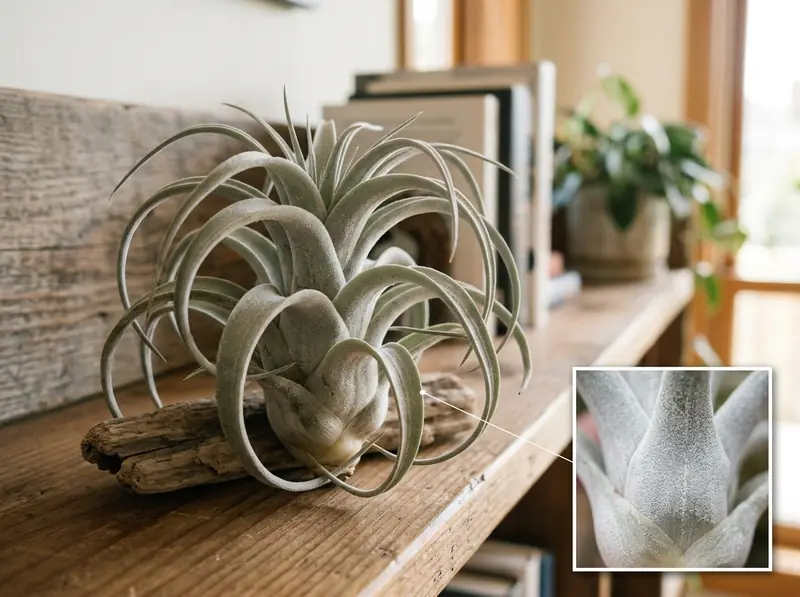 AI-generated
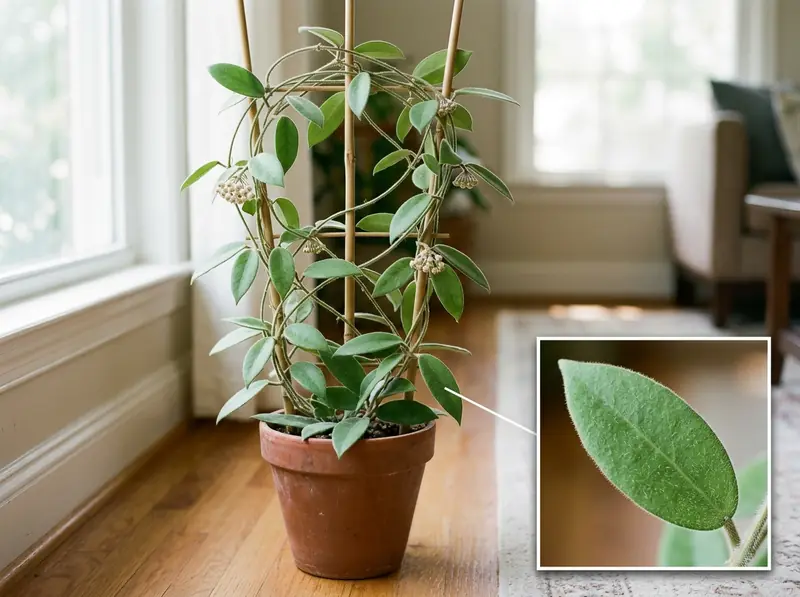 AI-generated
 AI-generated
 AI-generated