
 AI-generated
Ruby Glow Peperomia
Peperomia graveolens
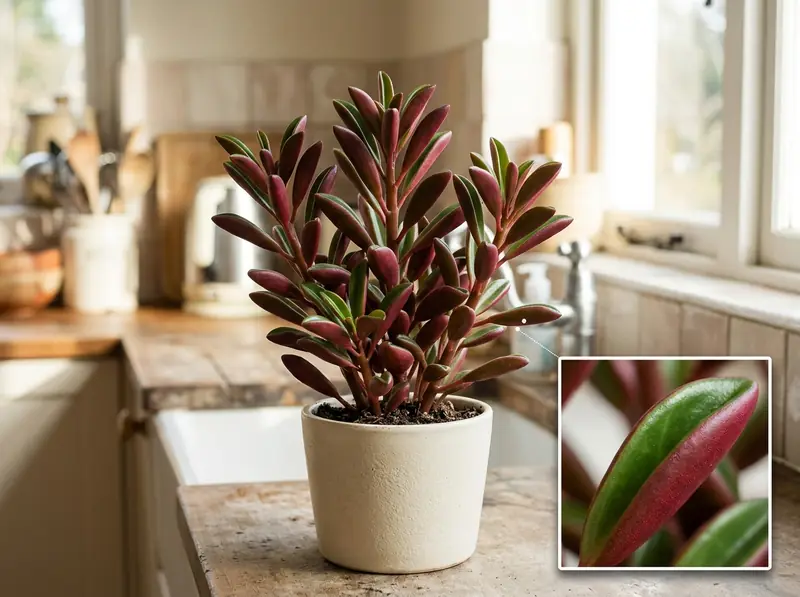
Ruby Glow Peperomia is a compact, slow-growing plant with thick, glossy, cupped green leaves that are deep red underneath. It is forgiving and suits beginners, as long as it gets bright light and is watered sparingly. It stays small, so it is ideal for a desk, shelf or windowsill.
Saving is free with a KinClub account, and it works here and in the KinClub app. Sign up free
Care profile
- Light
- Bright, indirect lightLow → direct sun
- Water
- Let it dry outAbout every 14 days
- Difficulty
- EasyTricky → easy
- Coldest it tolerates
- 50°F
- Humidity
- Low
- Mature size
- SmallSmall → tree-size
- Growth rate
- Slow
- How common
- CommonRare → everywhere
- Plant family
- Piperaceae
Pets and toxicity
Cats and dogs: not yet checked
Not yet checked against ASPCA — don't assume it's safe for pets.
No toxicity source on record for this plant yet. If a pet eats any houseplant, call your vet or an animal poison helpline.
How to care for Ruby Glow Peperomia
Light
Give it bright, indirect light, such as near an east or lightly shaded south or west window. A few hours of gentle morning sun is fine and deepens the red coloring.
Watering
Water thoroughly, then let the soil dry out almost completely before watering again, about every 2 weeks in summer and every 3 to 4 weeks in winter. Empty any water from the saucer after 15 minutes.
Soil
Use a gritty, fast-draining mix, such as cactus mix or standard potting mix with about one-third perlite or pumice. Always use a pot with drainage holes.
Feeding
Feed once a month in spring and summer with a balanced houseplant fertilizer diluted to half strength. Do not feed in fall and winter.
Repotting
Repot only every 2 to 3 years, when roots fill the pot, going up just one size (1 to 2 inches wider). Spring is the best time, and it likes being slightly root-bound.
Propagation
Take a stem cutting with a few leaves in spring or summer, or root single leaves with a bit of stalk in gritty mix. Keep it barely moist and bright, and roots form in 3 to 6 weeks.
Common problems
- Mushy stems and dropping leaves mean root rot from overwatering; cut off healthy tops, let them callus, and re-root in fresh gritty mix.
- Leggy growth with green leaves means too little light; move it to a brighter spot and pinch the tips to encourage branching.
- Wrinkled, soft leaves usually mean the plant is thirsty; give a thorough soak and resume a regular schedule.
- White cottony patches in leaf joints are mealybugs; dab them with rubbing alcohol on a cotton swab and repeat weekly.
Similar plants
Same light needs and difficulty.
 AI-generated
Chinese Money Plant
Pilea peperomioides
- Bright, indirect light
- Dry to moderate watering
Pets: not yet checked AI-generated
Christmas Cactus
Schlumbergera × buckleyi
- Bright, indirect light
- Moderate watering
Pets: not yet checked AI-generated
 AI-generated