
 AI-generated
San Pedro Cactus
Trichocereus pachanoi
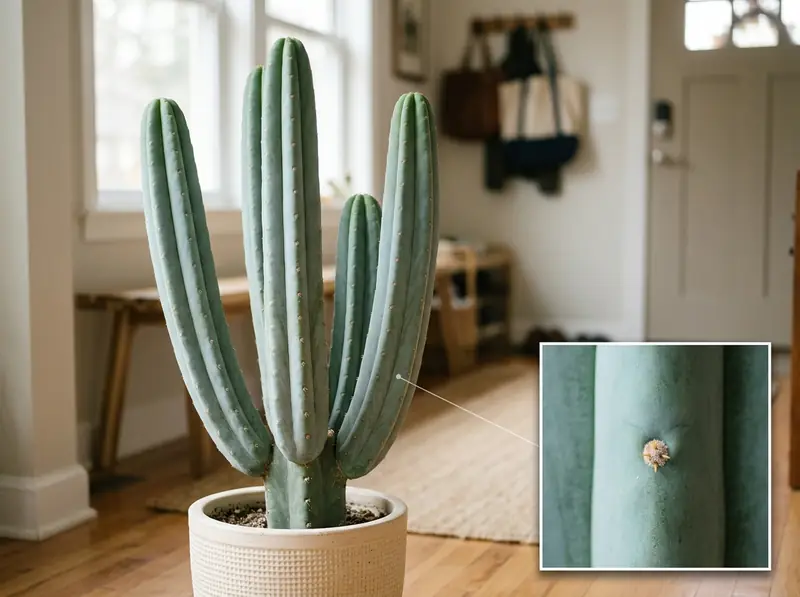
San Pedro is a fast-growing, columnar cactus with ribbed blue-green stems that can reach several feet indoors. It needs lots of direct sun, gritty soil and infrequent watering, and it forgives neglect better than overwatering. A cool, dry winter rest keeps it healthy.
Saving is free with a KinClub account, and it works here and in the KinClub app. Sign up free
Care profile
- Light
- Direct sunLow → direct sun
- Water
- Let it dry outAbout every 14 days
- Difficulty
- EasyTricky → easy
- Coldest it tolerates
- 35°F
- Humidity
- Low
- Mature size
- Large to tree-sizeSmall → tree-size
- Growth rate
- Moderate to fast
- How common
- EnthusiastRare → everywhere
- Plant family
- Cactaceae
Pets and toxicity
Cats and dogs: not yet checked
Not yet checked against ASPCA — don't assume it's safe for pets.
No toxicity source on record for this plant yet. If a pet eats any houseplant, call your vet or an animal poison helpline.
How to care for San Pedro Cactus
Light
Give it at least 4-6 hours of direct sun daily, such as a south or west window. Acclimate gradually to stronger light over a couple of weeks to avoid sunburn.
Watering
Soak thoroughly, then let the soil dry out completely before watering again, about every 10-14 days in summer. In winter, water only once a month or less, or not at all in a cool room.
Soil
Use a gritty cactus mix with extra pumice or perlite, roughly half mineral grit. Use an unglazed terracotta pot with a drainage hole.
Feeding
Feed with a low-nitrogen cactus fertilizer at half strength about once a month from spring to late summer. Do not feed in autumn and winter.
Repotting
Repot every 2-3 years in spring, moving up only one pot size, as tall plants need a heavy, stable pot. Let the roots dry a few days after repotting before watering.
Propagation
Cut a healthy section 6-12 inches long with a clean knife and let the cut end callus in a dry, shaded spot for 1-2 weeks. Then set it upright in dry gritty mix and water lightly once roots form.
Common problems
- Soft, mushy base from overwatering: stop watering; if rot is limited, cut above it into healthy green tissue, callus the cut, and re-root it.
- Thin, pale, stretched top from too little light: move to a sunnier spot; the thin section will stay, but new growth will thicken.
- Sunburn, with bleached or tan patches after sudden exposure to strong sun: move gradually to brighter light; scars are permanent but harmless.
- Mealybugs, which look like white cottony clusters in the ribs: dab with cotton swabs dipped in rubbing alcohol and repeat weekly until gone.
Similar plants
Same light needs and difficulty.
 AI-generated
 AI-generated
 AI-generated
 AI-generated