
 AI-generated
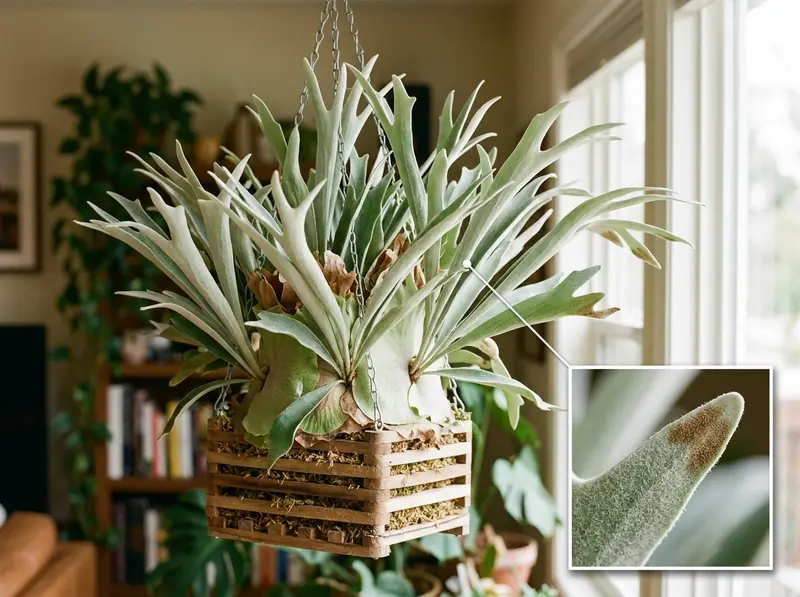
Silver Elkhorn Fern
Platycerium veitchii
Silver Elkhorn Fern is an epiphytic fern from Australia with silvery-green, antler-shaped fronds covered in fine, felt-like hairs. It does best mounted on a board or in a basket in bright, indirect light, with watering by soaking followed by full drainage. Avoid touching the fronds, because handling rubs off the silvery coating.
Saving is free with a KinClub account, and it works here and in the KinClub app. Sign up free
Care profile
- Light
- Bright, indirect lightLow → direct sun
- Water
- Dry to moderate wateringAbout every 7 days
- Difficulty
- ModerateTricky → easy
- Coldest it tolerates
- 50°F
- Humidity
- Medium
- Mature size
- MediumSmall → tree-size
- Growth rate
- Slow
- How common
- CommonRare → everywhere
- Plant family
- Polypodiaceae
Pets and toxicity
Cats and dogs: not yet checked
Not yet checked against ASPCA — don't assume it's safe for pets.
No toxicity source on record for this plant yet. If a pet eats any houseplant, call your vet or an animal poison helpline.
How to care for Silver Elkhorn Fern
Light
Give bright, indirect light, such as near an east window or a few feet back from a south or west window. Gentle morning sun is fine, but protect it from hot midday sun.
Watering
Water when the moss or medium feels dry just below the surface and the plant feels light, usually about once a week in the growing season. Soak the mount or basket for about 10 minutes, let it drain, and water less in winter.
Soil
Mount it on a board with sphagnum moss, or grow it in a wire basket or pot with a very airy mix of orchid bark, sphagnum moss and a little peat or coco. It needs to drain quickly and never stay soggy.
Feeding
In spring and summer, feed once a month with a balanced fertilizer diluted to half strength. Skip feeding in winter, and never put fertilizer on the dry moss.
Repotting
Repot or remount only every 2 to 3 years, when the plant outgrows its mount or the moss has broken down. Go up only a little in size, and leave the papery brown shield fronds in place.
Propagation
Separate pups (small offsets) with a sharp knife when they are at least 3 to 4 inches across, and mount them on their own board with moist sphagnum. Keep them warm and lightly damp until they root, which can take a few months.
Common problems
- Black, soft spots in the center: overwatering or water sitting in the shield fronds; let it dry out more and water from the sides or by soaking.
- Brown, crispy frond tips: dry air or too little water; soak more reliably and move it away from heaters and vents.
- Brown shield fronds at the base: this is normal aging and they protect the roots, so do not remove them.
- Scale or mealybugs on the fronds: dab with rubbing alcohol on a cotton swab and avoid wiping off the silvery fuzz on the fronds more than needed.
Similar plants
Same light needs and difficulty.
 AI-generated
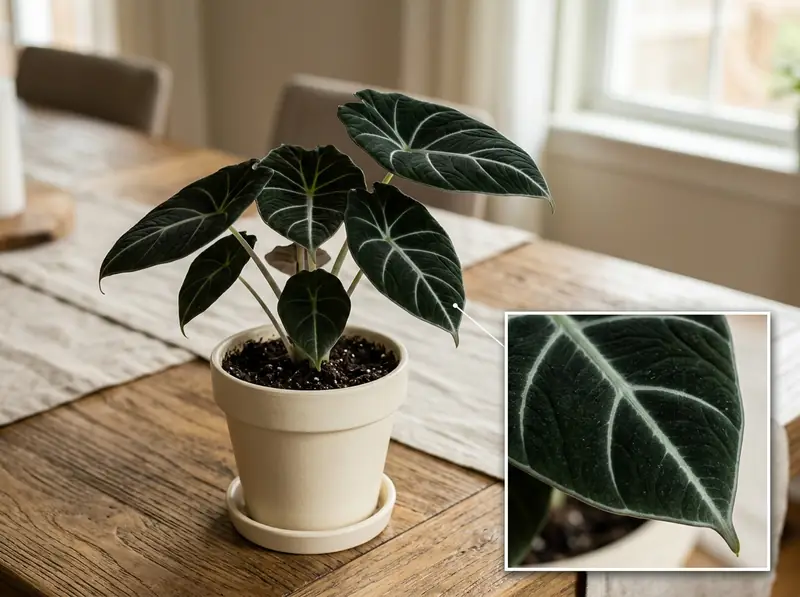
Black Velvet Alocasia
Alocasia reginula 'Black Velvet'
- Bright, indirect light
- Moderate watering
Toxic to cats and dogs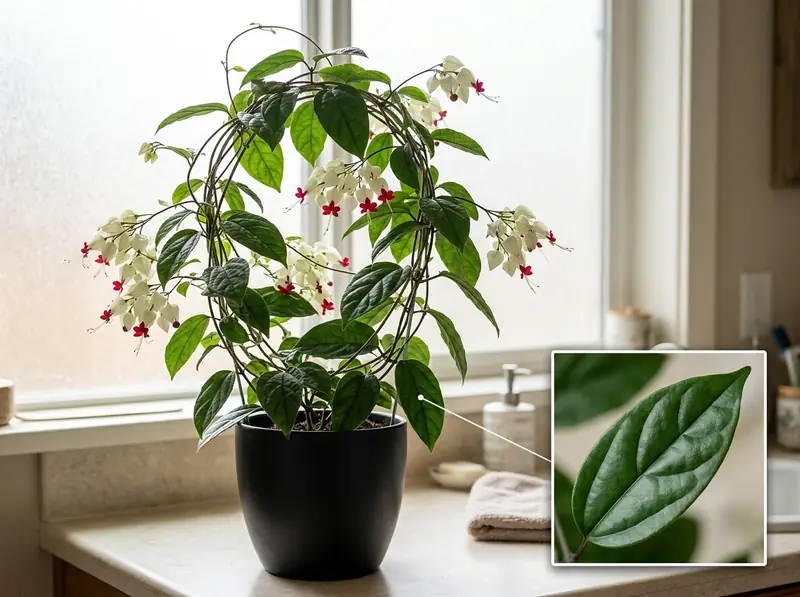 AI-generated
Bleeding Heart Vine
Clerodendrum thomsoniae
- Bright, indirect light
- Moderate watering
Pets: not yet checked AI-generated
 AI-generated