
 AI-generated
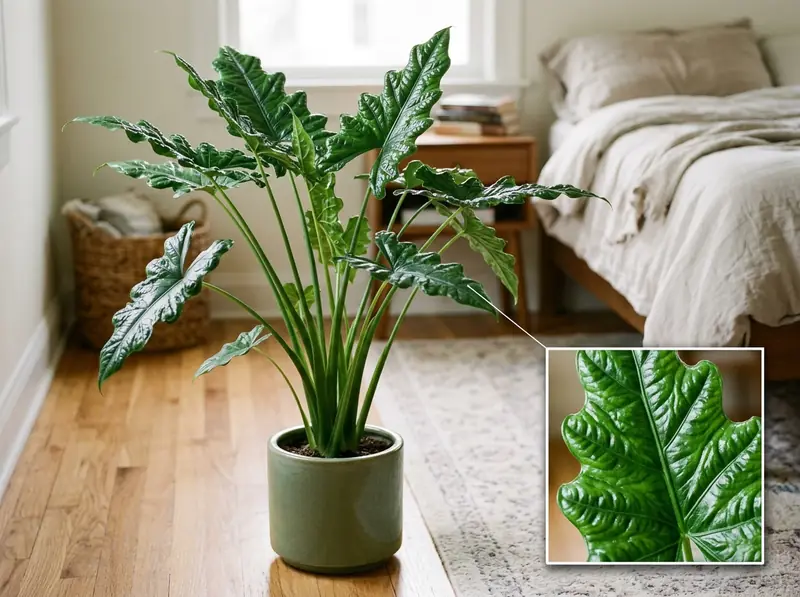
Sinuata Alocasia
Alocasia sinuata
Also known as Alocasia bullata
Sinuata is a less common Alocasia with glossy green leaves that have deeply wavy edges. It grows to roughly 2 to 3 feet and wants bright indirect light, warmth, and humid air.
Saving is free with a KinClub account, and it works here and in the KinClub app. Sign up free
Care profile
- Light
- Bright, indirect lightLow → direct sun
- Water
- Moderate wateringAbout every 7 days
- Difficulty
- ModerateTricky → easy
- Coldest it tolerates
- 60°F
- Humidity
- High
- Mature size
- Small to mediumSmall → tree-size
- Growth rate
- Moderate
- How common
- RareRare → everywhere
- Plant family
- Araceae
Pets and toxicity
Toxic to cats
Keep away from cats. Call your vet or a pet poison helpline if a cat chews it.
Toxic to dogs
Keep away from dogs. Call your vet or a pet poison helpline if a dog chews it.
Source: ASPCA toxic and non-toxic plants. If a pet eats any houseplant, call your vet or an animal poison helpline.
How to care for Sinuata Alocasia
Light
Bright, indirect light, like an east window or a bright room away from midday sun. The glossy, wavy-edged leaves scorch easily in direct light.
Watering
Water when the top inch or two of soil is dry, roughly every 7 days in summer and every 10 to 14 days in winter. Never leave it standing in a full saucer.
Soil
Chunky, fast-draining aroid mix: about 2 parts potting soil, 1 part orchid bark, and 1 part perlite. Soil should never stay waterlogged.
Feeding
Feed every 2 to 3 weeks in spring and summer with a balanced fertilizer at half strength. Skip it in fall and winter.
Repotting
Repot every 1 to 2 years in spring, going up one pot size. Handle the rhizomes and corms gently and replant at the same depth.
Propagation
Divide clumps and pot up offset corms that carry roots, using damp chunky mix. Keep warm and humid until growth resumes.
Common problems
- Spider mites and thrips cause speckling and silvery marks. Rinse leaves and treat with insecticidal soap weekly for 3 weeks.
- Yellowing leaves and mushy stems point to overwatering. Let the soil dry more between drinks.
- Leaf drop in winter is common in cool or dim rooms. Keep it above 60 F and water sparingly until spring.
Similar plants
Same light needs and difficulty.
 AI-generated
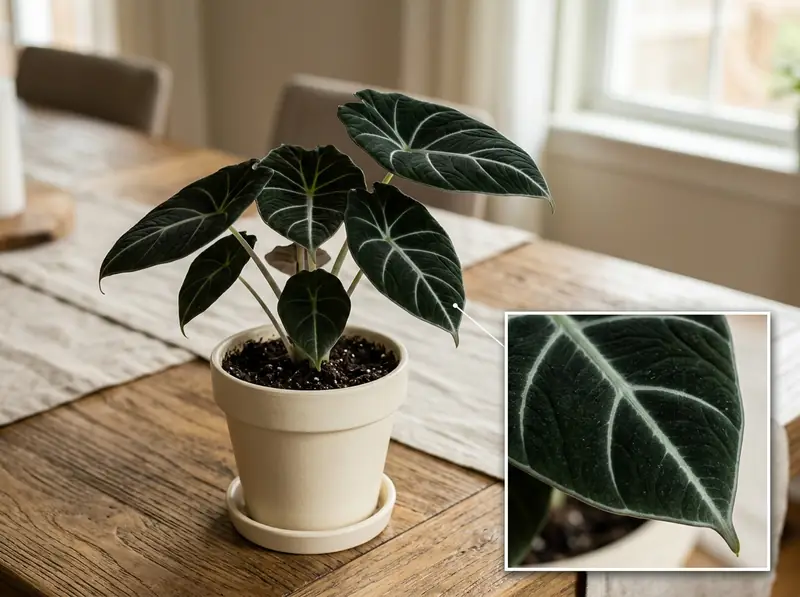
Black Velvet Alocasia
Alocasia reginula 'Black Velvet'
- Bright, indirect light
- Moderate watering
Toxic to cats and dogs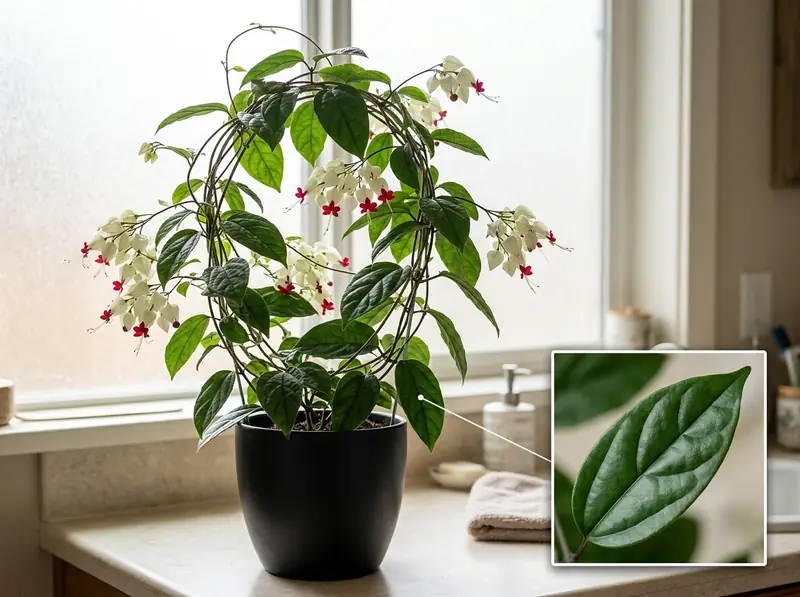 AI-generated
Bleeding Heart Vine
Clerodendrum thomsoniae
- Bright, indirect light
- Moderate watering
Pets: not yet checked AI-generated
 AI-generated