
 AI-generated
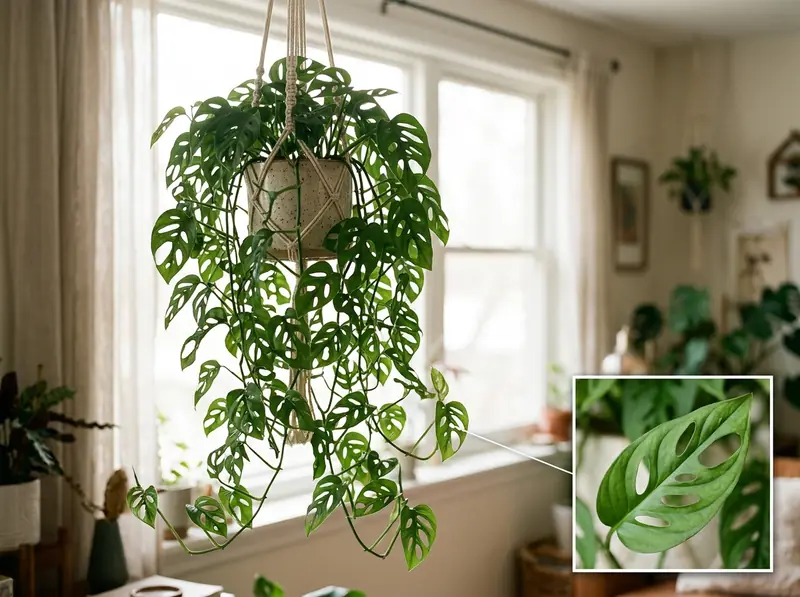
Swiss Cheese Vine
Monstera adansonii
Swiss cheese vine is a fast-growing tropical climber with heart-shaped leaves that develop natural holes as they mature. It is easy to grow in bright indirect light with regular watering and average home humidity. Give it a moss pole or let it trail from a hanging basket.
Saving is free with a KinClub account, and it works here and in the KinClub app. Sign up free
Care profile
- Light
- Bright, indirect lightLow → direct sun
- Water
- Moderate wateringAbout every 7 days
- Difficulty
- EasyTricky → easy
- Coldest it tolerates
- 55°F
- Humidity
- Medium to high
- Mature size
- LargeSmall → tree-size
- Growth rate
- Fast
- How common
- Very commonRare → everywhere
- Plant family
- Araceae
Pets and toxicity
Cats and dogs: not yet checked
Not yet checked against ASPCA — don't assume it's safe for pets.
No toxicity source on record for this plant yet. If a pet eats any houseplant, call your vet or an animal poison helpline.
How to care for Swiss Cheese Vine
Light
Bright indirect light suits it best, such as a spot a few feet from an east or lightly curtained south window. It tolerates medium light but grows slowly and leggy, and direct midday sun scorches the thin leaves.
Watering
Water thoroughly when the top 1-2 inches of soil feel dry, usually every 7-10 days in the growing season, and let excess drain away. Water less often in winter, and never let the pot sit in water.
Soil
Use a chunky, well-draining aroid mix, such as regular potting soil blended with about one third perlite and some orchid bark. The soil should hold slight moisture but never stay soggy.
Feeding
Feed every 4 weeks in spring and summer with a balanced liquid houseplant fertilizer diluted to half strength. Skip feeding in fall and winter.
Repotting
Repot every 1-2 years in spring when roots fill the pot or circle out the drainage holes. Move up only 1-2 inches in pot diameter and use a pot with drainage holes.
Propagation
Take a stem cutting with at least one node and a leaf, and root it in water or moist sphagnum moss. Roots usually form in 2-4 weeks, and it can be potted once roots are 2-3 inches long.
Common problems
- Small leaves without holes: the plant needs more light and a support to climb, so move it brighter and add a moss pole.
- Brown crispy leaf edges: usually dry air or missed waterings, so water more consistently and mist or group it with other plants.
- Yellowing leaves: often overwatering, so let the top inch or two dry out and check that the pot drains.
- Fine webbing and speckled leaves: spider mites, so rinse the leaves in the shower and treat with insecticidal soap weekly for several weeks.
- Long bare stems: low light, so move it brighter and prune back to encourage bushier growth.
Similar plants
Same light needs and difficulty.
 AI-generated
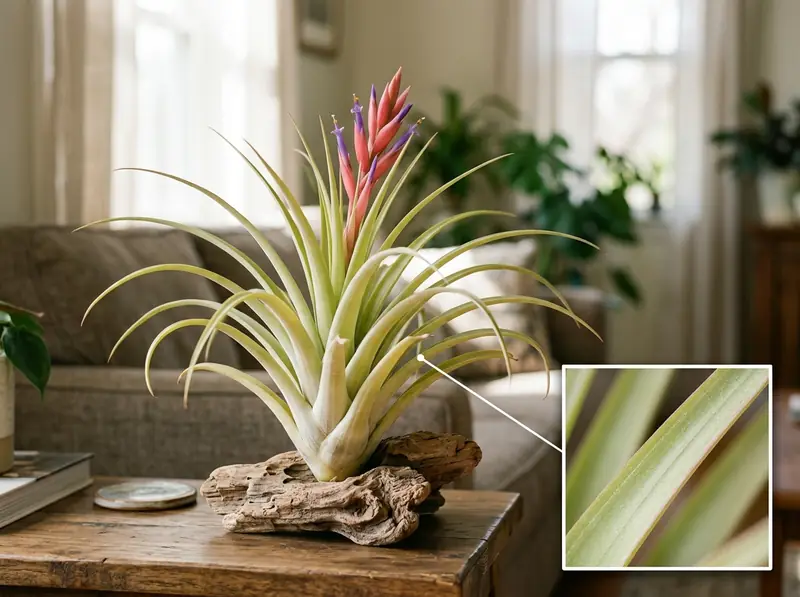
Leiboldiana Air Plant
Tillandsia leiboldiana
- Bright, indirect light
- Let it dry out
Pets: not yet checked AI-generated
 AI-generated
Chinese Money Plant
Pilea peperomioides
- Bright, indirect light
- Dry to moderate watering
Pets: not yet checked AI-generated
Christmas Cactus
Schlumbergera × buckleyi
- Bright, indirect light
- Moderate watering
Pets: not yet checked