
 AI-generated
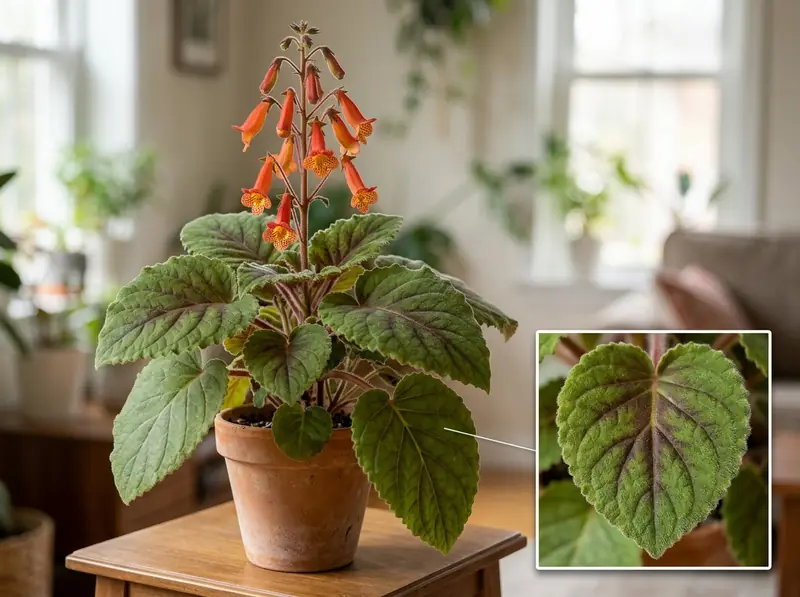
Temple Bells
Smithiantha zebrina
Temple Bells is a compact Central American gesneriad grown for its velvety, red-veined leaves and spikes of orange-red, tubular flowers in summer and fall. It likes African-violet-style care: bright indirect light, evenly lightly moist soil, and water kept off the leaves. It dies back and rests in winter, which is normal.
Saving is free with a KinClub account, and it works here and in the KinClub app. Sign up free
Care profile
- Light
- Bright, indirect lightLow → direct sun
- Water
- Moderate to moist wateringAbout every 7 days
- Difficulty
- ModerateTricky → easy
- Coldest it tolerates
- 55°F
- Humidity
- Medium to high
- Mature size
- SmallSmall → tree-size
- Growth rate
- Moderate
- How common
- CommonRare → everywhere
- Plant family
- Gesneriaceae
Pets and toxicity
Cats and dogs: not yet checked
Not yet checked against ASPCA — don't assume it's safe for pets.
No toxicity source on record for this plant yet. If a pet eats any houseplant, call your vet or an animal poison helpline.
How to care for Temple Bells
Light
Give bright, indirect light, such as an east window or a few feet back from a south or west window. Avoid direct midday sun, which scorches the velvety leaves.
Watering
Water when the top half inch of soil feels dry, using lukewarm water poured onto the soil, not the leaves. Keep it lightly moist while growing and never let it sit in a saucer of water.
Soil
Use a light, airy, well-draining mix, such as African violet potting mix with extra perlite (about one part perlite to three parts mix).
Feeding
During spring and summer, feed every 2 to 4 weeks with a balanced or bloom-type fertilizer diluted to half strength. Stop feeding when growth slows in fall.
Repotting
Repot every year or two in late winter or early spring as new growth starts. Use a shallow pot only slightly larger, and plant the scaly rhizomes about 1 inch below the soil surface.
Propagation
Separate the scaly rhizomes when repotting and plant each piece 1 inch deep in moist mix. Leaf or stem cuttings in a humid spot also root, and seed works but is slow.
Common problems
- Plant dies back in fall and winter: this is normal dormancy. Cut back the dead tops, water very sparingly, and keep it around 60 to 65°F until spring growth resumes.
- Tan or brown rings on leaves: caused by cold water or water drops in sun. Water at the soil level with room-temperature water.
- No flowers: usually too little light or no winter rest. Move to brighter indirect light and give a cool, dry dormancy.
- Soft, rotting stems or rhizomes: from overwatering or poor drainage. Let the soil dry more, use a gritty mix, and cut away the rotted parts.
- Sticky or cottony white clusters in leaf joints: mealybugs. Dab with rubbing alcohol on a cotton swab and repeat weekly.
Similar plants
Same light needs and difficulty.
 AI-generated
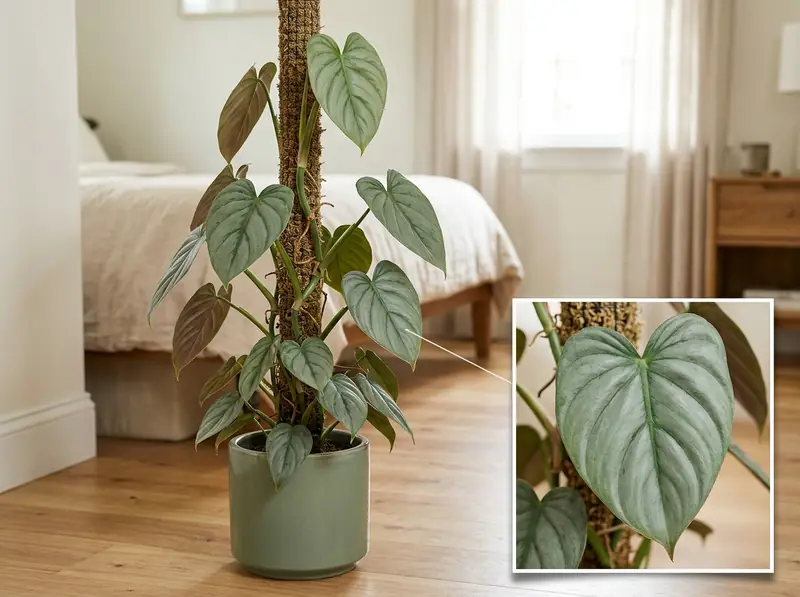
Sodiroi Philodendron
Philodendron sodiroi
- Bright, indirect light
- Moderate watering
Toxic to cats and dogs AI-generated
 AI-generated
 AI-generated